Money moves fast in the digital world, and today, more than 560 million people worldwide own some form of cryptocurrency. This massive shift in how we handle value has turned simple apps into financial powerhouses that handle billions of dollars.
Developing a high-end wallet is a path filled with technical hurdles and high stakes. You aren’t just building an app. You are building a bank, a trading floor, and a high-security vault all at once. For anyone looking to enter this space, knowing the costs and the effort involved is the first step toward success.
Because of this boom, many businesses want to know what it takes to create a platform that stands up to the likes of Coinbase. Our team at PixelPlex has put together this guide because we know that building such a tool is a massive undertaking. We have spent years in the trenches of crypto wallet development, and we want to share the real-world knowledge we gained while helping our clients launch successful products.
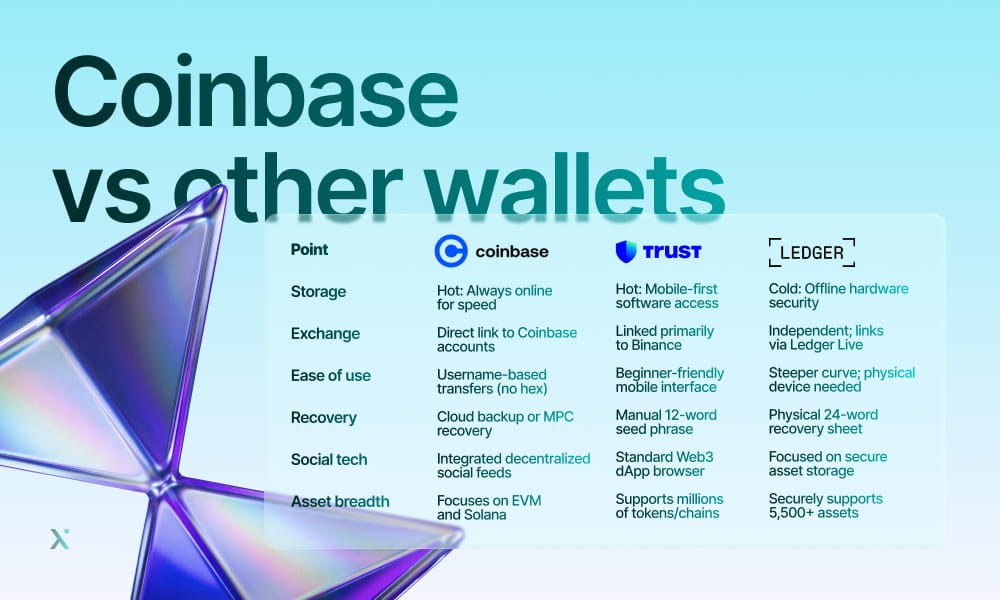
Why is building a wallet like Coinbase a big challenge?
When you look at an app like Coinbase, you see a clean interface and a few buttons, however, there is a massive engine running 24/7. One of the biggest reasons it is so hard to build is the sheer scale of the infrastructure. You have to handle thousands of transactions per second without a single error. If a user loses a fraction of a cent due to a bug, your reputation is gone instantly.
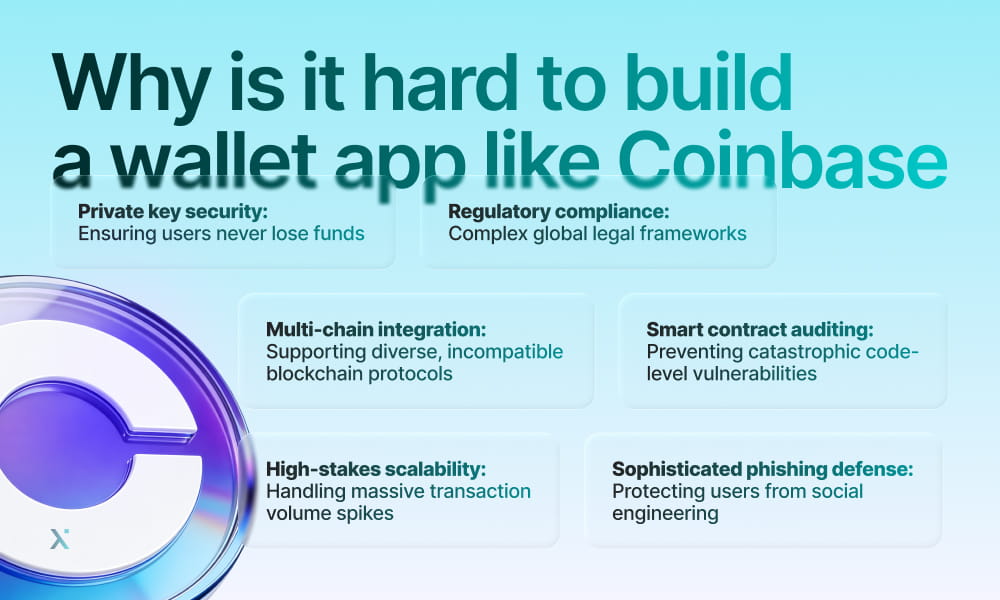
Another massive wall to climb is the regulatory landscape. Coinbase spends millions of dollars every year just to stay compliant with laws in different countries. You have to deal with KYC (Know Your Customer) and AML (Anti-Money Laundering) rules that vary from one state to another. To ease the way, many firms choose white label crypto wallet development to get a head start on the foundational tech.
There is also the constant threat of hackers. Since wallets hold direct access to wealth, they are the number one target for cybercriminals. Protecting the private keys and the user data requires a level of security that most standard apps never have to worry about. You need a team that understands how to build defenses that are literally unhackable. Because the stakes are so high, a professional security audit and risk management strategy is a must.
NFT Wallet Development Explained: Features, Process, and Pricing
MPC Wallet Development Cost: Pay Now or Pay After a Breach
Which technology stack do you need?
If you choose the wrong language or database early on, you might find yourself stuck in a corner as your user base grows. You need a mix of speed, safety, and flexibility to make everything work together.
For the frontend
1. React Native for cross-platform ease
Building two separate apps for iOS and Android can double your costs and your headaches. By using React Native, you can share a large chunk of your code across both platforms. This doesn’t just save money. It ensures that your users get the same experience no matter what phone they have in their pocket.
2. Swift for native iOS performance
Sometimes, you need to go deep into the hardware of an iPhone to get the best performance. For parts of the app that require high speed or special animations, Swift is the way to go. It is safe, fast, and plays well with all the latest Apple features like FaceID.
3. Kotlin for Android stability
On the Android side of things, Kotlin has become the gold standard. It is a modern language that prevents many of the common bugs that used to plague older Android apps. Using Kotlin helps in creating a very stable environment for crypto wallet development.
4. TypeScript for cleaner code
Plain JavaScript can get messy when a project grows. TypeScript adds a layer of rules that help developers catch mistakes before the app even runs. Relying on specialized TypeScript development services is vital when you are handling financial logic where a small typo could lead to a big problem.
5. Flutter for high-end UI
If you want your wallet to look incredibly unique and have smooth transitions, Flutter is a great choice. It allows for beautiful designs that look identical on every device. It is a popular pick for Web3 app development because it handles complex visuals so well.
Frontend technology comparison
| Technology | Best for | Main advantage |
| React Native | Multi-platform | Fast development time |
| Swift | iOS Native | Best performance on iPhone |
| Kotlin | Android Native | High reliability |
| TypeScript | Logic and Safety | Reduces coding errors |
| Flutter | Visual Design | Beautiful and consistent UI |
Own or Rent a Mining Pool: What Fits Your Goals?
DApp Development: How It Works and What It Costs
For the backend
1. Node.js for real-time speed
A crypto wallet needs to update prices and transaction statuses in real-time. Node.js is perfect for this because it can handle many connections at once without slowing down. It is the backbone of many high-traffic financial systems today.
2. Go (Golang) for heavy data loads
When you need to process massive amounts of data or talk to the blockchain directly, Go is often the best tool. It was built by Google to be incredibly efficient. It is particularly useful when working on private blockchain development projects where speed is crucial.
3. PostgreSQL for data integrity
Your wallet needs a place to store user profiles and transaction history safely. PostgreSQL is a very “serious” database that makes sure no data is ever lost or corrupted. It is much more reliable for financial records than many other modern alternatives.
4. Redis for fast caching
Users hate waiting for a screen to load. Redis stores frequently used data in the server’s memory so it can be grabbed in an instant. This makes the whole app feel snappy and responsive.
5. Amazon Web Services (AWS) for hosting
You need a server that never goes down. AWS provides a massive range of tools to keep your wallet running and to scale up automatically if you suddenly get a million new users.
Never pick a tech stack just because it is trendy. Always choose the tools that your developers know best and that have a strong track record of security in the financial world.
The Real Cost of Stablecoin Development: What You Pay For and Why

The Ultimate Guide to Web3 DAO Platform Development
Advanced features to add
To stand out in a crowded market, a basic wallet isn’t enough. You need to offer things that make the user’s life easier and more profitable.
1. In-app crypto swapping
Users don’t want to leave your app to trade one coin for another. Integrating a swap feature directly into the interface keeps them engaged. It also allows you to earn a small fee on every trade, which is a great way to make the project pay for itself.
2. Fiat-onramps and offramps
Buying crypto with a credit card or a bank transfer should be easy. By adding crypto payment solutions, you allow people to move their traditional money into the world of digital assets without jumping through hoops.
3. Staking and earning rewards
Many people today want their money to work for them. Offering a way to “stake” coins directly in the wallet to earn interest is a huge draw for long-term investors. This involves complex dApp development to connect with various blockchain protocols.
4. NFT Gallery
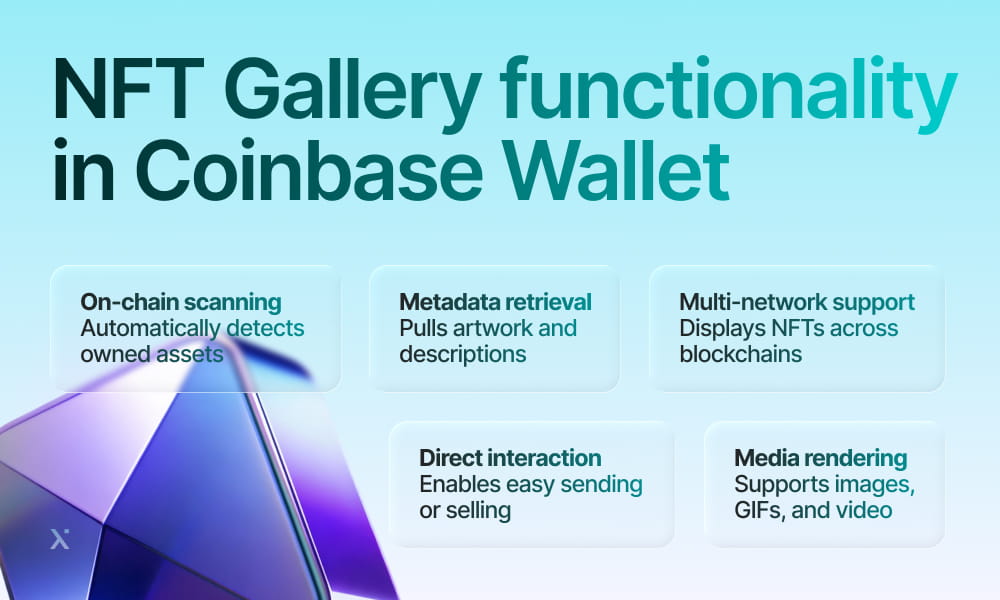
Digital art is a massive part of the ecosystem now. Digital wallet app development services are becoming more comprehensive. A wallet like Coinbase needs a dedicated space where users can view, send, and even buy NFTs. Building this requires specialized NFT wallet development services to create an interface that can seamlessly handle high-quality images and metadata from different chains.
5. Biometric security layers
Entering a long password every time you want to check your balance is annoying. Using Fingerprint or FaceID makes the app much more user-friendly while still keeping things very secure.
6. Push notifications for price alerts
A good wallet keeps the user informed. If a coin they own suddenly drops or rises in price, they should get a notification immediately. This helps them stay on top of the market without having to stare at the app all day.
Estimated time for advanced features
| Feature | Complexity | Est. development time |
| Crypto swaps | High | 4-6 Weeks |
| Fiat onramps | Medium | 3-5 Weeks |
| Staking | High | 6-8 Weeks |
| NFT Gallery | Medium | 3-4 Weeks |
| Biometrics | Low | 1-2 Weeks |

The New Hunger Games for Hash: Why 2026 Bitcoin Mining Demands Volcanoes and Satellites
Blockchain Supply Chain Application Development and When It Fits
Step-by-step development process
Building a wallet is a marathon, not a sprint. You have to follow a very specific set of steps to make sure you don’t miss anything important along the way.
Discovery and market research
First, you need to figure out who your users are and what they need. Are they beginners who want simplicity, or are they pros who need advanced charts? This phase is about planning and making sure your idea actually makes sense in the current market.
UI/UX design
Before a single line of code is written, you need to see what the app will look like. Designers create wireframes and prototypes to test how a user will move through the app. The goal is to make a complicated process like crypto wallet development feel easy for the average person.
Building an MVP
Instead of building every single feature at once, it is often smarter to start with a “Minimum Viable Product.” This lets you launch the core features quickly and see how people use them. Many successful projects start with MVP development to save time and money.
Core infrastructure coding
This is where the heavy lifting happens. Developers build the backend, set up the servers, and connect to the various blockchains. This stage ensures that the foundation of the app is strong enough to hold up everything else.
Integrating financial systems
Now you add the parts that let users connect their bank accounts or trade coins. This requires careful work with third-party providers and ensuring that every piece of financial software development is perfectly secure.
Rigorous security testing
You cannot release a wallet without testing it a thousand times. Security experts try to “hack” the app to find any weak spots. This is the most critical part of the whole process because a single mistake here can lead to a total loss of funds.
Quality assurance and beta testing
A small group of real users gets to try the app before everyone else. They find the little bugs that developers might have missed. This helps polish the experience so the final launch is as smooth as possible.
Deployment and ongoing updates
Once the app is in the stores, the work isn’t over. You need to monitor the servers, answer user questions, and add new features as the market changes. The world of crypto moves fast, and your app needs to move with it.
The first version of your wallet doesn’t have to be perfect. It just has to be safe. You can always add the fancy bells and whistles later as your community grows.
Web3 Smart Contract Development: Building the ‘Brain’ of Your Web3 Project
Zero-Leakage Vaults: Building High-Stakes Canton Network Wallets
How much it’ll cost you
Estimating the price of a Coinbase-like app is tricky because every project is different. However, we can break it down into the main buckets where your money will go.
Cost of design
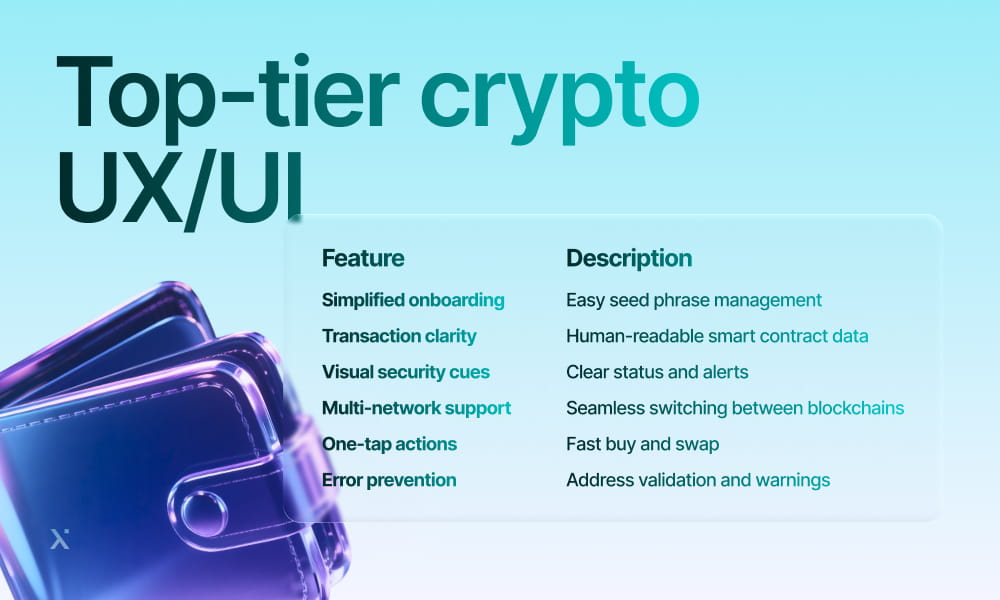
Good design isn’t just about pretty colors. It is about building a layout that guides the user safely through a trade. Expect to spend a significant portion of your budget here. For a high-end wallet, design costs can range from $15,000 to $40,000 depending on how many screens and custom animations you want.
Cost of initial development
The bulk of your budget goes to the developers. You are paying for their deep knowledge of crypto wallet development. Building the core features usually starts at around $60,000 and can easily go up to $150,000 for a complex version. This covers the frontend, backend, and the basic blockchain integrations.
Cost of maintenance
You can’t just build it and walk away. You need to pay for servers, security updates, and customer support. Usually, you should set aside about 20% of your initial build cost every year just to keep the lights on and the app running safely.
Cost of advanced features
Every “extra” adds to the bill. If you want to add complex DeFi development features or custom trading bots, you should budget an extra $20,000 to $50,000. These features take a lot of time to get right because they interact with very complex smart contracts.
Estimated cost breakdown (USD)
| Category | Basic wallet | Coinbase-level |
| UI/UX design | $10k – $15k | $30k – $50k |
| Backend dev | $30k – $50k | $80k – $120k |
| Mobile dev | $25k – $40k | $70k – $100k |
| Security/Audit | $10k – $20k | $40k – $60k |
| Total est. | $75k – $125k | $220k – $330k+ |
Which features are a MUST for a wallet like Coinbase and similar ones
If you want people to trust you with their money, there are a few things you simply cannot skip. These are the “non-negotiables” of the industry.
Security
This means two-factor authentication (2FA), encrypted storage for private keys, and session timeouts. You also need a way for users to recover their accounts if they lose their phones, which usually involves a 12 or 24-word recovery phrase.
Transparency
Users need to see their full transaction history with clear links to the blockchain explorers. If a transaction is taking a long time, the app should explain why and what is happening. To get these details right, many companies invest in blockchain consulting to understand the best way to present technical data to a non-technical audience.
Customer support
When money is involved, people get nervous. If something goes wrong, they need to be able to talk to a human or a very smart bot right away. Having a help center with clear guides is a must for any serious financial app.
Most users decide within the first 30 seconds of opening an app if they trust it. A professional, clean interface does more for your brand than any marketing campaign ever could.
Canton Network 2026’s DeFi Boom: Top Profitable Solutions to Build
Complete Guide to Web3 Wallet Development and Its Costs
Challenges you may face
There are several big problems that every team faces during the crypto wallet development process.
Maintaining cross-chain compatibility
Each blockchain works differently. Bitcoin, Ethereum, and Solana all have their own “rules.” Making one wallet that can talk to all of them at the same time is a massive technical challenge. It requires a very smart architecture that can translate between these different systems.
High-speed data syncing
The blockchain is constantly growing. Your app needs to stay synced with the network so that users see their real balance. If the sync is slow, the user might see an old balance and panic. This requires very clever business intelligence solutions to manage the flow of data effectively.
Handling network congestion
Sometimes, a blockchain gets very busy and fees go through the roof. Your wallet needs to be smart enough to suggest the right fee so that the transaction doesn’t get “stuck.” This is a tricky balance between saving the user money and making sure their trade actually goes through.
Evolving security threats
Hackers are always finding new ways to trick people. Your team has to stay one step ahead of the latest phishing scams and malware. This involves constant monitoring and the use of transaction monitoring software to spot suspicious activity before it becomes a problem.
Regulatory shifts
Laws about crypto change all the time. One day a feature might be legal, and the next day it might be banned in a certain country. You have to be able to update your app quickly to stay on the right side of the law without breaking the user experience.
Big data management
As your wallet grows, you will have millions of transactions to track. Making sense of all this information is tough. You might need to look into data science development to find patterns that help you improve the app and protect your users.
Common development roadblocks
| Challenge | Impact | Solution |
| High gas fees | User frustration | Dynamic fee estimation |
| Syncing issues | Inaccurate balances | High-performance nodes |
| Security leaks | Loss of funds | Multi-sig and hardware support |
| Regulatory changes | App store bans | Geofencing and KYC updates |
| Network downtime | App unusable | Redundant server clusters |
Quick reference list for your project
- Define your target audience early.
- Pick a tech stack that scales.
- Never skip a professional security audit.
- Start with an MVP to test your ideas.
- Keep a close eye on the latest regulations.
Success metrics for a new wallet
| Metric | Target goal | Why it matters |
| App load time | < 2 Seconds | Keeps users from leaving |
| Transaction success | 99.9% | Builds essential trust |
| Monthly active users | Growth of 5-10% | Shows market fit |
| Support ticket time | < 4 Hours | Keeps users happy |
Why choose PixelPlex for crypto wallet development
Choosing the right team is the most important decision you will make. You need people who have been through this before and know where the traps are hidden. At PixelPlex, we have built over 8 different wallet solutions, each with its own unique set of requirements and challenges. We don’t just write code. We build businesses.
Our experience covers a wide range of different projects:
- Echo Wallet: This is a 5-star mobile wallet that people love because it is so easy to use. We focused heavily on the design to make sure it felt natural for everyone.
- MANTRA Wallet: We built the official wallet for MANTRA, which is a major Layer 1 blockchain. This required a very high level of security and deep protocol knowledge.
- Qtum Wallet: Our team created native apps for both Android and iOS for the Qtum ecosystem, ensuring they were both fast and rock-solid.
- Blip Wallet: This was a fun project where we built a multi-chain app that lets users manage assets from many different places all in one screen.
- Canton Loop: This is the Canton Network’s first self-custodial wallet, featured in the official ecosystem marketplace, earned 31.3M Canton Coin in revenue.
We know that every project has a different soul. Whether you are looking for a custom Web3 wallet development or a massive exchange-style platform, we have the tools and the experts to make it happen. We have seen the industry change over the years, and we know how to build things that last.
Your wallet is only as strong as its weakest link. We spend extra time on the “boring” parts like database backups and server hardening because we know that is what actually keeps the money safe.
Conclusion
Building a giant in the crypto world like Coinbase is a huge task, but it is one that can pay off immensely. The journey through crypto wallet development is long, involving complex tech stacks, deep security requirements, and a constant eye on the market. By understanding the costs and the steps involved, you are already ahead of most people who try to jump in without a plan.
We hope this breakdown helps you understand the roadmap ahead. Feel free to reach out to our team whenever you are ready to start your journey.
FAQ
The total cost is mainly determined by the complexity of features, such as multi-chain support and the level of security infrastructure required to protect user assets.
Because wallets handle direct access to wealth, even a minor vulnerability can lead to a total loss of funds and the permanent destruction of your brand’s reputation.
Using a white-label foundation allows you to bypass the lengthy initial coding stages and focus your budget on custom branding and unique advanced features.
We recommend using Swift for native iOS performance and Kotlin for Android stability to ensure your app is both fast and reliable for all users.
You must include two-factor authentication (2FA), biometric login (FaceID/Fingerprint), and encrypted storage for private keys to meet industry trust standards.
We implement dynamic fee estimation logic that helps users find the perfect balance between transaction speed and cost during busy network periods.
Starting with an MVP is often smarter as it allows you to launch core secure features quickly and refine the app based on real user feedback.
You should typically set aside about 20% of the initial build cost annually for server hosting, routine security audits, and essential customer support.