You want a trading platform that behaves like Kraken? The tricky part is that most people ask about the sticker price before they know what they are actually buying, and that is where budgets go sideways.
The market itself keeps giving founders reasons to jump in. Spot crypto trading hit $18.6 trillion in 2025, up 9% year over year, so the appetite is clearly there.
The wider exchange market, meanwhile, is expected to grow at a 20.5% CAGR and reach roughly $103 billion in 2026 alone. That leaves plenty of room for new players.
Kraken, for its part, crossed $2 trillion in platform volume last year and now serves more than 8 million traders. Numbers like those explain why cryptocurrency exchange development questions land in our inbox almost every week.
Here is the thing: a working exchange is a stack of hard problems glued together: matching engine, custody, compliance, liquidity, and a UI people actually trust with their money. Since our crypto wallet and exchange team has shipped these builds before, we figured a plain-spoken guide would help more than another vague estimate. That is precisely why we wrote this one, and if you need a hand with any wallet or trading build afterwards, we are around.
What exactly is Kraken?
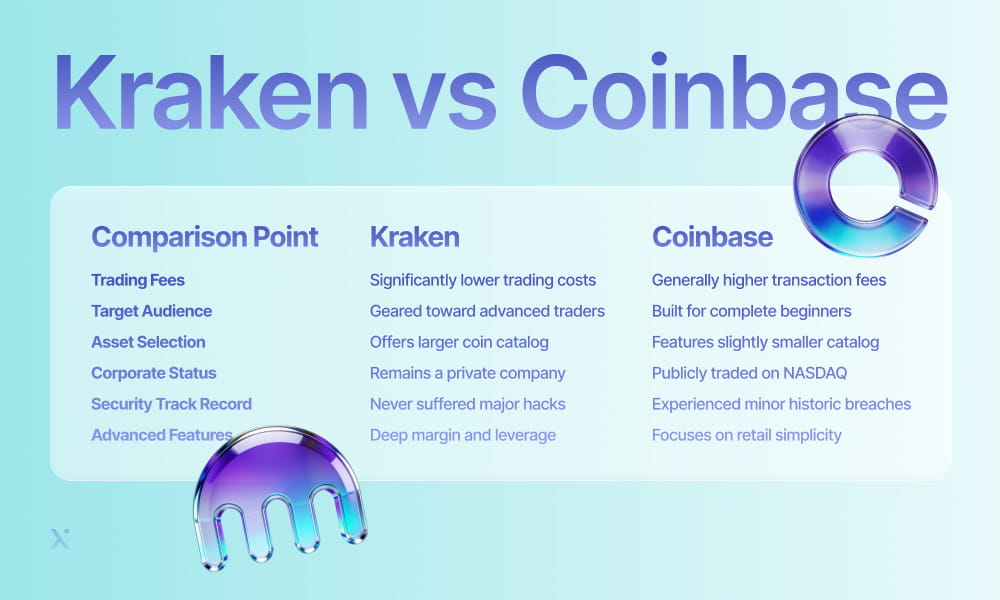
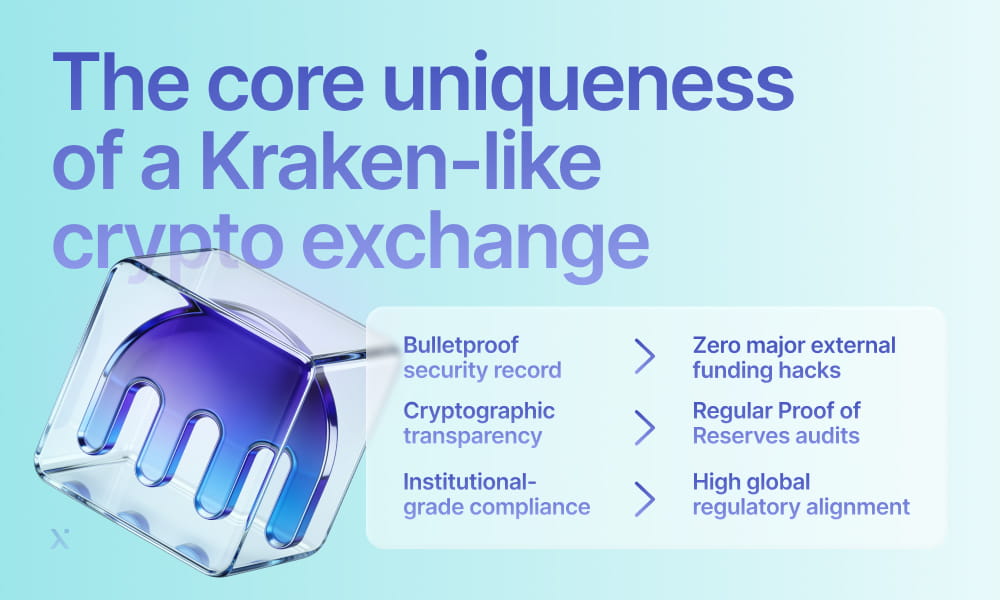
Kraken is one of the older names in the game, launched back in 2011, and it grew into a centralized exchange trusted by both retail folks and big institutions. Users can buy, sell, and trade hundreds of coins, stake assets for yield, trade on margin, and dabble in futures. What set it apart early on was a stubborn focus on security and regulatory standing, which paid off when flashier rivals stumbled.
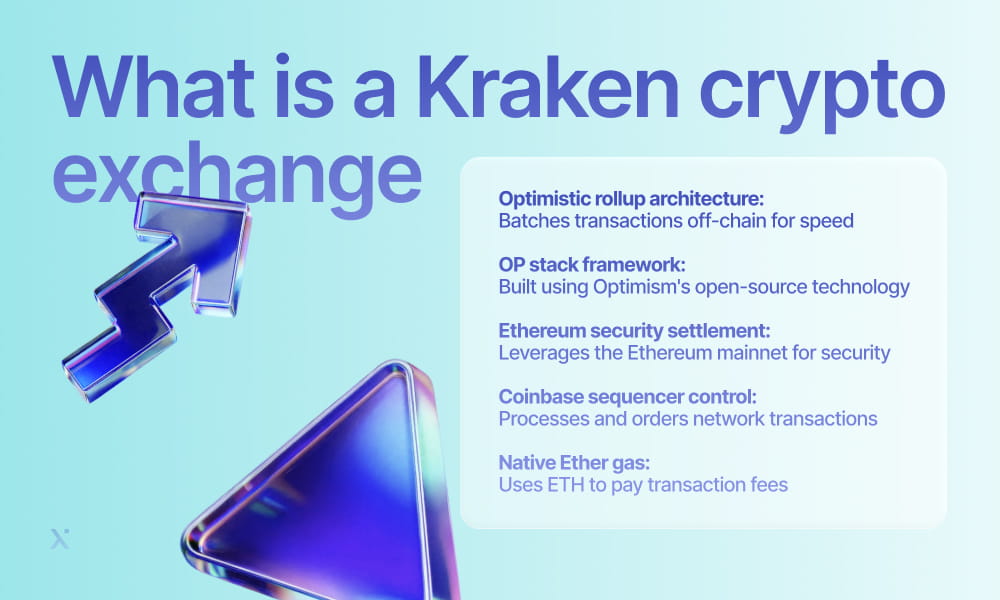
By 2025 the platform ran 721 coins across 1,523 trading pairs, held about $48 billion in client assets, and climbed to the number one global exchange ranking by Q3. That kind of scale does not happen by accident. It comes from years of layered engineering, and copying the surface without the plumbing underneath rarely ends well. When people say they want “a Kraken clone,” what they usually mean is that trust, depth, and polish, which is a taller order than it looks.
Because of that, anyone weighing cryptocurrency exchange development should study what Kraken got right operationally, not just how its screens look. The reputation was built on boring reliability, and that is the part worth copying most.
Kraken spent years as a spot-only venue before adding derivatives. Starting narrow and expanding once you have traction is a pattern worth stealing.
Cracking the Coinbase Code: What It Takes to Build Coinbase-Like Exchange
How to Build a P2P Crypto Exchange: Development Process, Tech Stack & Pricing Explained
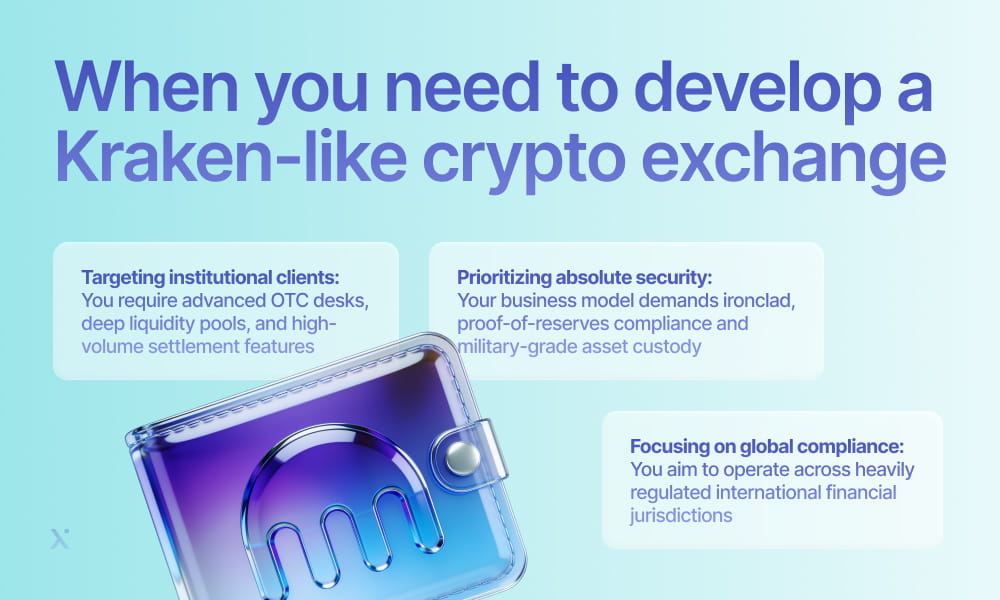
How a Kraken-style exchange differs from the rest
Not every exchange is built the same way, and the gap between a serious platform and a weekend project shows up fast. Below are five areas where Kraken pulls ahead, and where your own cryptocurrency exchange development effort should aim. Keep them in mind while you read, since each one quietly shapes your budget later.
Security is treated as the product
Kraken keeps the bulk of client funds in cold storage, runs frequent proof-of-reserves, and layers on strict internal controls. Most smaller exchanges bolt security on at the end, which is exactly backwards. If you are serious about this, a proper security audit and risk management process should run alongside coding from day one, not after launch.
Deep liquidity and a fast matching engine
Thin order books scare traders off. Kraken maintains deep liquidity and an engine that can chew through huge order volumes without lagging, and matching latency is where many clones quietly fail. Getting this right often means market-maker partnerships plus a custom-tuned engine, which is a chunk of the work most estimates skip over.
Regulatory muscle across many regions
Where a lot of exchanges dodge licensing, Kraken leaned into it, securing registrations in multiple jurisdictions. That legal groundwork is slow and unglamorous, yet it is the moat. Skipping it might save money now and cost you the whole business later.
A product range that grows with the user
Spot, margin, futures, staking, and an OTC desk all live under one roof at Kraken. Newcomers can start simple, and pros never feel boxed in. Building your architecture so features slot in later, rather than being crammed in from the start, keeps early costs sane.
Support and transparency people believe in
Around-the-clock support and clear communication have kept Kraken’s reputation steady through rough markets. Trust is slow to earn and quick to lose in this space. Solid support tooling, honest status pages, and readable fee structures do more for retention than any marketing push.

Web3 Insurance App Development: Why It Matters and How It Works in Real Life

Decentralizing Healthcare: What It Means for Your Product
The tech stack you will need
Picking tools is where a lot of teams overthink things. There is no single “correct” stack, but there are proven choices and sensible backups. Below we split it into frontend and backend, with a recommended option and an alternative for each. Good cryptocurrency exchange development leans on tech your hiring pool actually knows, so resist the urge to chase novelty for its own sake. The stack that ships and stays maintainable beats the trendy one every single time, and your future self will thank you.
For the frontend
The frontend is what users touch, so it has to feel quick and calm even when markets are wild.
| Layer | Recommended | Alternative |
| Framework | React | Vue.js |
| State management | Redux Toolkit | Zustand |
| Charts | TradingView library | Highcharts |
| Real-time data | WebSocket (native) | Socket.IO |
| Mobile | React Native | Flutter |
Framework
Recommended: React
React has the biggest talent pool and a mature ecosystem, which keeps hiring and maintenance easier down the road.
Alternative: Vue.js
Vue is lighter to pick up and works nicely for smaller teams who want fast onboarding.
State management
Recommended: Redux Toolkit
Trading UIs juggle tons of live state, and Redux Toolkit keeps that predictable.
Alternative: Zustand
When you want less boilerplate and a smaller footprint, Zustand does the job cleanly.
Charting
Recommended: TradingView charting library
Traders basically expect TradingView-grade charts, so this saves you reinventing candlesticks.
Alternative: Highcharts
Highcharts is flexible and well documented if you need more custom visuals.
Real-time data
Recommended: Native WebSocket
Price feeds and order updates must stream instantly, and native WebSockets are lean and fast.
Alternative: Socket.IO
Socket.IO adds handy reconnection logic when you would rather not hand-roll it.
Mobile
Recommended: React Native
Sharing logic with your web React code speeds up a mobile launch considerably.
Alternative: Flutter
Flutter shines when you want a highly polished, near-native feel on both platforms.

Canton Development and a New Vision for Blockchain in Finance: Use Cases, Features, and Cost
What Happens to Your Budget When Building a Trust Wallet Alternative?
For the backend
The backend is the engine room, and this is where the money and the risk concentrate.
| Layer | Recommended | Alternative |
| Core language | Go | Rust |
| API layer | Node.js (NestJS) | Java (Spring Boot) |
| Database | PostgreSQL | CockroachDB |
| Cache / queue | Redis + Kafka | RabbitMQ |
| Infrastructure | Kubernetes on AWS | GCP + Terraform |
Core matching engine language
Recommended: Go
Go handles high concurrency with low latency, which suits a matching engine well.
Alternative: Rust
Rust gives you even tighter performance control when microseconds truly count.
API and services layer
Recommended: Node.js with NestJS
NestJS keeps a large service codebase organized, and JavaScript talent is everywhere.
Alternative: Java with Spring Boot
Spring Boot remains a rock-solid pick for institution-grade backends.
Database
Recommended: PostgreSQL
Reliable, battle-tested, and great with financial data and transactions.
Alternative: CockroachDB
When you need horizontal scale across regions, CockroachDB earns its keep.
Caching and messaging
Recommended: Redis plus Kafka
Redis handles blazing-fast reads, and Kafka moves order events reliably at volume.
Alternative: RabbitMQ
RabbitMQ is a simpler messaging option for smaller throughput needs.
Infrastructure
Recommended: Kubernetes on AWS
Kubernetes gives you scaling and resilience that an exchange genuinely needs.
Alternative: GCP with Terraform
A tidy, repeatable setup if your team prefers Google’s cloud.
Don’t glue the matching engine directly to your web API. Keep it isolated as its own service so a spike in web traffic never slows down trade execution.
Advanced features worth adding
Once the basics run, these are the extras that turn a plain exchange into something traders stick with. Each adds cost, so weigh them against your audience. In our cryptocurrency exchange development projects, the winners usually pick two or three of these to nail rather than shipping all seven half-baked.
Margin and futures trading
Leverage attracts active traders, though it brings liquidation logic and risk engines that are genuinely hard to build. Get the math wrong and losses cascade fast.
Staking and yield
Letting users earn on idle assets keeps balances on your platform. Behind the scenes this ties into validator infrastructure or partner protocols, which is where solid DeFi development know-how pays off.
Automated trading and bots
Power users love APIs and built-in strategy tools. Offering bot support and clean documentation can pull in a whole community of algorithmic traders.
Fiat on- and off-ramps
Card payments and bank transfers remove a huge barrier for newcomers. Reliable crypto payment solutions here make the difference between a smooth signup and an abandoned one.
Advanced analytics dashboards
Traders want portfolio breakdowns, profit-and-loss views, and tax-friendly reports. Strong business intelligence solutions turn raw trade data into something users actually read.
Fraud and transaction monitoring
Watching for suspicious flows in real time protects both users and your license. Pairing rules with machine learning through dedicated transaction monitoring software catches problems humans miss.
NFT and token marketplace
Some exchanges add a marketplace to widen their appeal and open new revenue. If that fits your roadmap, NFT marketplace development can slot alongside the core trading engine.
Ship features in waves tied to user demand, not all at once. Every feature you launch is a feature you have to secure, support, and maintain forever.

Exploring Solana Development: Core Features, Industry Use Cases, and Future Trends
Comparing DApps Across Protocols: Why Your Blockchain Choice Can Break Everything
Integrations you might want to plan for
No exchange lives on an island, and the right integrations save you months of building from scratch. Here are the usual suspects worth budgeting for early.
- KYC/AML providers like Sumsub or Jumio for identity checks
- Liquidity aggregators and market makers to fill your order books
- Blockchain node providers or your own nodes for deposits and withdrawals
- Payment gateways for fiat handling
- Custody partners for institutional-grade asset storage
Each integration carries its own contract, fees, and quirks, so read the fine print. A good chunk of any cryptocurrency exchange development timeline goes into wiring these third parties together and testing every edge case. Pick partners with solid documentation and responsive support, because a flaky KYC vendor or node provider can stall your whole launch. If your platform will lean heavily on smart contracts, bringing in Web3 app development expertise early keeps those connections clean.
| Integration type | Why it matters | Typical option |
| KYC/AML | Legal compliance | Sumsub, Jumio |
| Liquidity | Tight spreads | Market-maker deals |
| Nodes | Deposits/withdrawals | Self-hosted or provider |
| Fiat gateway | Card and bank support | Regional PSPs |
| Custody | Institutional trust | Qualified custodian |
How to build a Kraken-like exchange
Here is the roadmap we tend to follow. Every step feeds the next, so skipping ahead usually creates rework later. Think of this as the backbone of any cryptocurrency exchange development plan, whether you build a lean version or the full thing.
Step 1: Discovery and business analysis
Before a line of code, you nail down your target users, regions, revenue model, and regulatory path. This is where good blockchain consulting saves you from expensive detours down the line.
Step 2: Legal and licensing groundwork
Figure out which licenses you need and where, since this often runs in parallel with development for months. Underestimate it and launch dates slip badly.
Step 3: Architecture and tech planning
Now you design the system: matching engine, wallet layer, APIs, and how they all talk. Decisions here echo through the entire cryptocurrency exchange development process, so give them time.
Step 4: UI/UX design
Design flows for onboarding, trading, deposits, and withdrawals. A clear interface here means fewer support tickets later. Key screens to prototype first include:
- Registration and KYC flow
- The main trading terminal with live charts
- Deposit and withdrawal pages
- Portfolio and history views
- Account security settings
Step 5: Core development
Engineers build the matching engine, wallet infrastructure, user accounts, and admin panel. This is the longest phase, and it is where your budget mostly goes.
Step 6: Security hardening
Every layer gets locked down: encryption, cold storage, 2FA, and rate limiting. Before going live, a thorough external audit is non-negotiable. The essentials usually include:
- Penetration testing of all endpoints
- Smart contract audits where relevant
- Cold and hot wallet separation
- Multi-signature approval for large withdrawals
- Real-time anomaly alerts
Step 7: Testing and QA
You run load tests, simulate market chaos, and hunt for bugs across every feature. An exchange that buckles under its first busy day loses trust instantly.
Step 8: Launch and iteration
You go live, watch metrics closely, and fix things fast. The first weeks after launch tell you more than months of planning ever could.
The launch is the beginning, not the finish line. Budget for at least a year of active iteration after you go live, because that is when real users find the gaps.
What does it cost?
Alright, the question everyone came for. There is no flat rate, because scope swings wildly, but we can give honest ranges. The figures below reflect typical cryptocurrency exchange development work and assume a competent team, not the cheapest freelancers you can find.
| Package | Scope | Rough cost | Timeline |
| MVP | Spot trading, basic wallet, KYC, simple UI | $80K–$150K | 3–5 months |
| Basic | MVP plus margin, more pairs, mobile app, admin tools | $150K–$350K | 6–9 months |
| Enterprise | Full suite: futures, staking, multi-region licensing, deep liquidity | $500K+ | 12+ months |
An MVP is your proof of concept, and honestly it is the smart way to start. If speed to market matters most, focused MVP development lets you validate demand before pouring in the big money. The basic tier suits founders who already have traction and want a fuller product. Enterprise builds are for teams chasing serious institutional volume, and those numbers climb quickly once compliance and liquidity enter the picture. Whichever tier fits you, phased cryptocurrency exchange development keeps risk low, because you learn from real users before committing to the next layer of spend.

Own or Rent a Mining Pool: What Fits Your Goals?
The Real Cost of Stablecoin Development: What You Pay For and Why
One more thing on pricing
The single biggest swing factor in cryptocurrency exchange development is your compliance and liquidity ambition, far more than the number of screens. Two platforms with identical features can differ by hundreds of thousands of dollars purely on licensing scope, so scope that first and let it drive the rest.
On top of the build, plan for ongoing care. An exchange is never truly “done,” and neglecting upkeep is how platforms get hacked or fall behind.
| Care package | What it covers | Monthly range |
| Essential | Bug fixes, uptime monitoring, security patches | $3K–$8K |
| Growth | The above plus new features and minor upgrades | $8K–$20K |
| Enterprise care | 24/7 support, dedicated team, compliance updates | $20K+ |
Hosting, node fees, KYC checks, and liquidity costs are recurring too. Many founders budget the build and forget the running bill, then get a nasty surprise in month two.
Making your exchange genuinely easy to use
A powerful backend means little if people bounce on the signup page. Kraken kept things approachable while still serving pros, and you can too. Start with an onboarding flow that does not overwhelm, then let complexity reveal itself as users grow comfortable. Usability is where a lot of cryptocurrency exchange development budgets quietly earn their keep, since a smoother flow means more funded accounts per visitor.
Small touches add up. Fast KYC, clear error messages, sensible defaults, and a mobile app that loads quickly all reduce friction. When people trust that their money moves smoothly, they come back. Thoughtful cryptocurrency exchange development treats usability as a core feature, not decoration. Since a wallet sits at the heart of the whole experience, our crypto wallet development team pays close attention to how deposits, balances, and withdrawals feel to a first-timer.
Test your onboarding on someone who has never touched crypto. If your aunt can fund an account and place a trade without calling you, you are on track.
Challenges you will run into
Every serious build hits turbulence. Knowing the common snags ahead of time means you plan for them instead of panicking. Here are six that come up again and again during cryptocurrency exchange development. None of them are dealbreakers on their own, yet ignored together they can sink a launch, so treat this as a checklist rather than a scare list.
Security threats that never sleep
Exchanges are prime targets, and attackers get cleverer each year. Staying ahead demands constant audits, monitoring, and a team that treats security as a daily habit rather than a phase.
Regulatory uncertainty
Rules shift from country to country and change without much warning. What is legal today might need a new license tomorrow, so flexibility in your compliance setup really matters.
Building enough liquidity
A new exchange with empty order books struggles to attract traders, yet traders are what create liquidity. Breaking that chicken-and-egg loop usually means market-maker deals and incentives early on.
Scaling under sudden load
Crypto markets spike without warning, and your system has to hold up when volume triples overnight. Poorly planned infrastructure crumbles exactly when it matters most.
Managing custody safely
Holding other people’s money is a heavy responsibility. Balancing hot wallet convenience against cold storage safety is a constant tightrope, and mistakes here are unforgiving.
Talent and long-term maintenance
Finding engineers who understand both finance and blockchain is tough, and keeping the platform current takes ongoing effort. This is one reason many founders partner with an experienced team rather than building everything in-house. Seasoned cryptocurrency exchange development studios already carry that niche knowledge, which spares you a long and costly hiring hunt.
A lot of exchange failures trace back to operational slip-ups, not fancy hacks. Boring discipline around keys and access beats clever code every time.
Why founders choose PixelPlex for the build
We are not new to this. Over the years our team has delivered 8+ wallets and exchange platforms, and that hands-on track record is why clients trust us with their cryptocurrency exchange development from concept through launch and beyond. Whether you need a full cryptocurrency exchange development partner or targeted help on one hard piece, we can plug in where it counts.
Here is a quick look at platforms we have shipped:
Bitnetwork, a crypto exchange for professional traders
A web and mobile CEX built for demanding users, with enterprise-grade security and a fully customizable interface.
It packs 20+ configurable trading modules like order book, candle chart, visual depth, and trading logs. Traders get 3-type 2FA (Google Authenticator, email, and SMS), 18 trading pairs, limit and market orders, plus live chat and a ticket support system.
If a professional-tier venue is your goal, our CEX development experience maps directly to it.
FunShape, a crypto exchange for beginners
This was a first-of-its-kind exchange for the Japanese market, designed for quick trading on the go with zero fuss. It runs a minimalist UX with a trimmed module set and no configuration overhead, offering 10 trading pairs, an EN/JP interface, and limit and market orders. Security comes via phone and email 2FA with mandatory KYC before trading begins.
Arbitrage Bot, an automated trading platform
A multi-exchange arbitrage bot wired into Binance, Kraken, Coinbase, Bitfinex, and Bittrex. It runs 3- and 4-way arbitrage with no trade limit and scans dozens of opportunities per second. Strategies are fully configurable (min/max profitability, trade size, balance threshold), with API and WebSocket integration per exchange and full trade history exportable to CSV.

The New Hunger Games for Hash: Why 2026 Bitcoin Mining Demands Volcanoes and Satellites

Web3 Smart Contract Development: Building the ‘Brain’ of Your Web3 Project
Conclusion
So circling back to where we started: strong cryptocurrency exchange development is a marathon, and the right partner shortens the distance a lot. That is the whole reason we put this guide together, and our crypto wallet and exchange team would be glad to help with any build or expertise you need. Reach out whenever you are ready.
FAQ
For a genuine, secure MVP you are looking at roughly $80K to $150K. Anything much cheaper usually cuts corners on security, which you really don’t want in cryptocurrency exchange development. Because this is really financial software development at heart, spending a bit more upfront saves you a fortune on incident cleanup later.
It comes down to your users and how much control you want over custody. Both paths are common in cryptocurrency exchange development, and if you are torn, our dApp development team can walk you through the trade-offs of each model.
Plan for hosting, node fees, KYC checks, liquidity, and a care package for maintenance. And if you later add data science development for smarter trading analytics, budget for that too. Skimping on upkeep is how good platforms quietly fall apart.
Very much so, the wallet is the core of user trust. Our team treats it as a first-class part of every cryptocurrency exchange development project, and if you are curious about wallet-specific costs, our breakdown on how to develop a wallet like Ledger is a good read.
Yes, and the quickest route is white label crypto exchange development, where you get a proven engine dressed entirely in your brand.
It is a different challenge, mostly around smart contracts and liquidity, and our DEX development team handles those quirks day in and day out.
Definitely, P2P crypto exchange software development is right in our wheelhouse, and it suits founders who want buyers and sellers trading directly with escrow in the middle.
They can, yes. With custom Web3 wallet development your traders hold their own keys, which appeals to the crowd that dislikes leaving funds on an exchange.
That is where private blockchain development comes in, giving you a permissioned network with the control and privacy big institutions expect.
For sure, our Canton Network exchange development practice is built exactly for teams chasing regulated, institution-grade settlement.