
It’s easy to think of a stablecoin as a simple idea. Keep the price at one dollar, and everything works. But once you start building, the picture changes. Stability turns out to be something you have to design from the ground up. There’s more to it than code.
You’re dealing with collateral, liquidity, external integrations with crypto exchange development platforms, and regulations. And none of it works without trust. If that trust slips, so does the price.
In this article, we’ll take a detailed look at what actually goes into developing a stablecoin, what this process looks like in practice, and what determines its final value.
Why build your own stablecoin
Stablecoins have quietly become a key part of the cryptocurrency ecosystem. They move value between blockchains, enable DeFi, and act as a bridge between fiat and digital assets. For businesses, they’re more than just a tool; they’re an infrastructure on which to build.
With your own stablecoin, the financial logic stays in your hands. You’re not plugging into someone else’s token. Whether you are running a custom platform or setting up a white label digital currency exchange, you shape how value moves, how fees work, and how users experience transactions.
Why teams go this route
- Faster cross-border payments: No banks, no cut-off times. Transactions settle in minutes, sometimes seconds.
- Native currency for your ecosystem: Useful for marketplaces, platforms, and closed-loop economies where you want predictable pricing.
- Liquidity in DeFi: Your own stablecoin can be plugged into lending, staking, and trading protocols.
- Real-world asset tokenization: Stablecoins are often used as the settlement layer for tokenized assets.
- Lower transaction and settlement costs: Especially compared to traditional payment rails.


What You Should Know About the True Cost of Building a Crypto Wallet Like MetaMask

Web3 Smart Contract Development: Building the ‘Brain’ of Your Web3 Project
Where stablecoins are actually used
| Use case | What it solves | Example |
| Payments | Fast, low-cost transfers | Fintech products |
| DeFi | Liquidity and collateral | Lending protocols |
| Gaming | Stable in-game currency | Web3 games |
| Tokenization | Settlement layer | Real estate platforms |
Types of stablecoins
At a glance, stablecoins seem alike, but the way they’re built can be very different. It all comes down to how they maintain their value. Real assets, crypto collateral, or code-driven models. That decision shapes how risky the system is and how it performs under stress, making experience in custom asset creation from an altcoin development company valuable for projects exploring new token models.
| Type | What backs it | Risk level |
| Fiat-backed | USD, EUR held in reserves | Low |
| Crypto-backed | Assets like ETH or BTC | Medium |
| Algorithmic | No direct collateral | High |
| Hybrid | Mix of collateral and algorithms | Medium |
Fiat-backed stablecoins are the most straightforward. Every token is backed by real money sitting in reserves. Easy to understand, easier to trust. But you’re relying on custodians and whatever regulations come with them, so it’s not fully in your control.
Crypto-backed models work differently. Instead of fiat, they use assets like ETH as collateral, usually locking up more than needed to stay on the safe side. That gives you more decentralization, but also more complexity. There are more moving parts, and they need to be managed carefully.
Algorithmic stablecoins try to keep the price steady through supply and demand. On paper, it sounds elegant. The system adjusts itself; no collateral needed. But in reality, this is where things tend to break first, especially when people start losing confidence.
Hybrid models sit somewhere in between. They mix collateral with algorithmic logic to balance things out. The idea is to get the best of both worlds, but it also means more complexity under the hood.
Choosing the right model is not just a technical decision. It defines how your stablecoin reacts when the market shifts, and whether it can hold its peg when it matters most.
One thing that often gets overlooked is that the model you choose also defines how your stablecoin behaves in a crisis. Fiat-backed coins tend to rely on off-chain trust. Crypto-backed ones rely on overcollateralization and liquidations. Algorithmic models rely almost entirely on market confidence. When things go wrong, these differences become very obvious very quickly.

How to Build a DeFi Platform: a Step-by-Step Guide Based on PixelPlex’s Expertise

Blockchain for Business: Beyond Cryptocurrency to Real-World Value
The good, the bad, and the fragile parts of stablecoins
Stablecoins solve a real problem in crypto. They give you something predictable in an environment that usually isn’t. That’s why they sit at the center of trading, DeFi, payments, and pretty much any on-chain financial flow.
But stability is always conditional. It depends on how the system is designed, what backs it, and how it behaves under stress. The same mechanics that make a stablecoin useful can also become points of failure.
What you gain
- Price predictability: You are not exposed to the usual crypto volatility. Easier accounting, clearer pricing, better UX.
- Fast settlement: Transactions move as fast as the underlying chain allows. No banking delays.
- Transparency: On-chain activity is visible. Reserves and flows can be audited, at least in theory.
- Automation: Smart contracts handle issuance, redemptions, and logic without manual intervention.
What can break
- Depegging: If the mechanism fails, the price drifts away from the target. Sometimes slowly, sometimes all at once
- Regulatory pressure: Especially for fiat-backed models. Compliance can reshape or even shut down a project.
- Smart contract risk: Bugs, exploits, or poor design decisions can lead to losses.
- Liquidity gaps: Without enough demand and market depth, maintaining the peg becomes harder.
Where the trade-offs sit
| Factor | What works | Where it breaks |
| Stability | Pegged to fiat or assets | Collateral issues or bank exposure |
| Technology | Automated logic | Bugs, exploits, edge cases |
| Regulation | Clear frameworks in some regions | Legal uncertainty in others |
In the end, it all depends on the weakest part of the system. A stablecoin isn’t just a token; it has to keep working when the market doesn’t.

Announcing Our Native Canton Console Wallet: Fast, Secure, and Ready to Use

Top Blockchain Companies Revealed: How to Choose the Right Development Partner
What worked — and what didn’t
If you look at the stablecoin market today, a few patterns stand out pretty quickly. Some models hold up over time. Others look solid on paper but fall apart under pressure.
Here are a few well-known examples.
| Project | Type | Outcome | What made the difference |
| USDT | Fiat-backed | Works at scale | Deep liquidity and wide adoption |
| USDC | Fiat-backed | Strong position | Transparency and regular audits |
| DAI | Crypto-backed | Proven model | Overcollateralization and decentralized control |
| UST | Algorithmic | Collapsed | Weak mechanism under stress |
What stands out is that liquidity often matters more than how elegant the model looks on paper. Projects like USDT and USDC benefit from strong market presence and trust, which helps them stay stable even during volatility. In the case of DAI, the system is designed to absorb shocks through overcollateralization, which gives it more room to handle market swings.
At the same time, UST showed how quickly things can fall apart when the model relies too heavily on market confidence. Once that confidence dropped, the system could not recover.
The main point here is simple. The collateral model is not just one of many decisions. It shapes how the entire system behaves when things get tested.

How to Build a Social App MVP That Users Actually Come Back To

Top 10 Blockchain Use Cases In 2026: How Your Business Can Ride the Wave
From idea to launch: how stablecoins are built
Building a stablecoin is not a one-step process. It’s a sequence of decisions and iterations, where each stage affects how the system behaves later on. Most of this work happens during a blockchain consultation before anything is deployed on-chain.
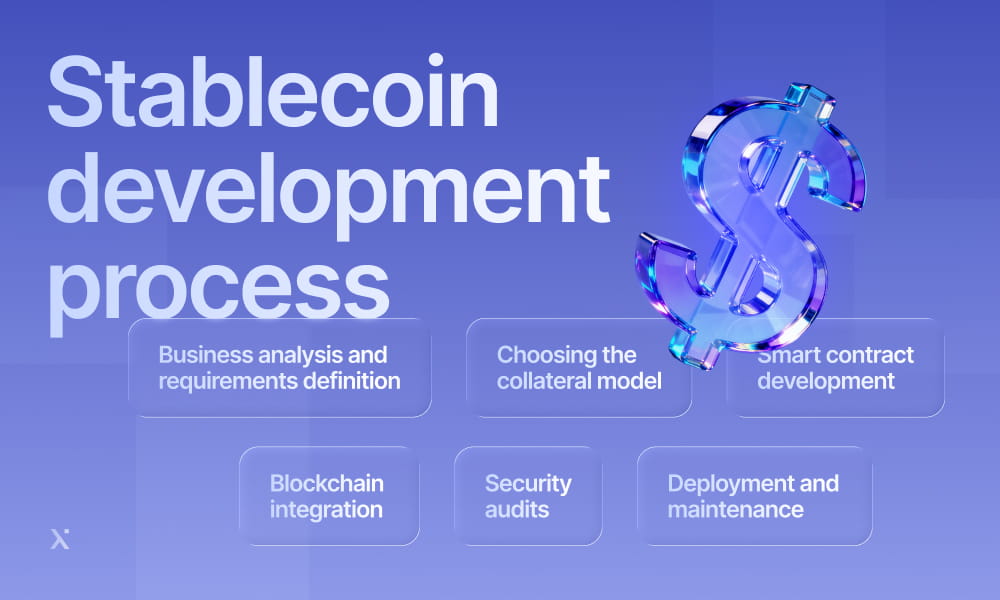
It usually starts with figuring out what you’re actually building. Not just “a stablecoin,” but the model behind it. What backs it, how it holds the peg, and how users enter and exit the system. This part shapes everything that follows, so rushing through it tends to create problems later.
Once the model is clear, the focus shifts to implementation. Smart contracts define how tokens are issued, redeemed, and managed. At the same time, the backend and integrations are set up to handle things like price feeds, wallets, and external services. Nothing here lives in isolation; everything has to connect cleanly.
After that comes testing. This is where edge cases show up. How the system behaves under load, what happens when prices move fast, and how it reacts to unusual inputs. Audits are part of this stage as well. Skipping them is one of the fastest ways to introduce risk.
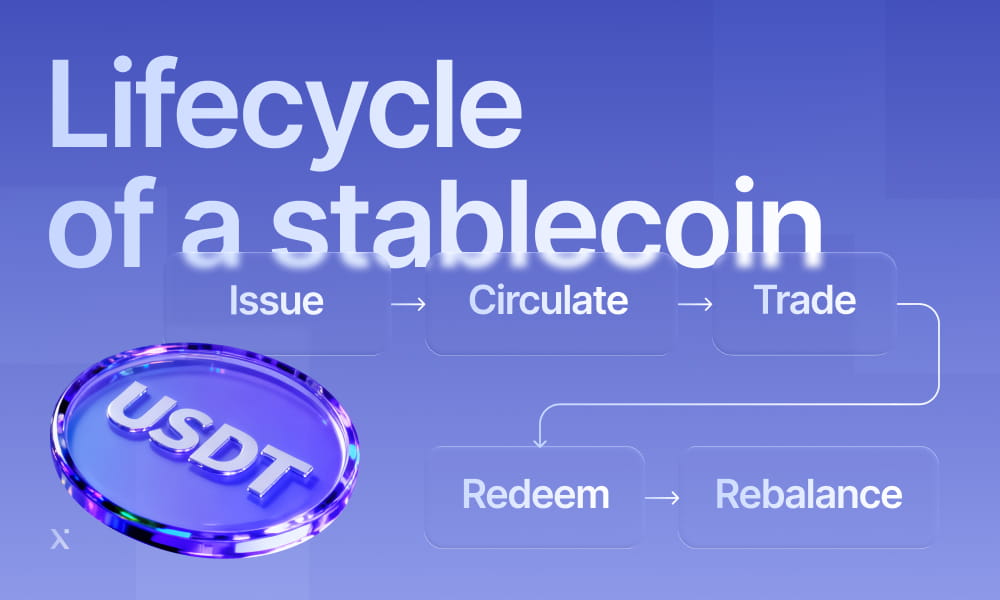
Only then does the project move to launch. Even at that point, the work is not done. A stablecoin requires ongoing monitoring, updates, and sometimes adjustments to remain stable over time.
Typical timeline
| Stage | What happens | Timeline |
| Discovery | Define model, requirements, and strategy | 1–2 weeks |
| Development | Build smart contracts and core logic | 3–6 weeks |
| Testing | QA, stress testing, security audit | 2–4 weeks |
| Launch | Deployment and initial rollout | ~1 week |

A Comprehensive Guide to Blockchain Application Development

Web3 Development: What It Takes to Build the Future
Where the budget goes
The cost of stablecoin development is not just about writing code. Most of the budget is shaped by how complex the system is, how secure it needs to be, and how many external pieces it has to connect to. Some projects stay relatively simple. Others require full infrastructure, compliance layers, and deep integrations. That’s where costs start to scale.
Top cost drivers
- Smart contracts: Core logic of issuance, redemption, and peg mechanics. The more complex the model, the higher the cost.
- Backend infrastructure: Handles data, APIs, user flows, and integrations with external systems.
- UI/UX: Not always critical for MVPs, but important for user-facing products.
- Security audits: One of the most important investments. Skipping this is where most risks come from.
- Integrations: Oracles, wallets, payment systems, and exchanges add complexity.
Cost breakdown
| Component | Estimated cost |
| Smart contracts | $10,000 – $50,000 |
| Backend | $5,000 – $30,000 |
| UI/UX | $5,000 – $20,000 |
| Audit | $8,000 – $40,000 |
| Integrations | $5,000 – $25,000 |
At this level, most teams focus on getting the core system right. Smart contracts and audits usually take the largest share, especially if the logic behind the peg is not trivial. Integrations can also add up quickly, particularly if you need price feeds, fiat on-ramps, or exchange listings from day one.

Web3 Development Cost: Breaking Down What Really Drives the Price

Blockchain Development Cost in 2026: What Goes Into the Price Tag
Total project cost
| Project type | Cost |
| MVP | $25,000 – $60,000 |
| Mid-level | $60,000 – $150,000 |
| Enterprise | $150,000+ |
The difference between these tiers is typically one of scale, not just functionality. An MVP might cover basic release and translation features. A mid-tier product adds integrations and an improved user interface. Enterprise-level systems include compliance levels, monitoring tools, and higher security standards.
One thing teams often underestimate is how quickly costs grow outside the initial build. It’s not the first version that gets expensive; it’s everything that comes after. Once the stablecoin is live, you need monitoring, updates, liquidity support, and sometimes even adjustments to the model itself.
In practice, the biggest variable is not the code itself, but everything around it. Security, integrations, and how the system is expected to behave under load tend to define the final number.

Cryptocurrency Exchange Development Cost: Key Factors & Estimates

Planning Web3 App Development Cost: Team, Timeline, And Hidden Expenses
How the blockchain choice affects the cost
The blockchain you choose has a direct impact on both development and long-term costs. It’s not just about fees. Different networks come with different ecosystems, tooling, performance, and limitations. All of that affects how much work goes into building and maintaining your stablecoin.
Some teams default to Ethereum because of its maturity and security track record. Others choose chains like Polygon or BNB Chain to reduce transaction costs and improve speed. There’s no universal answer here. It depends on what you’re optimizing for.
From a development perspective, this is where experienced blockchain development services make a difference. Choosing the wrong chain early can lead to higher costs later, especially if migration or re-architecture is needed.
Blockchain comparison
| Blockchain | Fees | Speed | Ecosystem | Cost impact |
| Ethereum | High | Medium | Very strong | Higher development and operational costs |
| BNB Chain | Low | High | Mature | Lower fees, faster deployment |
| Polygon | Low | High | Growing | Cost-efficient with Ethereum compatibility |
| Solana | Very low | Very high | Expanding | Lower fees, but more complex development |
Ethereum gives you reliability and a mature ecosystem, but it comes at a price. High gas fees can become a problem as usage grows. Chains like Polygon or BNB Chain offer a cheaper alternative, which works well for products with frequent transactions.
Solana stands out with its speed and low fees, but it may require more specialized development and testing. That can shift costs from operations to development.
There’s always a balance to find when picking a blockchain. Cheaper networks save on fees, but can fall short on ecosystem support. More mature ones offer stability and liquidity but cost more to run. Most teams end up choosing what makes sense for their product, not just what’s cheaper upfront.

Blockchain Game Development: Budgeting for Success in 2026

From Code to Confidence: Inside Smart Contract Audit Pricing
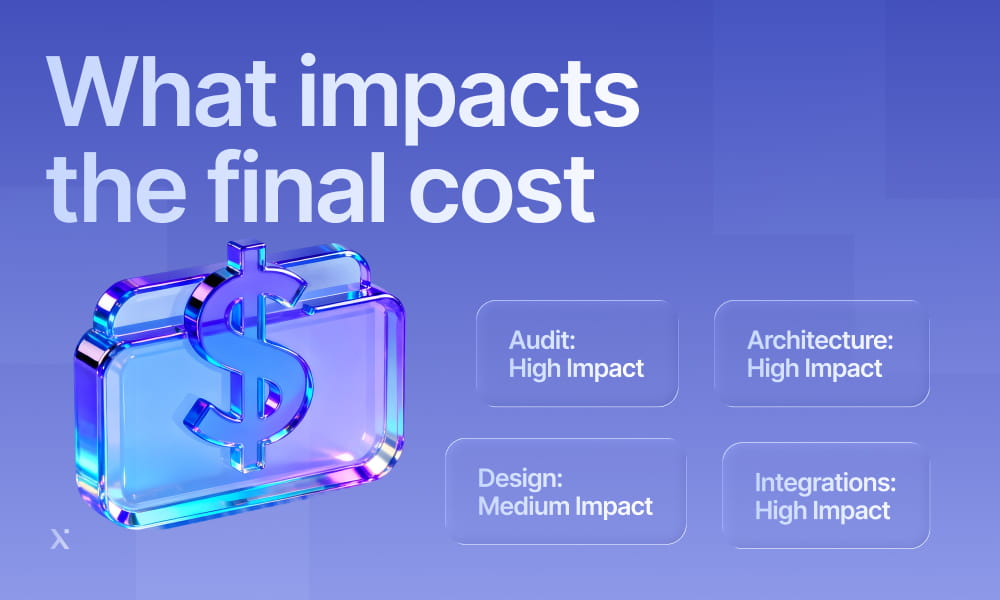
What actually impacts the final cost
By the time you get to budgeting, it becomes clear that there’s no fixed price for stablecoin development. Two projects with the same core idea can end up costing very different amounts. It all comes down to how the system is designed and what it needs to handle in production.
Some factors are obvious, like security or integrations. Others only show up later, when the product starts scaling or dealing with real users.
Key factors that influence the cost of stablecoin development
- Security requirements: The more value your system holds, the higher the expectations for audits, testing, and protection against exploits.
- Scalability needs: Handling a few transactions is one thing. Handling thousands per second is another. Infrastructure and architecture need to support that.
- Regulatory compliance: If your stablecoin interacts with fiat or operates in regulated markets, legal and compliance layers can significantly increase costs.
- Ongoing maintenance: Stablecoins are not “build once and forget.” Monitoring, updates, and support are part of the long-term budget.
In reality, most of the budget goes into security and architecture. That’s where things get complex, and where mistakes can be expensive. Integrations can also add up fast, especially if your product needs to connect to multiple services or chains.
Design usually takes a smaller share of the budget, but it still matters. For user-facing products, a smoother interface makes a real difference and helps with adoption over time.
Crypto Payment Gateway: Costs, Benefits, Implementation

Complete Guide to Web3 Wallet Development and Its Costs
Why choose PixelPlex for stablecoin development
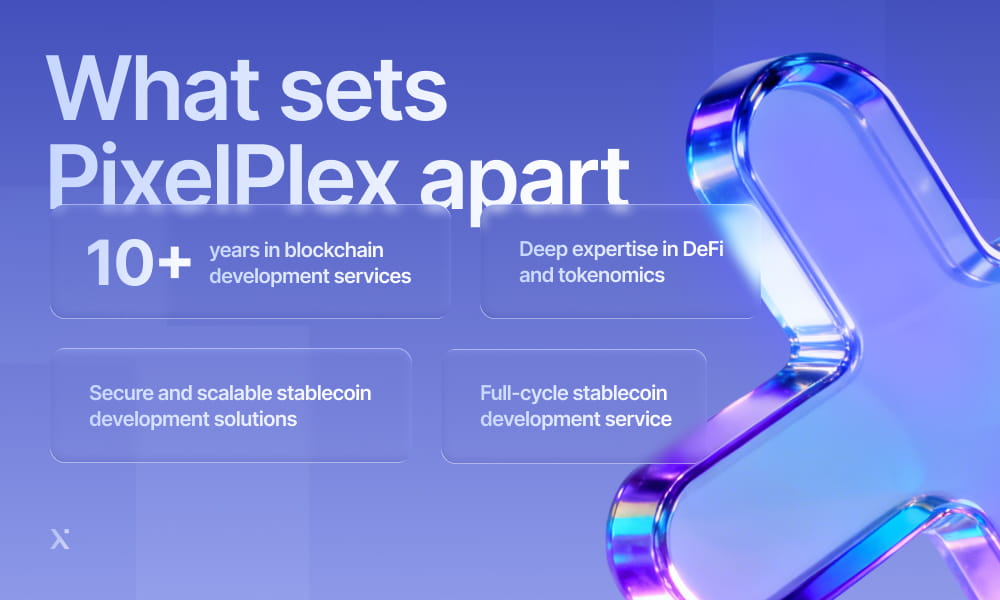
Building a stablecoin is not just a technical task. It’s a mix of engineering, financial logic, and risk management. You need a team that understands all three and knows how they interact in real-world conditions.
PixelPlex brings that experience into every project. We don’t just deliver code, we help design systems that hold up under pressure and scale over time. Our expertise in cryptocurrency development allows us to approach stablecoins not as isolated products but as part of a broader financial ecosystem.
What we deliver
- Custom stablecoin architecture: Designed around your business model and technical requirements.
- Smart contract development and audits: Secure, tested, and ready for production.
- Integrations with payment systems and exchanges: So your stablecoin works in real-world scenarios from day one.
- Post-launch support: Monitoring, updates, and ongoing improvements as your product grows.

Top Full-Service Web3 Development Companies 2026

Top 10 Blockchain Development Companies in 2026
Conclusion
Building a stablecoin always looks simpler from the outside than it actually is. Once you get into the process, it becomes clear that you’re not just launching a token, you’re designing a system that has to stay stable in different market conditions, handle real users, and hold up under pressure.
The final cost reflects that. It’s shaped not only by development, but by decisions around collateral, security, integrations, and long-term support. Cutting corners in any of these areas usually leads to bigger problems later, whether it’s technical issues, loss of trust, or difficulty scaling.
This is where working with the right team matters. With experienced stablecoin development services, you can avoid common pitfalls early, choose the right model, and build a system that is not only functional at launch but sustainable over time.
At the end of the day, it isn’t just about launching another stablecoin — it’s about building something that actually holds its ground when the market gets shaky.
FAQ
It depends on your goals and constraints. If you need simplicity and trust, fiat-backed models work well. If decentralization is a priority, crypto-backed options make more sense. A solid stablecoin development guide usually starts with aligning the model to your business case, not the other way around.
In many cases, yes. Especially if your stablecoin is backed by fiat or operates in regulated markets. Requirements vary by jurisdiction, so legal planning should be part of the early stages of any stablecoin development service.
It depends on how it’s designed. Some systems use upgradeable smart contracts, while others are immutable. Upgradability adds flexibility but also introduces additional security considerations.
Liquidity usually comes from exchanges, DeFi protocols, and market makers. Without enough liquidity, it becomes harder to maintain the peg. This is why many stablecoin development solutions include integrations with trading platforms and liquidity providers.
Yes, multi-chain stablecoins are common. However, they require additional infrastructure like bridges and synchronization mechanisms. This increases both development complexity and maintenance costs.
Oracles are the bridge that brings real-world data, like asset prices, into the blockchain. They’re the backbone of crypto-backed and algorithmic models, but they have to be rock-solid; if the oracle design is weak, you’re looking at skewed pricing and a system that’s dangerously unstable.
It really depends. Some stablecoins take off almost overnight if they’re plugged into an ecosystem people already use. Others need more time to build up liquidity and earn the community’s trust. Usually, real adoption comes down to three things: solid partnerships, practical use cases, and the right incentives to get users on board.
Yes. Revenue can come from transaction fees, reserve management, lending, or integrations with DeFi. The exact model depends on how the stablecoin is designed and used.