
Cryptocurrency wasn’t built with regulation in mind. That was part of the appeal early on. Teams moved quickly, chose jurisdictions on the go, and dealt with legal questions later. It worked when the market was smaller and regulators were still catching up.
The situation has changed. Governments are no longer watching from the sidelines. In the US, legislators are finally structuring stablecoins and market regulations. In Europe, the MiCA law is already forcing companies to rethink how they launch and operate. At the same time, requirements like AML, KYC, and the Travel Rule are becoming part of the daily operations of exchanges, wallets, and any business dealing with digital assets.
If you’re building in crypto today, regulation is not something you figure out later, especially when working with blockchain development services that need to meet real compliance requirements from day one. It shapes your product from day one — where you launch, how your flows are designed, and who you’re even allowed to work with.
To get a clear picture, it helps to step back and examine how different regions treat crypto, what compliance actually looks like in practice, and which jurisdictions make sense for your goals.

Crypto Compliance: Key Regulations and Consequences of Non-Compliance

The State of Crypto Regulations and Laws in 2026
What crypto regulation covers
When people talk about “crypto regulation,” they usually mean one thing. In reality, it’s a mix of several legal areas that affect how a product is built, launched, and operated. Depending on your model, you may deal with all of them at once, especially when launching an early-stage product through MVP development.
In real terms, regulation is about how crypto actually works in the market, how assets are issued, how they move, and how they’re stored. Whether you’re running an exchange, launching a token, or working on altcoin development, you’re dealing with it.
| Area | What it covers | Why it matters |
| Licensing | Registration or authorization to provide crypto-related services | Defines whether a company can legally operate in a target market |
| Taxation | Capital gains, income, transaction reporting, and asset classification for tax purposes | Affects users, businesses, reporting duties, and overall profitability |
| AML/CFT | Transaction monitoring, suspicious activity reporting, sanctions screening, and financial crime controls | Helps prevent money laundering, terrorist financing, and interaction with sanctioned entities |
| KYC | User identity verification, document checks, PEP screening, and risk scoring | Required for onboarding users in most regulated crypto services |
| Stablecoins | Issuance rules, reserve backing, audits, redemption rights, and issuer obligations | Ensures stablecoins are properly backed, transparent, and redeemable |
| Asset classification | Treatment of tokens as securities, commodities, payment tokens, utility tokens, or other asset types | Determines which regulator applies and what registration, disclosure, and marketing rules must be followed |
| Consumer protection | Risk disclosures, marketing restrictions, safeguards for client funds, and transparency requirements | Reduces fraud, misleading claims, and platform-related user losses |
| Custody and disclosures | Storage of client assets, segregation of funds, security controls, audit trails, and risk policies | Protects user funds and defines how platforms must manage assets they hold on behalf of clients |
Each of these areas comes with its own requirements, regulators, and risks. And in most cases, they overlap.
Next, we’ll look at how this plays out in practice, starting with the United States, where multiple agencies share control and the rules are still evolving.

How to Build a Social App MVP That Users Actually Come Back To

How to Approach SaaS MVP Development Without Wasting Time or Budget
Crypto regulation in the United States
The US regulatory approach has historically been fragmented. Unlike the EU, which fully adopted MiCA and created a unified regulatory system, the US didn’t start from scratch. Regulators simply applied existing financial rules and divided oversight among various agencies. This is why, for many years, everything seemed inconsistent, which is why many companies rely on blockchain consulting to navigate regulatory uncertainty.
Now it’s getting a bit more structured. There’s actual movement around stablecoins, and token classification is starting to make more sense. But it’s still not one system you can rely on. You’re dealing with federal regulators and state rules at the same time, which keeps things more complicated than they probably need to be.
How the current framework evolved
Rather than introducing a dedicated crypto framework, the US extended existing financial regulations to digital assets over time — shaping the system we see today.
| Year | Development |
| 2013 | FinCEN applies the Bank Secrecy Act to virtual currency activity |
| 2014 | IRS defines crypto as property for tax purposes |
| 2015 | New York introduces BitLicense |
| 2016–2017 | CFTC regulates crypto derivatives, SEC classifies tokens as securities (DAO report) |
| 2019 | FinCEN reinforces AML obligations for crypto service providers |
| 2020 | Anti-Money Laundering Act expands crypto compliance requirements |
| 2022 | Responsible Financial Innovation Act introduced |
| 2023 | FIT21 and stablecoin frameworks proposed |
| July 2025 | GENIUS Act signed into law |
| March 2026 | SEC and CFTC issue updated token classification guidance |
This progression says a lot. What used to depend on how regulators interpreted the rules is now being replaced by more formal and predictable frameworks.
Stablecoins as a turning point
One of the most significant developments in US cryptocurrency regulation is the introduction of a formal framework for stablecoins through the GENIUS Act of 2025. Another change is a tiered regulatory model, where oversight depends on the issuer’s scale and structure — federal for some, regional for others. This is the first comprehensive federal law focused specifically on digital assets, offering vital structural clarity for an IEO development company while signaling a broader move toward formalizing crypto markets.

The Real Cost of Stablecoin Development: What You Pay For and Why

Introduction to Stablecoins. Use Cases and Examples
Token classification: moving beyond the “security vs. commodity” debate
For years, one of the biggest sources of uncertainty in the US was how digital assets should be classified. The traditional split between securities (SEC) and commodities (CFTC) did not always reflect how crypto assets function in practice.
In March 2026, the SEC and CFTC introduced updated guidance that provides a more structured classification approach. Based on the research and recent reporting, this framework introduces a broader token taxonomy, including:
- Digital commodities
- Digital collectibles
- Payment tokens
- Digital tools
- Digital securities
Only some of these assets are treated as securities. For many projects, especially those focused on utility or infrastructure, this makes the legal side more predictable.
Comparing agency roles in practice
Although each regulatory body has a specific role, in reality, its responsibilities often overlap. This creates additional complexity for companies working across different product categories, including cryptocurrency development. The table below shows how these agencies differ in their focus and oversight methods.
SEC vs. CFTC vs. FinCEN vs. IRS
| Aspect | SEC | CFTC | FinCEN | IRS |
| Primary focus | Investor protection | Market integrity | Financial crime prevention | Tax compliance |
| Asset type | Securities | Commodities | All crypto transactions | All crypto assets |
| Key requirement | Registration and disclosure | Trading oversight | AML/KYC compliance | Reporting and taxation |
| Applies to | Token issuers, platforms | Exchanges, derivatives | VASPs, exchanges | Individuals and businesses |
This is consistent with how US regulators divide their roles, focusing on markets, compliance, and taxation separately.

Machine Learning in Anti-Money Laundering: Benefits, Limitations, and Applications

Blockchain and KYC: Expert Interview on Navigating Security and Compliance Challenges
US state-level comparison
Another defining feature of the US system is the role of individual states. While federal agencies set general rules, states can establish their own licensing and operating requirements. This creates a fragmented environment in which regulatory burdens can vary significantly by location. To illustrate this, it’s helpful to compare the approaches of different states to cryptocurrencies.
| State | Regulatory approach | Business impact |
| New York | Highly restrictive (BitLicense) | High compliance cost, limited flexibility |
| Wyoming | Crypto-friendly | Dedicated legal framework for blockchain businesses |
| Texas | Moderate | Growing ecosystem with relatively balanced regulation |
New York takes a strict approach: companies need a BitLicense and must meet high compliance standards. Wyoming has gone in the opposite direction, creating a more welcoming environment for blockchain projects. Texas falls in the middle, with fewer restrictions and increasing institutional interest.
Key takeaways for crypto companies
The US is no longer a regulatory gray area, but the market remains fragmented. Companies need to navigate the following areas:
- Multiple federal regulators
- Overlapping legal definitions
- State-level licensing requirements
- Evolving legislation
At the same time, recent developments point to a shift toward greater clarity. Stablecoin regulation is now clearly defined, token classification is becoming more structured, and the overall direction is shifting away from enforcement-based approaches.
For businesses, this means one thing: operating in the US is possible, but it requires a clear compliance strategy from the start.

Code, Capital, and Compliance: A Deep Dive into Canton Network Smart Contract Development

How to Select The Best Blockchain Platform for Your Project
Key US crypto laws and bills
The US didn’t move toward a single crypto framework overnight. What’s happening now is the result of several parallel efforts, some already signed into law, others still going through Congress. Together, they show where regulation is heading: clearer rules around stablecoins, better-defined market structure, and a more explicit stance on CBDCs.
To make sense of it, it helps to separate what is already law from what is still proposed.
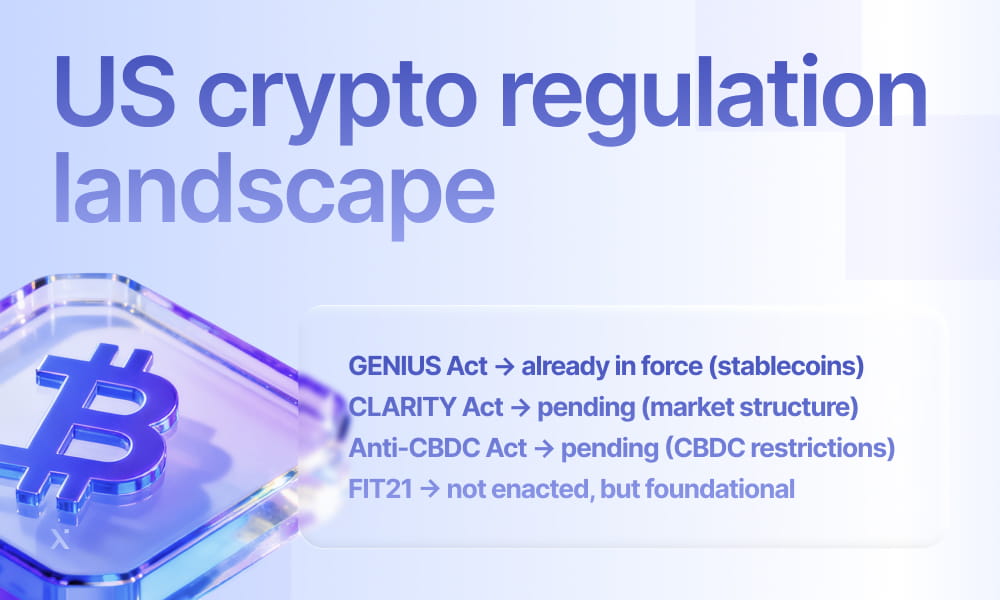
GENIUS Act (already law)
The GENIUS Act is the most important milestone so far. It was signed into law in July 2025 and became the first comprehensive federal legislation focused on crypto, specifically stablecoins.
The law introduces a clear framework for payment stablecoins, including:
- 1:1 reserve backing with liquid assets
- Mandatory disclosures and audits
- AML and sanctions compliance
- Defined categories of approved issuers
This is a major shift. Before this, stablecoins were operating in a gray zone. Now there’s a formal structure that banks and fintech companies can work within.
CLARITY Act (passed House, pending Senate)
The CLARITY Act focuses on market structure. It aims to define what digital assets are and how they should be regulated. The Act:
- Splits oversight between the SEC and CFTC
- Introduces categories like digital commodities and investment contract assets
- Sets registration rules for exchanges, brokers, and dealers
The bill passed the House in 2025 but is still awaiting Senate approval, so it is not law yet.
If adopted, it would address one of the biggest issues in the US market, unclear jurisdiction between regulators.
Anti-CBDC Surveillance State Act (passed House, pending)
This bill takes a different angle. Instead of regulating crypto markets, it focuses on what the government should not do.
The Anti-CBDC Surveillance State Act would:
- Prohibit the Federal Reserve from issuing a retail central bank digital currency.
- Limit direct financial interaction between the Fed and individuals.
It passed the House in 2025 and is now under consideration in the Senate.
The idea behind it is to prevent government-controlled digital money and reinforce a preference for private-sector solutions like stablecoins.
FIT21 (passed House, not enacted)
The Financial Innovation and Technology for the 21st Century Act (FIT21) was an earlier attempt to bring structure to the market.
It:
- Proposed a framework for digital asset regulation
- Clarified the roles of the SEC and CFTC
- Aimed to reduce regulatory overlap
It passed the House in 2024 but did not become law.
Much of its logic later carried over into the CLARITY Act, which is effectively its updated version.
Stablecoin-related proposals (multiple bills)
Before the GENIUS Act was finalized, several stablecoin bills were proposed, including:
- STABLE Act
- Lummis-Gillibrand Payment Stablecoin Act
These proposals shaped the final framework by introducing ideas like:
- Strict reserve requirements
- Federal vs. state supervision models
- Consumer protection rules
While not all of them became law, they influenced the direction of US policy and helped define the structure that exists today.
Right now, the US regulatory framework looks like this. What stands out is that regulation is no longer theoretical. The US is moving toward a defined system, but it’s still being built in parts rather than introduced as a single framework. For businesses, that means one thing: you’re operating in a market where the direction is clear, but the final structure is still taking shape.
Global crypto regulation overview
Crypto regulation looks very different depending on the country. Some have introduced full licensing frameworks and support innovation. Others still operate in a gray area or apply partial restrictions, while a smaller group has gone as far as banning crypto altogether.
There’s a reason for this variation. Each country shapes its approach based on its priorities, whether that’s financial stability, investor protection, or supporting the market.
A useful reference point is the global tracker, which compares jurisdictions across legal status, taxation, AML/CFT, licensing, and consumer protection. It shows how fragmented the landscape still is: out of 75 jurisdictions, crypto is legal in 45, partially restricted in 20, and generally banned in 10.
Crypto regulation by country
Instead of listing all jurisdictions, it makes more sense to focus on the markets that matter most for crypto businesses.
| Country/region | Approach | What it means in practice |
| United States | Legal, fragmented | Multiple regulators, evolving federal framework, strong enforcement |
| European Union | Legal, unified (MiCA) | Single regulatory regime across 27 countries |
| United Kingdom | Legal, developing | FCA-led framework with stricter controls |
| Switzerland | Legal, structured | Clear DLT legislation and a strong tokenization ecosystem |
| Singapore | Legal, tightly controlled | Strict MAS licensing, focus on risk management |
| UAE | Legal, pro-innovation | Dedicated crypto regulators (VARA, ADGM) |
| Japan | Legal, strict | Strong consumer protection and licensing rules |
| Hong Kong | Legal, regulated | Licensed hub for exchanges and institutional players |
| Canada | Legal, regulated | Exchange registration and AML compliance required |
| China | General ban | Trading and mining are prohibited, focus on CBDC |
| El Salvador | Legal, Bitcoin-centric | Legal tender status, limited institutional maturity |
This aligns with the broader view described in, where countries range from innovation-driven frameworks to restrictive policies.
Legal, partial ban, and general ban jurisdictions
It’s not as simple as legal or not. You can have a market where trading is allowed, but banking doesn’t work. Or one where exchanges are permitted, but only under strict rules and with restrictions for retail users. That’s why most analyses divide jurisdictions into three categories.
| Status | Meaning | Examples |
| Legal | Crypto allowed with licensing, AML, and tax requirements | US, EU, UK, Switzerland, Singapore, UAE |
| Partial ban | Certain activities are restricted (banking, payments, mining) | Varies by country and use case |
| General ban | Broad prohibition of crypto activity | China, Algeria, Morocco, Bangladesh, Nepal, Egypt, Pakistan |
This classification is broadly in line with global regulatory trackers such as the Atlantic Council and Blockspot.
In practice, the situation is more complex. Some markets are open in theory but difficult to operate in, while others are stricter but more predictable. So it’s not really about legality. It’s about whether you can build and run your product there without hitting roadblocks at every step.

Top Full-Service Web3 Development Companies 2026

Top 10 Blockchain Development Companies in 2026
Most crypto-friendly countries
“Crypto-friendly” is often reduced to tax benefits or light regulation. In reality, that’s not what makes a jurisdiction attractive for serious businesses.
Three factors matter most:
- Transparency of regulation
- Workable tax treatment
- Access to financial infrastructure
In practice, strong jurisdictions combine these with consistent enforcement and a developed ecosystem.
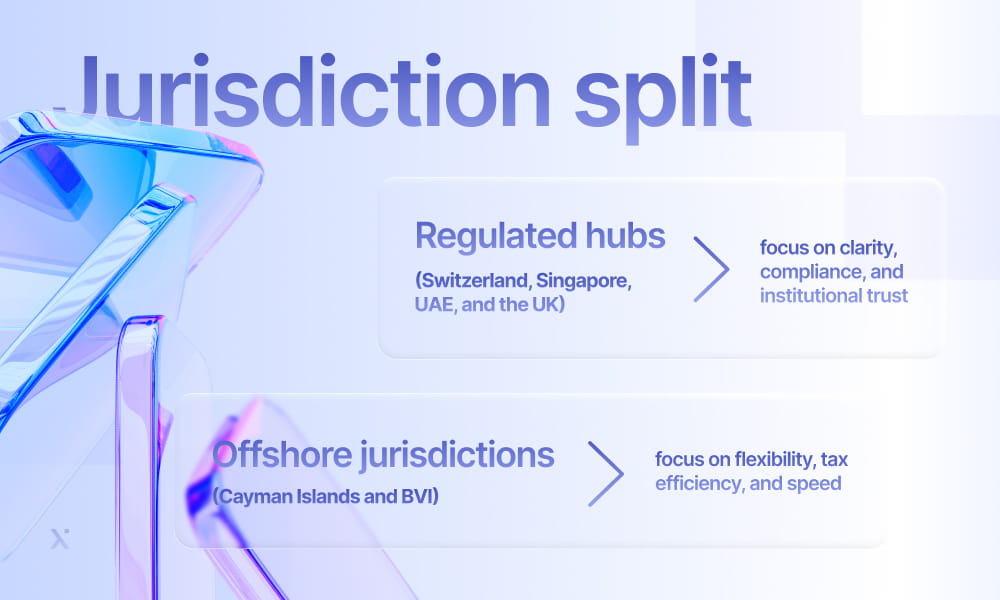
Most attractive jurisdictions for crypto businesses
| Jurisdiction | Why it stands out | Key strength |
| Switzerland | DLT law, regulatory clarity | Strong legal framework |
| Singapore | MAS licensing, strict oversight | Institutional trust |
| UAE | VARA and ADGM frameworks | Fast and structured market entry |
| Hong Kong | Licensed exchange hub | Access to Asian markets |
| Germany | MiCA-aligned regulation | EU legal certainty |
| United Kingdom | Expanding regulatory regime | Mature financial ecosystem |
| Cayman Islands | Offshore flexibility | Tax efficiency |
| British Virgin Islands | Token issuance hub | Simple corporate setup |
| Bahamas | Early crypto legislation | Clear exchange regulation |
This list is consistent with rankings that highlight both regulated hubs and offshore jurisdictions.
Strictest crypto jurisdictions
At the other end are countries that take a restrictive approach. In these markets, regulation is focused on control rather than innovation.
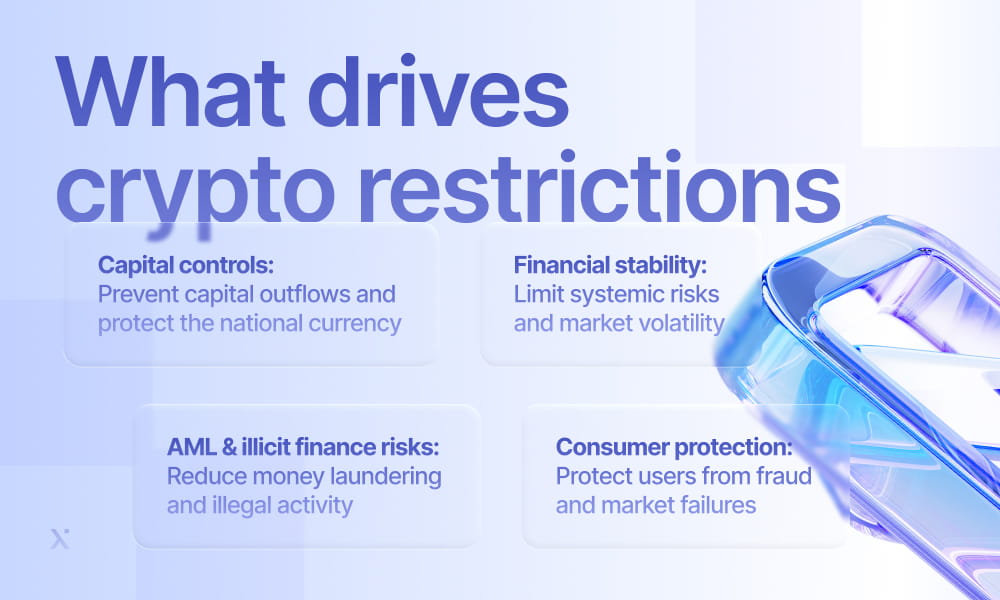
These concerns are consistently reflected in regulatory analyses and enforcement activity.
Strict crypto jurisdictions and restrictions
| Country | Level | Key restrictions |
| China | General ban | Trading, exchanges, and mining are prohibited |
| Algeria | General ban | Ownership and transactions are restricted |
| Morocco | General ban | Payments and exchange operations |
| Bangladesh | General ban | Trading and usage |
| Nepal | General ban | All crypto activity |
| Egypt | General ban | Transactions restricted |
| Pakistan | General ban | Exchange operations limited |
| Saudi Arabia | De facto ban | Banking and trading restrictions |
China is the clearest example of a full-scale restrictive approach. China’s approach is well documented in global regulatory reports. The government banned crypto trading and mining to control financial risk, limit capital outflows, and address the energy impact of large-scale mining. At the same time, it’s developing its own central bank digital currency (CBDC) to keep control within the state financial system.
What this means for businesses
These markets are rarely viable for crypto businesses. Even if there’s user demand, the legal and operational risks are too high. In most cases, companies run into the same barriers:
- No licensing frameworks
- Restricted banking access
- Enforcement risk
- Legal uncertainty
For most companies, these jurisdictions are excluded from expansion strategies.
MiCA and other EU crypto regulations
The European Union took a different approach from the United States. Instead of adapting existing laws, it introduced a dedicated regulatory system designed specifically for cryptoassets.
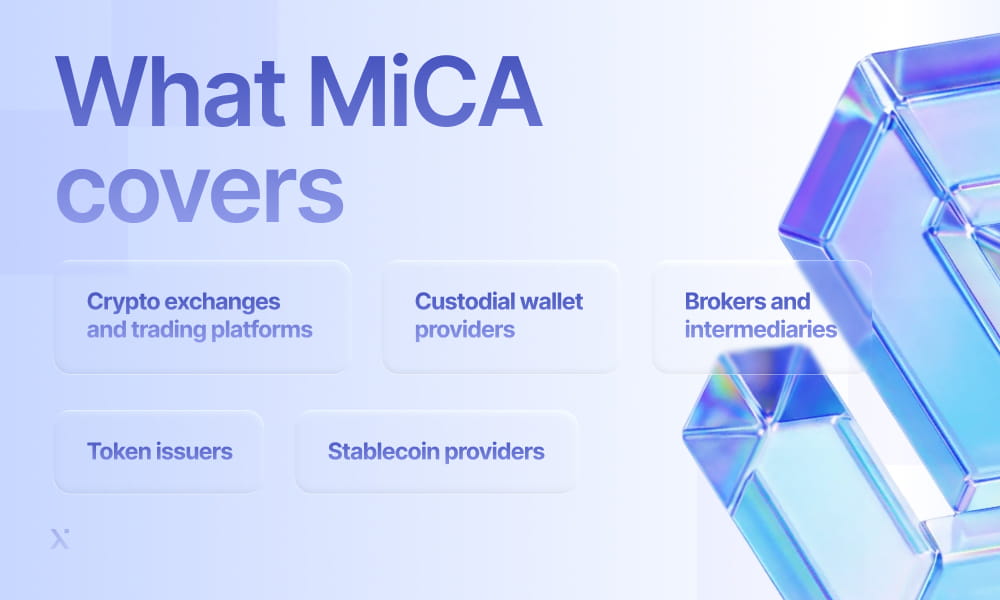
MiCA (Markets in Crypto-Assets) is the EU’s first attempt to create a consistent set of rules for crypto across all member states. It replaces the mix of national regulations with a single framework for issuing assets and providing crypto services.
The rollout happened in phases. Stablecoin rules took effect on June 30, 2024, setting new requirements for issuers and companies involved in stablecoin development services, followed by the broader framework for CASPs and issuers on December 30, 2024. Existing companies have until July 2026 to fully comply, depending on the jurisdiction.
To operate in the EU, companies need to obtain CASP authorization from a national regulator. Once approved, they can offer services across all member states under a single license — known as passporting.
Asset classification under MiCA
One of the key contributions of MiCA is the clear categorization of crypto assets.
- ARTs (Asset-Referenced Tokens): Tokens backed by multiple assets, such as fiat currencies, commodities, or other crypto assets.
- EMTs (Electronic Money Tokens): Stablecoins pegged to a single fiat currency (e.g., EUR-backed tokens).
- Other crypto-assets: Utility tokens and other digital assets that don’t fall into the first two categories.
Each category comes with its own regulatory requirements, especially for stablecoins, which face stricter rules around reserves and supervision.
MiCA obligations for crypto businesses
The table below summarizes the main requirements companies must meet under MiCA.
| Area | Requirement | What it means in practice |
| Authorization (CASP) | Mandatory licensing | Companies must obtain approval from a national regulator before operating |
| Passporting | EU-wide access | One license allows operation across all EU member states |
| White paper | Disclosure obligation | Issuers must publish detailed documentation about the asset, risks, and structure |
| Asset classification | ART / EMT / other | Regulatory treatment depends on the token type |
| Reserve requirements | Mandatory for stablecoins | Issuers must hold sufficient reserves and manage them properly |
| Consumer protection | Transparency and safeguards | Clear communication of risks and protection of client funds |
| Governance | Internal controls | Companies must implement risk management and compliance systems |
| AML/KYC | Mandatory compliance | Integration with EU AML frameworks and identity verification |
| Custody rules | Segregation of assets | Client funds must be separated from company funds |
| Transitional period | Phased implementation | Existing companies have time to comply until 2026 |
MiCA removes a major barrier that has existed in Europe for years: regulatory fragmentation, making it easier to scale Web3 development projects across the EU. Before MiCA, companies had to deal with different rules in each country. Now there is a single framework. At the same time, MiCA raises the bar for compliance. Licensing, reporting, and operational requirements are stricter, especially for stablecoins and custodial services.
For crypto businesses, the trade-off is clear: higher compliance costs but access to a unified market of 450+ million users. This makes the EU one of the most structured and increasingly attractive regions for long-term crypto operations.

MiCA Regulation Explained: New Framework for Regulating Crypto Assets

Tokenomics 101: From Crypto Token Types to Token Distribution Models
Crypto compliance: AML, KYC, and the travel rule
Crypto has moved beyond its anonymous roots. It now follows regulatory standards close to traditional banking, including AML and KYC in most markets.
At a high level, the difference is simple:
- KYC is about identifying who your user is.
- AML is about monitoring what the user does over time.
In practice, both are tightly connected and form the foundation of crypto compliance frameworks.
What AML and KYC look like in crypto
The KYC process is typically conducted during registration, when users provide personal information, documents, and, in some cases, biometric data. This allows platforms to verify identity and assess risks.
AML goes beyond registration. It includes monitoring transactions over time, identifying suspicious activity, and reporting it when necessary, including sanctions compliance checks and risk analysis.
KYT (Know Your Transaction) focuses specifically on transaction monitoring. It uses blockchain analytics to track fund flows, identify unusual patterns, and assign risk scores to wallets and transactions.
The Travel Rule and FATF requirements
One of the most important global standards is the Travel Rule, introduced under FATF Recommendation 16.
In simple terms, it requires crypto platforms to share user information when transferring funds between providers.
If a transaction exceeds a certain threshold (commonly $1,000 / €1,000, depending on jurisdiction):
- The sender’s identity must be collected.
- The recipient’s information must be shared with the receiving platform.
This effectively removes anonymous transfers between regulated entities and creates traceability across the ecosystem. FATF’s latest updates confirm that Travel Rule implementation remains a global priority, especially for Virtual Asset Service Providers (VASPs), including exchanges, custodians, and brokers.
What this means for VASPs
VASPs are expected to:
- Verify customer identities before allowing transactions.
- Monitor transactions in real time.
- Share sender/receiver data with other VASPs.
- Detect and report suspicious activity.
- Maintain compliance records for regulators.
In practice, this requires integrating compliance tools, blockchain analytics, and secure data-sharing mechanisms.
Common AML red flags in crypto
Most suspicious activity follows recognizable patterns. Compliance systems are designed to detect them early.
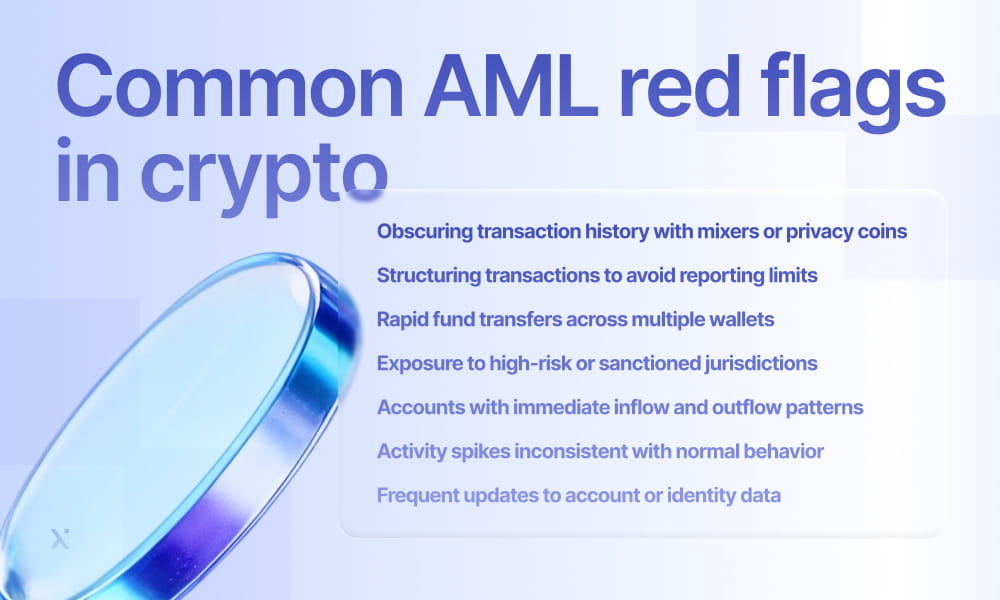
These signals don’t automatically mean fraud, but they trigger further investigation and, in some cases, regulatory reporting.
Risks of crypto regulation
Regulation makes the market more structured, but it also adds constraints. For crypto companies, compliance isn’t just a legal issue anymore — it affects how products are built, how long they take to launch, and how markets are approached. To manage the escalating costs of these requirements, many firms rely on offshore software development to efficiently scale their engineering teams. However, distributing talent across multiple jurisdictions introduces its own hurdles, meaning most of the challenges tend to fall into a few key areas.
| Risk | What it means | Impact on business | Real example |
| Higher compliance costs | Investment in legal, AML/KYC, reporting, and audits | Raises operational costs, especially for startups | SEC enforcement led to billions in penalties, including a $4.5B settlement with Terraform Labs |
| Slower product launches | Licensing, approvals, and compliance setup required before launch | Delays time-to-market | Telegram’s TON project was stopped by the SEC, forcing a shutdown after a $1.24B case |
| Limited market access | Products restricted by region or user type | Requires product redesign or geo-blocking | Kraken was forced to shut down its US staking service after regulatory action |
| Jurisdictional overlap | Multiple regulators with conflicting interpretations | Creates uncertainty and duplicated compliance work | SEC vs. CFTC classification disputes continue to affect how assets are treated (security vs. commodity) |
| Innovation constraints | Strict rules limit experimentation | Slows the development of new models (DeFi, tokenization) | SEC actions against token offerings and DeFi projects have reduced new launches in some segments |
| Enforcement uncertainty | Rules applied inconsistently or retroactively | Makes long-term planning harder | Ripple fined $125M for unregistered securities offering, despite ongoing disputes over asset classification |
At this stage, regulation isn’t just a legal layer. It influences what you can build, where you can launch, and how your product grows.

Artificial Intelligence Regulation: What Laws Do Countries Apply to This Tech?

What You Should Know About the True Cost of Building a Crypto Wallet Like MetaMask
Where crypto regulation is heading
Crypto regulation has moved past the reactive stage. It’s now influencing how the market develops. Going forward, the emphasis will be on stability and predictability, rather than constant response to new risks.
Clearer market structure in the US
The US is shifting from enforcement toward clearer rules. New legislation focuses on asset classification, oversight, and clarifying the roles of the SEC and CFTC.
Stricter oversight of stablecoins
Stablecoins are becoming a key focus for regulators. They’re no longer treated as experimental products, but as part of the broader financial system. As a result, rules around reserves, audits, and disclosures are getting stricter — and will likely tighten further as adoption grows.
Deeper implementation of the Travel Rule
The Travel Rule isn’t applied the same way everywhere yet, but that’s starting to change. Regulators are pushing for more consistent enforcement and better data sharing between platforms. As this progresses, it will become much harder to move funds anonymously between regulated services.
More MiCA-style frameworks globally
MiCA set a clear example. It’s likely that other regions will follow with similar frameworks, particularly where regulation is still inconsistent. That would make it easier for companies to operate across multiple markets without constantly adjusting to new rules.
Stronger consumer protection
Consumer protection is gaining priority. Regulators are tightening rules on marketing, risk disclosure, and the management of user funds to reduce fraud and improve safety.
The ongoing CBDC debate
CBDCs are still evolving. While approaches vary by country, they are expected to influence how digital assets are regulated and integrated into the financial system.
Growing institutional adoption
Institutional interest is growing, but it follows clarity. Banks and asset managers are stepping in where regulation is predictable, which is slowly turning crypto into a more structured market.
It’s clear where things are heading. Regulation will increase, but so will clarity. This means companies can no longer treat compliance as an afterthought; it must be built into the product from day one.

Future of AI: Unveiling Its Impact on Industries and Society

Digital Transformation Strategy: Best Practices
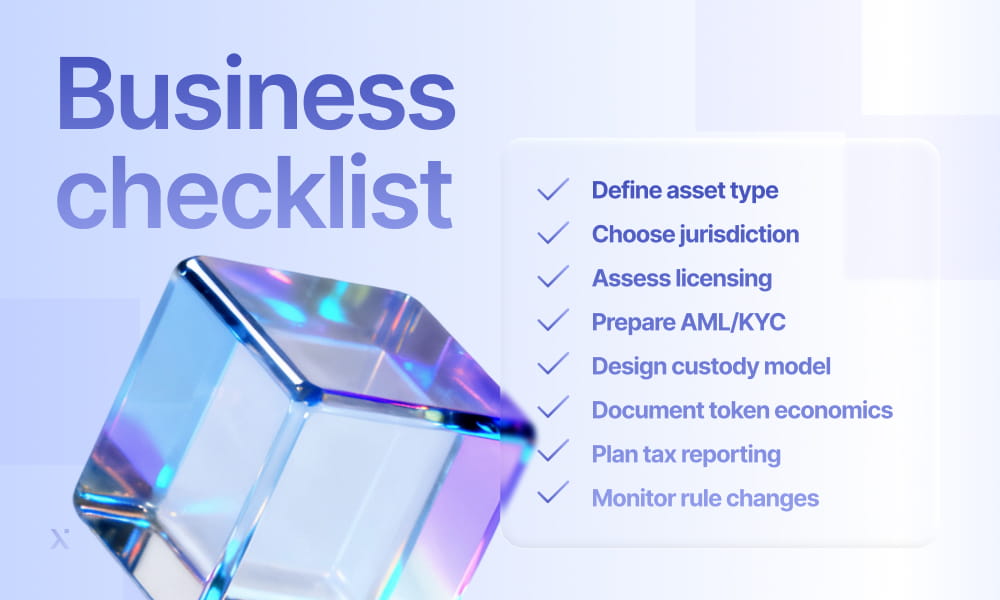
Business checklist for crypto startups
Regulation is now part of product development. The sooner it’s taken into account, the fewer problems will arise down the road. For crypto startups, most problems arise not from technology, but from non-compliance with regulatory requirements.

Web3 Development: What It Takes to Build the Future

Blockchain for Business: Beyond Cryptocurrency to Real-World Value
Conclusion
Crypto isn’t the wild west anymore, but it’s not fully mapped out either. The rules are there, just not in one place, and they don’t work the same way everywhere.
For teams building products, this changes the game. You can’t just pick a jurisdiction because it’s easy or move fast and deal with compliance later. You have to think ahead, where you’ll operate, how your product fits the rules, and whether you’ll be able to work with banks, partners, and regulators without friction.
Teams that factor this in early move faster and avoid rework. Regulation is no longer separate — it’s part of how the product operates.
FAQ
In the short term, this is possible. Compliance entails additional costs and complexity. But in the long term, clear regulations tend to attract institutional players and create a more stable environment for growth.
Yes, but not the way it used to be. You can still move fast, but you need to account for compliance from the beginning. Teams that ignore this usually end up slowing down later.
Not really. Non-custodial platforms might still have fewer requirements, but regulators are starting to go after the layers around them — frontends, APIs, operators. DeFi isn’t outside that anymore.
No. Most countries allow crypto, but regulation varies. Some require licensing, others restrict key activities, and a few ban it outright. The real difference is how easy it is to operate.
Both. It increases compliance costs but also provides clarity and EU-wide access under a single license. For many companies, that trade-off makes sense.
Users won’t notice much, but anonymity is reduced. Exchanges now share sender and receiver details for transfers between regulated platforms.