If you look at the numbers, the growth is wild. Reports show that the number of global crypto users has already crossed 560 million in 2024, and more than 650 in 2025. Among them, Trust Wallet stands as a titan with over 60 million downloads.
But here is the thing. Most people look at a successful app and think they can just copy-paste the code and strike it rich.
Actually, the reality is a bit more complicated than that. Building something that holds people’s money requires a mix of extreme security, smooth design, and a lot of technical expertise. At PixelPlex, our crypto wallet development team has spent years building these kinds of systems.
We have seen what works and what turns into a money pit. We created this guide to help you understand the real costs and steps involved, so you don’t go into this blind.
What makes Trust Wallet stand out compared to the others?
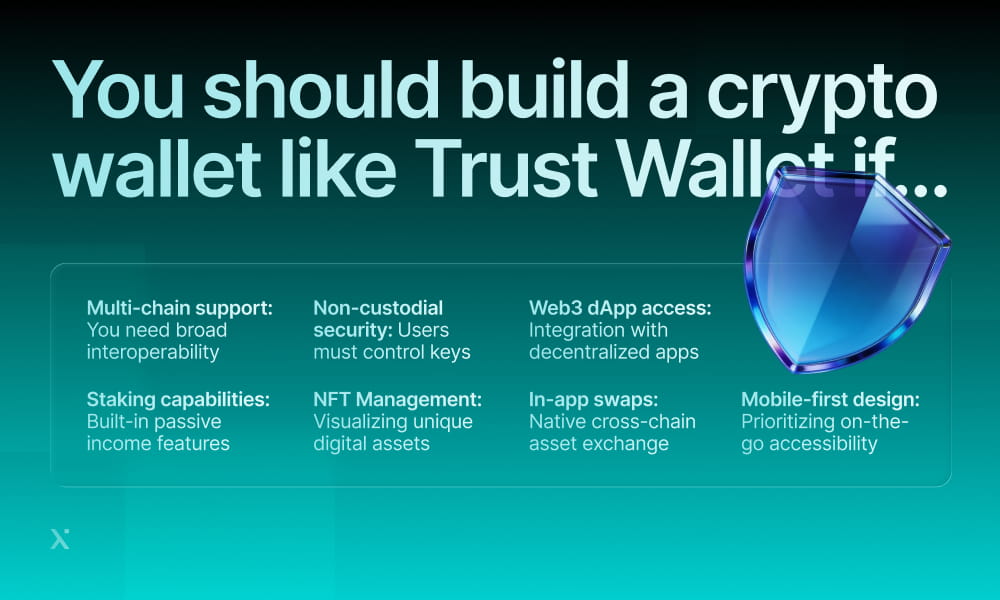
If you want to build a rival, you have to know what you are up against. Trust Wallet is not just another app on the store. It has specific traits that made it the go-to choice for millions.
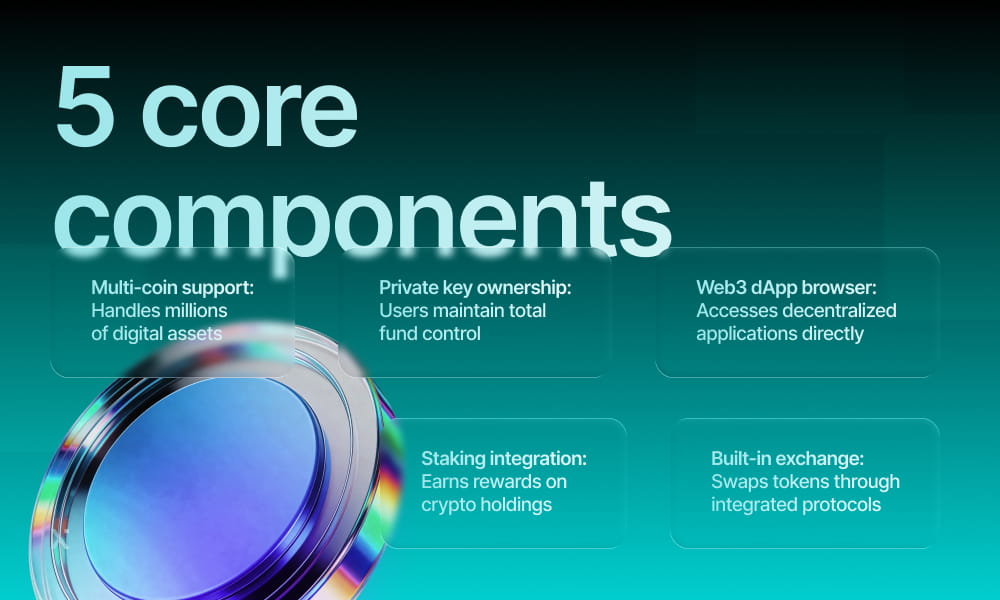
Total freedom with non-custodial storage
The biggest draw here is that the user is the only one who holds the keys. In a world where big exchanges can go bust overnight, people want control. A non-custodial setup means your servers never touch the private keys. This is a huge selling point but it adds layers of complexity to your crypto wallet development strategy. You have to ensure that if a user loses their phone, they have a way to recover their funds using a seed phrase, all while keeping the app completely decentralized.
Support for almost every chain out there
Most wallets start with just Bitcoin or Ethereum. In fact, many projects choose to route these primary assets through pre-built white label Bitcoin exchange software rather than constructing a multi-currency hub from scratch. Trust Wallet went the other way and decided to support basically everything. We are talking about dozens of different blockchains and millions of tokens. This is a massive technical challenge. Each chain has its own rules, its own way of handling transactions, and its own speed. To mimic this, you need a very flexible architecture that can handle new protocols without breaking the old ones.
A gateway to the decentralized web
It is not enough to just send and receive coins anymore. Users want to swap tokens, lend money, and buy NFTs without leaving the app. Trust Wallet includes a built-in browser for decentralized applications. This creates a smooth flow where the wallet acts as a digital passport. Integrating this kind of functionality requires a deep understanding of Web3 app development to make sure the connection between the wallet and the web is safe and fast.
| Feature | Trust Wallet approach | Typical basic wallet |
| Key control | User-controlled (Non-custodial) | Sometimes company-controlled |
| Chain support | Multi-chain (60+ blockchains) | Single or few chains |
| Extra tools | DApp browser & Staking | Simple Send/Receive |
| Privacy | No personal data required | Often requires email/phone |
Canton Network 2026’s DeFi Boom: Top Profitable Solutions to Build
Complete Guide to Web3 Wallet Development and Its Costs
Choosing the right tech stack for your project
If you choose wrong, you will spend your whole budget fixing bugs instead of adding features.
Tools for the user interface
The frontend is what people see and touch, and it needs to be fast and look professional.
Building with React Native
This is a popular choice because it allows you to use the same code for both iOS and Android. It saves time and money, which is great for startups. It feels almost like a native app and has a huge community behind it. Many teams prefer this for custom Web3 wallet development because it handles updates very well.
Going native with Swift
If you only care about the best possible performance on iPhones, Swift is the way to go. It is faster than cross-platform tools and gives you full access to all the latest Apple features. It costs more because you need a separate team for Android, but the quality is hard to beat.
Using Kotlin for Android
For a high-quality Android experience, Kotlin is the standard. It is modern, safe, and works perfectly with Google’s ecosystem. Similar to Swift, it ensures that your app won’t lag when the user is trying to sign a transaction quickly.
Flutter for beautiful designs
Google’s Flutter is another cross-platform option. It is famous for making apps look amazing. It uses its own rendering engine, so you have total control over every pixel. It is a solid choice if you want a very unique and “unusual” look for your wallet.
Ionic for web-first teams
Ionic is a bit different because it uses web technologies like HTML and CSS. It is the fastest way to get an MVP out the door. However, it might feel a bit slower than native apps once you start adding complex blockchain features.
Don’t just pick the trendiest tech. Think about your long-term goals. If you plan to scale fast to millions of users, investing in native development or high-performance frameworks like Flutter will save you from a total rewrite later on.
Web3 Smart Contract Development: Building the ‘Brain’ of Your Web3 Project
Zero-Leakage Vaults: Building High-Stakes Canton Network Wallets
The engine of the backend
While the frontend looks pretty, the backend does the big work like talking to the blockchain and tracking prices.
Node.js for speed
Most developers love Node.js because it is fast and uses JavaScript. It is great for handling many small tasks at once, like fetching price updates for hundreds of different tokens simultaneously.
Golang for high performance
Google created Go to be efficient and fast. It is perfect for the “heavy” parts of crypto wallet development where you need to process a lot of data quickly. Many blockchain nodes are actually written in Go, so it fits the ecosystem perfectly.
Python for data tasks
If you plan to add smart features or analytics, Python is excellent. It is easy to read and has tons of libraries. It might be a bit slower than Go, but it is great for building the “brains” of your app.
Rust for maximum security
Rust is becoming the gold standard in the crypto world. It is incredibly fast and prevents a lot of common coding mistakes that lead to security holes. If you are worried about hackers, Rust is your best friend.
Elixir for 100% uptime
Elixir is used by companies like Discord because it almost never crashes. For a financial app, this is huge. You don’t want your backend to go down right when a user is trying to move their funds during a market crash.
| Component | Recommended tech | Alternative tech | Why it matters |
| Mobile app | React Native | Swift / Kotlin | Speed vs Performance |
| API layer | Node.js | Golang | Ease of use vs Raw Power |
| Database | PostgreSQL | MongoDB | Data integrity |
| Cache | Redis | Memcached | Fast price updates |
| Blockchain interaction | Web3.js / Ethers.js | Custom RPC | Connecting to the chain |

The New Hunger Games for Hash: Why 2026 Bitcoin Mining Demands Volcanoes and Satellites
Blockchain Supply Chain Application Development and When It Fits
Smart features that make your wallet better
A basic wallet is boring. To win users, you need features that actually make their lives easier or help them earn money.
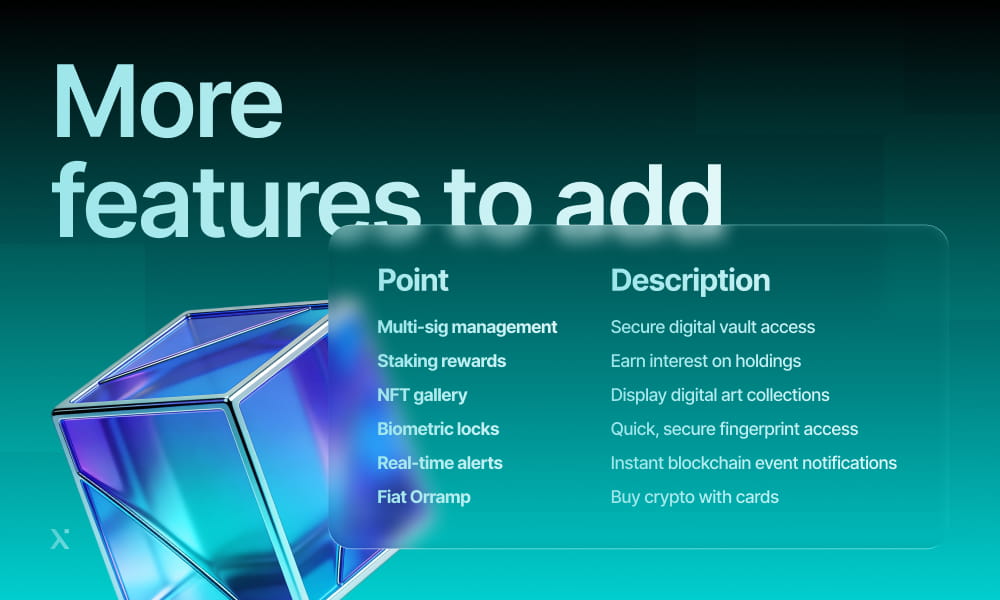
Managing multiple signatures
Security is a big deal, and multi-sig is like a digital vault that needs two or more keys to open. This is great for families or business partners who want to manage funds together. It makes the wallet much harder to hack because a thief would need to steal two different devices.
Earning rewards through staking
Why just hold coins when they can earn interest? Integrating staking directly into the app is a huge win. It allows users to lock up their coins and earn rewards without having to figure out complex third-party websites. This often involves DeFi development expertise to make the process safe and simple.
Showing off the NFT collection
NFTs are not just a fad anymore. People want a clean, pretty gallery where they can look at their digital art. Your wallet should be able to fetch metadata from various NFT marketplaces and display images or videos smoothly.
Biometric locks for quick access
Typing a long password every time you want to check your balance is annoying. FaceID and fingerprint scanning make the app feel modern and secure. It is a simple addition that massively improves the daily user experience.
Real-time push alerts
If someone sends you money, you want to know instantly. Implementing a reliable notification system that tracks blockchain events is harder than it sounds, but it is essential for keeping users engaged with the app.
Buying crypto with a credit card
Most people don’t have crypto yet. They have “real” money. Adding a fiat on-ramp allows users to buy coins using their bank card directly in the app. This usually requires a partnership with a payment processor and some solid crypto payment solutions integration.
Many wallets lose users because the transaction fees (gas) are confusing. If you can add a feature that suggests the best time to send a transaction when fees are low, your users will love you forever.
The Real Cost of Stablecoin Development: What You Pay For and Why

The Ultimate Guide to Web3 DAO Platform Development
Connecting to the outside world
In the broader landscape of multi-network blockchain solutions development, a wallet doesn’t live in a bubble. It needs to talk to a lot of other services to be useful. For example, you need price feeds from places like CoinGecko or CoinMarketCap so users know what their balance is worth in dollars.
You also need to connect to “nodes.” These are the servers that actually talk to the blockchains. Instead of running your own nodes (which is expensive and hard), most teams use services like Infura or Alchemy. On top of that, if you want to offer token swaps, you need to integrate with decentralized exchanges like Uniswap. This requires a lot of dApp development knowledge to ensure the swaps are executed at the best possible price.
The roadmap: 8 steps to a working wallet
You need a plan. Here is how our team usually handles the process.
Mapping out the details
First, we figure out exactly who the wallet is for. Is it for pros or beginners? What chains will it support? This is where blockchain consulting helps avoid making expensive mistakes early on.
Sketching the architecture
We decide how the app will talk to the backend and how the security layers will work. It is like drawing the blueprints for a house before you start laying bricks.
Designing the look and feel
Our designers create wireframes and then full-color mockups. We focus on making the “scary” crypto stuff feel friendly and easy to understand for regular people.
Writing the smart contracts
If the wallet has unique features like staking or multi-sig, we need to write code that lives on the blockchain. This code has to be perfect because you can’t easily change it once it is live.
Building the mobile app
This is where the frontend team turns the designs into a working app. They implement the screens, the logic, and the connection to the backend APIs.
Setting up the backend
The backend team builds the systems that track user balances, send notifications, and aggregate data from different blockchains.
Testing everything twice
We try to break the app in every way possible. We check for security holes, slow screens, and weird bugs. A security audit and risk management phase is non-negotiable here.
Releasing and growing
Finally, the app goes to the App Store and Google Play. But the work isn’t done. We listen to user feedback and start planning the next set of updates to keep the app fresh.
| Step | Goal | Deliverable |
| Discovery | Define goals | Project roadmap |
| Design | Visual style | UI/UX mockups |
| Development | Coding | Working beta |
| Audit | Safety check | Security report |
| Launch | Go live | App store presence |
Breaking down the cost of crypto wallet development
Money is usually the biggest question. The cost varies wildly depending on how much you want the app to do.
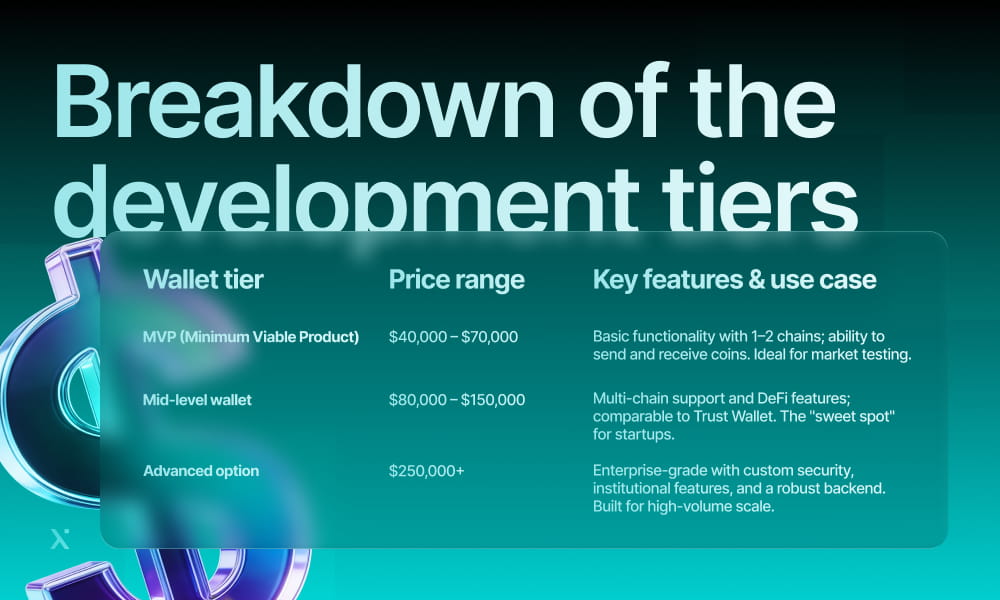
MVP
If you are looking for a basic MVP development version, you are likely looking at a range of $40,000 to $70,000. This gets you a working app with one or two chains and the ability to send and receive coins. It is great for testing the market.
Mid-level wallet
A mid-level wallet that feels more like Trust Wallet, with multi-chain support and some DeFi features, will likely cost between $80,000 and $150,000. This is the sweet spot for most startups.
Advanced option
For an enterprise-grade solution with every bell and whistle imaginable – including custom security layers, institutional-grade features, and a huge backend – the price can easily go over $250,000. This is a massive investment, but it builds a product that can handle millions of users and billions of dollars.
Coding is only part of the cost. You also need to budget for server hosting, security audits, marketing, and a support team to help users who get stuck.
Own or Rent a Mining Pool: What Fits Your Goals?
DApp Development: How It Works and What It Costs
Making your app a joy to use
A lot of crypto apps are “ugly” and hard to use. If you want to beat Trust Wallet, you have to be better at design.
One trick is to hide the complexity. Users just want to see their balance. Use big buttons, clear fonts, and helpful tooltips. Also, make the onboarding process fast. If a user has to wait ten minutes to set up the wallet, they will probably delete it.
Another thing is to provide clear feedback. If a transaction is pending, show a nice animation. If it fails, tell them why in plain English, not with a weird error code like “0x67”. If you want to add some high-tech features, you might even look into data science development to offer personalized insights to your users.
- Keep the home screen clean and simple.
- Use biometrics to speed up everything.
- Explain “Gas Fees” in a way a five-year-old would understand.
- Offer a dark mode (crypto people love it).
- Add a simple “Help” section with common questions.
Obstacles you will face along the way
There are some big hurdles you need to jump over.
Keeping the hackers away
If there is even a tiny hole in your security, someone will find it. You have to be obsessed with safety. This means using the best encryption and getting your code checked by outside experts.
Staying on the right side of the law
Laws around crypto change every week. Depending on where your users are, you might need to implement KYC (Know Your Customer) rules. Checking and understanding these financial software development regulations is a full-time job in itself.
Handling a sudden rush of users
If the market goes crazy and everyone opens your app at once, your servers need to stay up. Designing a system that can scale from 100 users to 100,000 in an hour is a major technical challenge.
Dealing with different chains
Every blockchain is a bit “weird” in its own way. Some have 5-second block times, others take 10 minutes. Some use accounts, others use UTXO models. Managing all these differences in a single application requires expert multi currency crypto wallet development services to prevent architectural headaches and ensure seamless cross-chain performance.
Making it work on every phone
There are thousands of different Android phones out there. Your app needs to look good and work perfectly on all of them, from the latest Samsung to a three-year-old budget phone.
Keeping the data accurate
Users hate it when their balance is wrong. You need a very reliable way to track transactions and prices. Sometimes you might need transaction monitoring software to keep an eye on things and ensure everything is running as it should.
| Challenge | Why it is hard | Solution |
| Security | Hackers never sleep | Frequent audits & Bug bounties |
| Regulation | Laws change fast | Legal consultants |
| Performance | Massive user spikes | Cloud-native architecture |
| UX | Crypto is confusing | Simple, human-centric design |
NFT Wallet Development Explained: Features, Process, and Pricing
MPC Wallet Development Cost: Pay Now or Pay After a Breach
Why PixelPlex is the partner you need
We have worked on everything from simple mobile apps and custom NFT wallet development to complex protocol-level engineering.
One of our proudest moments was the Echo Wallet. It is a 5-star mobile app that users actually love because it doesn’t feel like a boring financial tool.
If you are looking for something more niche, we developed the Qtum Wallet for both Android and iOS, ensuring the Qtum community had a secure place for their coins.
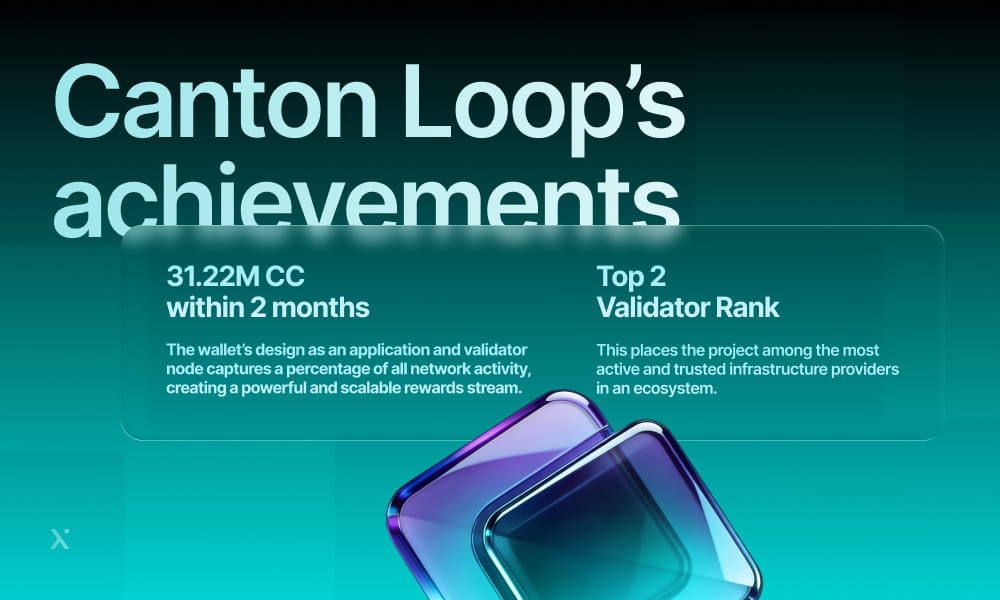
In the newer ecosystems, we have seen great success too. Canton Loop was the first self-custodial wallet for the Canton Network and it earned over 31 million Canton Coin in revenue.
Whether you want to start from scratch or use a white label crypto wallet development approach to get to market faster, we have the experience to make it happen. We have seen the pitfalls and we know the shortcuts.
If you are a small team, don’t try to build everything yourself. Use existing APIs for things like price feeds and node connections. Focus your budget on the things that make your wallet unique.
Wrapping it up
Building a wallet like Trust Wallet is a big mountain to climb, but the view from the top is worth it. It is an expensive journey, but if you do it right, you end up with a product that people use every single day.
The crypto world moves fast, and having a reliable partner can make all the difference. That is why we wrote this deep dive. At PixelPlex, we love the “unusual” and the complex. Our crypto wallet development experts are always ready to jump in and help you figure out the best path for your specific vision.
Whatever you need, don’t hesitate to reach out. We have been through the process dozens of times and we would be more than happy to share our expertise. Let’s build something great together.
FAQ
A basic MVP typically ranges from $40,000 to $70,000, while a mid-level multi-chain wallet similar to Trust Wallet usually costs between $80,000 and $150,000.
It provides users with total freedom and security by ensuring they are the sole holders of their private keys, meaning the service provider never touches their funds.
Multi-chain support is a massive technical challenge that requires a flexible architecture to handle the unique transaction rules and protocols of dozens of different networks.
While React Native is great for cross-platform speed, native development with Swift or Kotlin offers the best possible performance and responsiveness for signing transactions.
You should focus on implementing multi-signature support, biometric locks (FaceID/Fingerprint), and seed phrase recovery to protect users from hacks and device loss.
Yes, integrating a built-in browser allows your wallet to act as a digital passport, letting users swap tokens and buy NFTs without ever leaving the application.
By integrating staking functionality, users can lock their coins to earn interest directly through the interface, which requires deep DeFi development expertise to execute safely.
Rust is becoming the gold standard for crypto wallet development because it is incredibly fast and prevents common coding mistakes that often lead to security vulnerabilities.
We recommend adding features that suggest the best time to send transactions when fees are low and providing clear, plain-English explanations of why a fee is required.
Our team has over 13 years of experience and an impeccable exploit-free record, having developed successful solutions like the Canton Loop, Console Wallet, Echo and Qtum wallets for millions of users.