
Building an MPC wallet sounds like a straightforward upgrade over traditional crypto wallets, but once you get into the details, it quickly turns into a different kind of project. You are dealing with distributed key management, advanced cryptography, and a security model that has to hold up under real pressure.
That is exactly why the cost question is never simple. Two MPC wallets can look similar on the surface, yet differ dramatically in architecture, resilience, and long-term viability. Cutting corners here does not just affect performance or UX; it directly impacts how safe users’ funds actually are.
So instead of throwing out vague price ranges, it makes more sense to break things down properly. What goes into a solid MPC wallet, how these products generate revenue, what the development process looks like, and where the money really goes. These are the same factors any MPC crypto wallet development company considers when estimating project scope. Let’s go step by step.
Crypto Wallets Get Brain: How AI Crypto Wallet Development is Creating a Smarter and Safer Financial Future

What You Should Know About the True Cost of Building a Crypto Wallet Like MetaMask
What is an MPC wallet?
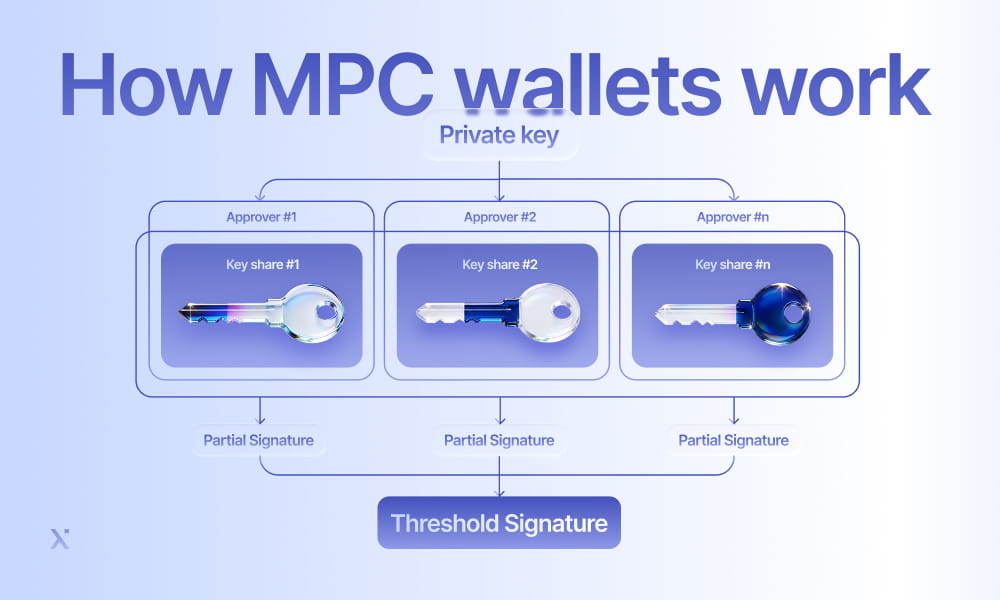
An MPC wallet (multi-party computation wallet) is a type of crypto wallet where the private key is never created or stored as a single piece. Instead, it is split into multiple encrypted shares that are distributed across different devices or parties. It represents a more advanced approach compared to traditional crypto wallet development, especially when security is a priority.
When signing a transaction, the parties interact via cryptographic protocols to generate a valid signature without having to restore the entire private key in one place. In practice, this means:
- No single point of failure
- No seed phrase that can be stolen or lost
- Stronger protection against hacks, insider threats, and device compromise
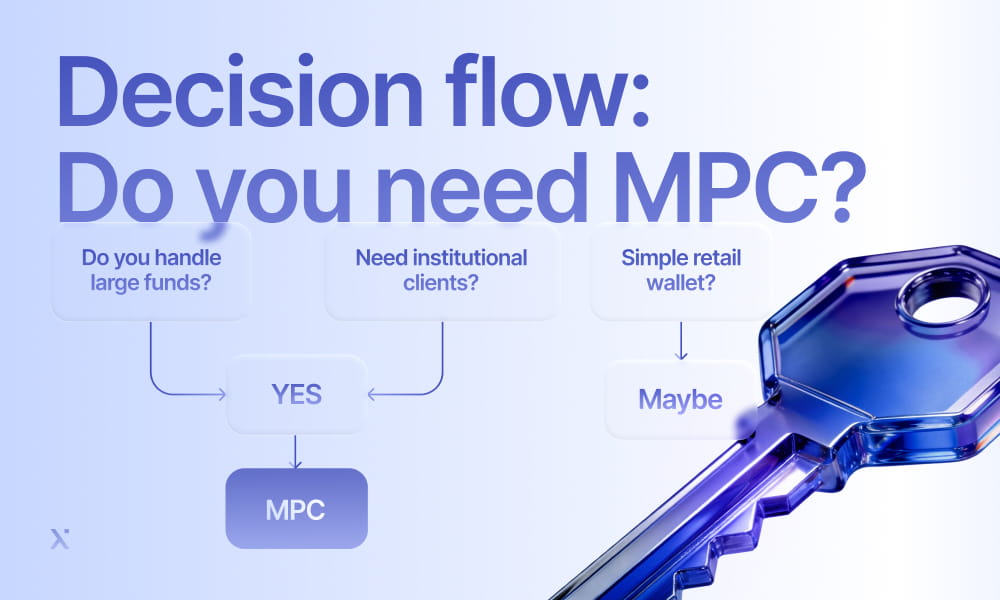
Unlike traditional wallets, where control depends on one key, an MPC wallet spreads trust across multiple participants. That is why it is widely used in institutional custody, fintech products, and high-security Web3 applications.

More Than Just Storage: How Crypto Wallet Rewards Programs Build Loyalty and Drive Growth
Inside Crypto Wallet MVP Development: Process, Costs, and Real-World Lessons
What defines a high-quality MPC wallet?
Not every MPC wallet on the market is built the same. Some are little more than a basic implementation of threshold signatures wrapped in a UI. Others are designed as full-scale infrastructure products that can support millions of users, institutional flows, and strict compliance requirements. The difference shows up not only in performance, but in how the system behaves under stress.
A high-quality MPC wallet is not just about splitting keys. It is about how those key shares are generated, stored, used, and recovered without ever exposing sensitive data. It also needs to balance security with usability. If users cannot access their funds when needed, or if recovery flows are too complex, even the most secure system fails in practice.
At the enterprise level, expectations are higher. Companies require transaction control, operational transparency, and the ability to enforce policies without compromising the principles of decentralization. This is where not only functionality but also architecture becomes crucial.

How to Build a Crypto Wallet: a Complete Guide

The State of Crypto Regulations and Laws in 2026
Core features of a high-quality MPC wallet
- Distributed key generation: Private keys are never created in a single place. Key shares are generated across multiple parties, reducing the risk of compromise at the source.
- Threshold signature schemes (TSS): Transactions require a predefined number of participants to sign. No single party can authorize transfers on its own.
- Multi-device authentication: Users can approve transactions from multiple devices, adding an extra layer of protection against device-level attacks.
- Transaction policy engine: Rules can be defined for transaction approvals, limits, and conditions, which is especially important for business use cases.
- Recovery mechanisms: Secure recovery flows that do not rely on seed phrases, making onboarding easier while maintaining security.
- Cross-chain compatibility: Support for multiple blockchains, allowing users to manage diverse assets within one wallet.
MPC wallet vs traditional wallets
| Feature | MPC wallet | Custodial wallet | Non-custodial wallet |
| Key storage | Distributed | Centralized | Single device |
| Security | High | Medium | Medium |
| Recovery | Flexible | Admin-based | Seed phrase |
| Attack surface | Minimal | High | Medium |

Top 10 Blockchain Use Cases In 2026: How Your Business Can Ride the Wave

Top 10 Blockchain Use Cases Across Different Industries and Domains to Explore in 2026 and Beyond
How businesses monetize MPC wallet solutions
For most companies, launching an MPC wallet is not just about security; it is about building a sustainable product. The wallet itself becomes a platform where different revenue streams can be layered depending on the target audience, whether that is retail users, crypto-native businesses, or institutions.
The main advantage of MPC wallets is that they are located at the asset management center. This position allows companies to monetize not only transactions but also access, infrastructure, and advanced financial services.
Revenue streams
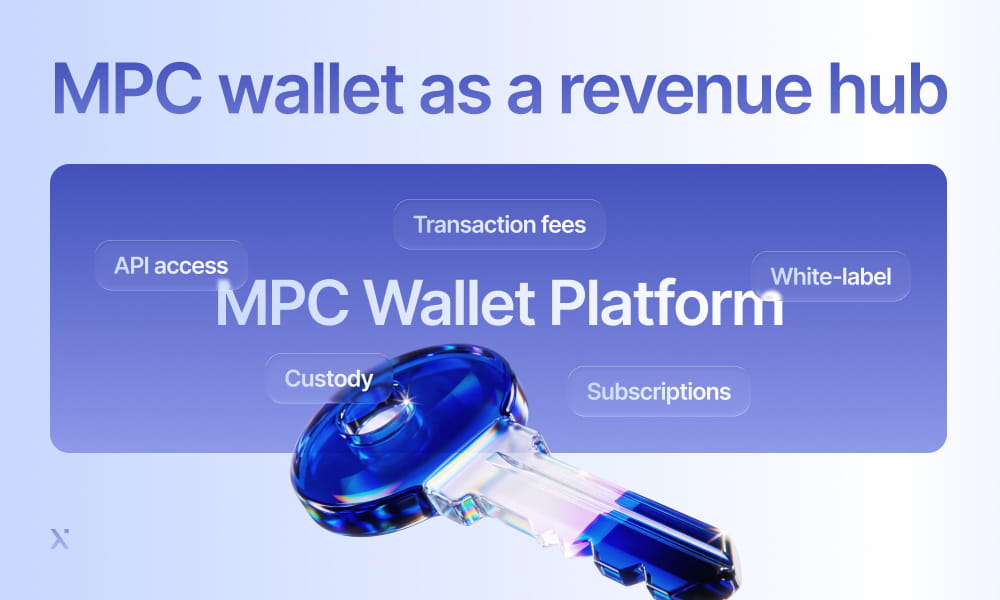
- Transaction fees: A percentage or fixed fee charged on every transfer, swap, or interaction.
- Subscription plans: Tiered pricing for premium features such as higher limits, analytics, or priority support.
- White-label licensing: Providing the wallet infrastructure to other businesses under their brand, similar to white-label crypto wallet development services used in scalable fintech products.
- API access monetization: Charging developers or partners for using wallet infrastructure and signing services.
- Institutional custody services: Offering secure asset storage and management for enterprise clients.
Fee structures
| Model | Description | Typical range |
| Transaction fee | Per transfer | 0.1%–1% |
| Subscription | Monthly access | $10–$500 |
| Enterprise license | Custom pricing | $10K+ |
| API usage | Per request | Variable |
Once you break down the fee structure, you start to see how these products actually make money. Most MPC wallets don’t depend on a single stream. They mix usage-based fees with recurring revenue. Transaction fees grow with activity, while subscriptions and enterprise deals bring more stability.
But if you think long term, the real growth often comes from API monetization and white-label products. They allow you to turn your wallet into a platform that other businesses can use, which scales much faster than relying only on end users.
Zero-Leakage Vaults: Building High-Stakes Canton Network Wallets
Inside Crypto Wallet MVP Development: Process, Costs, and Real-World Lessons
Additional monetization options
| Strategy | Description | Target audience |
| Staking integration | Earn yield | Retail users |
| DeFi access | Lending/borrowing | Advanced users |
| NFT support | Asset storage | Creators |
| Institutional custody | Secure storage | Enterprises |
These monetization options show how MPC wallets move far beyond basic storage. Once staking, DeFi access, and NFT support are added, the wallet starts to function more like a financial platform and can provide the secure asset-management layer required for white label crypto exchange development.
For enterprise products, institutional custody is often the most attractive direction. It takes more effort to get there, especially in terms of compliance and infrastructure, but it also brings larger clients and longer-term contracts.
In reality, strong MPC wallets don’t rely on a single revenue stream. They combine transaction fees, subscriptions, and additional services. The key is to think about monetization early. If it is built into the architecture from the start, scaling becomes much easier later.
API monetization and white-label models typically generate the highest profits, as they enable scalable use of the same infrastructure across multiple clients. Institutional asset custody remains a significant source of revenue, driven by stable volumes and long-term contracts.

Smart Contract Development Cost Demystified: What Every Business Should Know

Web3 Development Cost: Breaking Down What Really Drives the Price
MPC wallet development process
Building an MPC wallet is not a typical Web3 project. You are not just connecting to blockchains and building a UI. A big part of the work sits in cryptography, key management, and making sure everything works reliably under real-world conditions.
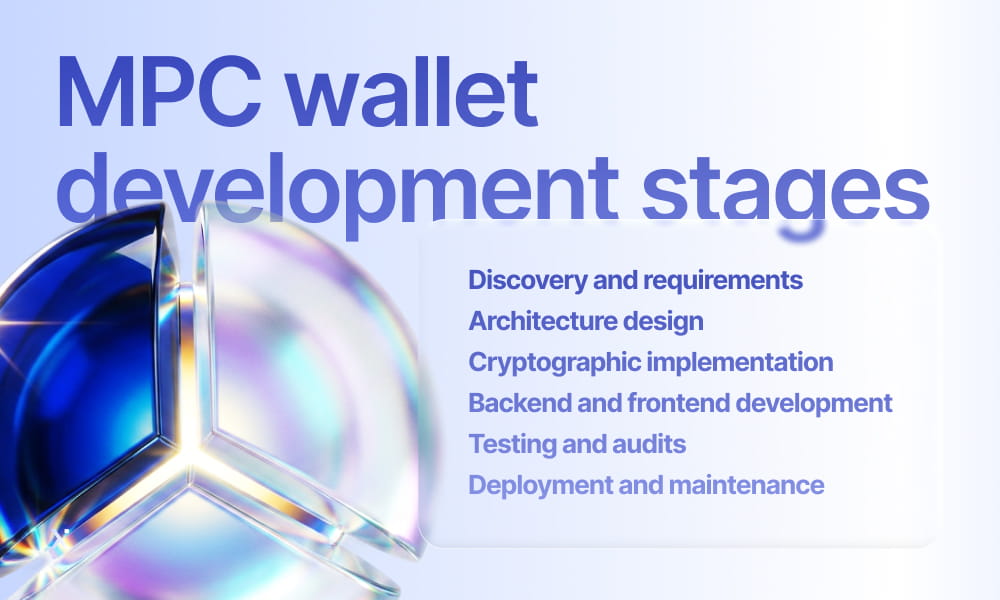
The process usually starts with defining how the wallet will actually be used. A retail product, a fintech app, and an institutional custody solution will all require different architecture decisions. From there, the focus shifts to designing secure key flows, implementing MPC protocols, and building the surrounding infrastructure.
Development timeline
| Stage | Duration | What happens |
| Planning | 2–4 weeks | Requirements gathering, use case definition, and initial architecture decisions |
| Development | 3–6 months | Core MPC implementation, backend services, UI development |
| Testing | 4–8 weeks | Security audits, bug fixing, performance, and stress testing |
| Deployment | 2–3 weeks | Infrastructure setup, release, monitoring, and initial support |
Your Practical Guide to Creating a Decentralized Cryptocurrency Exchange

Web3 Development: What It Takes to Build the Future
Technologies used in MPC wallet development
An MPC wallet is not just another Web3 product. It brings together multiple layers, from cryptography to UI, and they all need to work together without friction. The exact setup depends on what you are building and how demanding the product is.
MPC sits at the core, defining how keys are handled. Around it, you add backend services, frontend apps, and blockchain integrations. Infrastructure is just as important, since latency and uptime directly affect how the wallet performs in real use.
Tech stack overview
| Layer | Technologies | Role in the system |
| Cryptography | MPC protocols, TSS | Secure key generation and distributed signing |
| Backend | Node.js, Go, Rust | Handles logic, APIs, and coordination between parties |
| Frontend | React, Angular | Provides a user interface and interaction layer |
| Blockchain | Ethereum, Bitcoin, Solana | Enables asset storage, transfers, and smart contract interaction |
| Cloud | AWS, GCP | Ensures scalability, availability, and infrastructure management |
10 Best Programming Languages for Blockchain Development

How to Integrate Blockchain Into Your Existing Business Infrastructure
MPC wallet development cost: detailed pricing breakdown
Estimating the cost of an MPC wallet is not as simple as picking a number from a range. The final budget depends on what you are building, who it is for, and how far you want to go in terms of security and functionality. A lightweight MVP for testing the market will look very different from a full-scale institutional solution.
The main driver behind the cost is complexity. MPC cryptography alone requires a very specific skill set, and proper security audits are a must if you are working with real funds. Then you add blockchain integrations, third-party services, compliance, and things can scale up fast.
Cost breakdown
| Component | Cost range |
| UI/UX design | $10K–$30K |
| Backend development | $40K–$120K |
| MPC cryptography | $50K–$150K |
| Security audits | $20K–$80K |
| Integrations | $15K–$50K |
Looking at the components, it’s worth noting that MPC implementation and backend development typically account for the largest share of the budget. This is where the main complexity lies, especially when creating secure signature processes and scalable infrastructure.
Total cost estimation
| Type | Cost |
| MVP | $80K–$150K |
| Mid-level | $150K–$300K |
| Enterprise | $300K+ |
These ranges reflect how much functionality and robustness you want to include. MVPs are typically built to validate an idea and enter the market quickly, while mid-level and enterprise solutions focus on scalability, integrations, and compliance.
In the end, the cost really comes down to how much you prioritize security and long-term growth. You can lower the initial budget, but cutting corners usually means you will pay more later when the product needs fixing or reworking.

You can reduce development costs by focusing on core features first and leaving advanced functionality for later stages. Choosing the right architecture and experienced team early on also helps avoid expensive rework down the line.
Crypto Payment Gateway: Costs, Benefits, Implementation
Complete Guide to Web3 Wallet Development and Its Costs
Why choose PixelPlex for MPC wallet development
Choosing the right team for MPC wallet development is not just about technical skills. It is about trust. You are building a product where security, reliability, and long-term scalability directly affect your business and your users. This is where experience makes a real difference.
PixelPlex approaches MPC wallet development services as a full-cycle process, from architecture design to deployment and ongoing support. The focus is not only on delivering features, but on building systems that hold up under real-world conditions.
What sets PixelPlex apart
- Deep experience in blockchain security: Our team has worked on complex blockchain systems where security is not optional. We understand how to design MPC architectures that reduce risk rather than introduce new ones.
- Custom development approach: Every product is built around specific business goals. Whether you are targeting retail users or institutional clients, we adapt the architecture, features, and integrations accordingly.
- Compliance-ready solutions: We design wallets with regulatory requirements in mind, including KYC/AML integration and secure transaction policies, so you are prepared as your product grows.
- Proven portfolio: As an experienced MPC crypto wallet development company, PixelPlex has delivered blockchain development services across fintech, DeFi, and enterprise sectors, with a focus on performance and reliability.
Beyond development, we also help clients think through product strategy. That includes choosing the right monetization model, planning integrations, and avoiding costly architectural mistakes early on.
Working with the right partner can significantly impact both the cost and the outcome of your project. A team that understands MPC deeply will help you build faster, avoid rework, and launch a product that is secure from day one.

Top Full-Service Web3 Development Companies 2026

Top 10 Blockchain Development Companies in 2026
Conclusion
MPC wallets are often discussed in terms of features and security, but in practice, they are infrastructure products. What you build today becomes the foundation for everything that comes next, from scaling to compliance to new revenue streams.
That is why the real question is not just how much it costs to build an MPC wallet, but how well it will hold up over time. A solution that is flexible, secure, and designed with growth in mind will always outperform one that was built to save budget upfront.
FAQ
MPC wallets are not limited to large enterprises. Startups can also adopt this approach, especially if security is a core part of their product, though they often begin with a more focused MVP.
Yes, and it is something many teams underestimate. Keeping the system reliable means handling updates, security fixes, scaling infrastructure, and adjusting to changes in blockchain protocols.
In some cases, yes, but it depends on the original architecture. Many legacy wallets require a partial or full redesign to support MPC properly.
If everything is set up properly, users won’t notice any difference. In fact, it often feels simpler, since there is no need to deal with seed phrases, and recovery becomes easier.
The main risks are underestimating complexity, choosing the wrong architecture early on, and skipping proper security validation. These issues often lead to delays or costly fixes later.
It becomes critical as soon as you deal with regulated markets or institutional clients. Planning for compliance early helps avoid major changes after launch.
Yes, if designed right from the start. A flexible architecture allows integration with DeFi, NFTs, and new blockchain networks without major rewrites.
Before you start, it is worth getting clear on who the product is for, what you want to achieve, and how much security is really required. This keeps the project focused and prevents unnecessary complexity.