
Your cryptocurrency wallet isn't just about security anymore. It's moving beyond storage to offer rewards for holding, spending, and learning. In the next sections, you will discover how these programs work and why they’re so effective at building loyalty.
Today, holders of many wallets benefit from rewards programs. What was once mere crypto storage is now an opportunity to earn interest on your savings, get cashback on coffee, or receive free crypto for learning. This shift in functionality highlights the growing role rewards programs play in building strong user loyalty and changing how people interact with digital money.
The major Wall Street institution, Morgan Stanley, filed to launch a Spot Ethereum ETF that includes staking. They want to offer their wealthy clients a stock-like fund that tracks Ethereum’s price, but also automatically stakes the fund’s ETH to earn rewards and boost returns. It indicates that the staking reward mechanism, which is a cornerstone of crypto wallet programs, is now being sold by traditional finance to its clients. This trend legitimizes the underlying value proposition of earning yield on crypto assets.
In this article, we, together with our development experts, focus on the main rewards programs in crypto wallets. We break down how they work, why they’re so effective, and how strategic crypto wallet development leverages these models for user acquisition, retention, and ecosystem growth.
The toolkit of wallet rewards
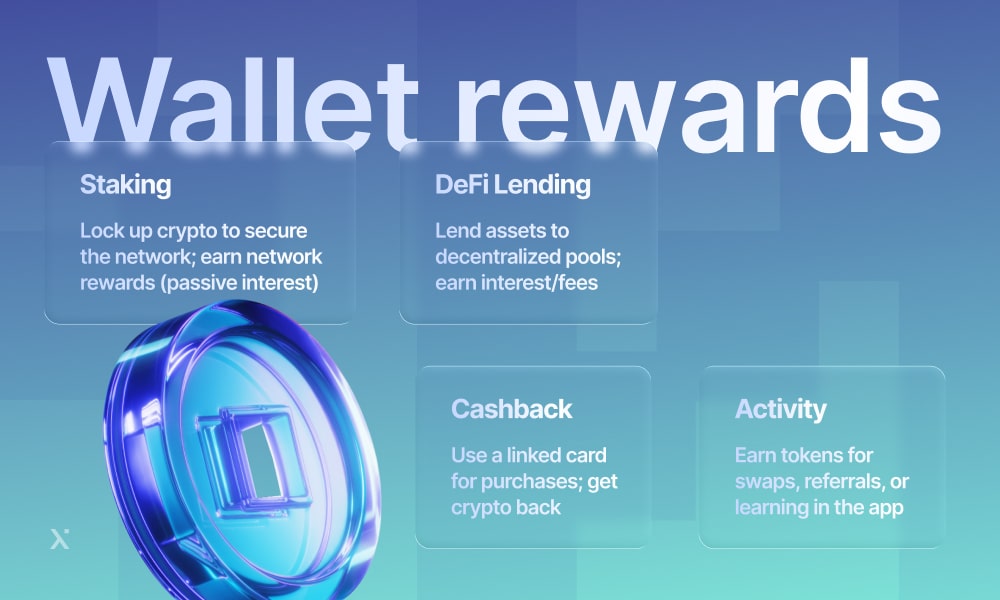
There are several types of crypto wallet rewards that allow holders to earn additional money for certain activities.
Staking
Owners of crypto wallets that support staking may lock (“stake”) their assets or cryptocurrency and earn passive interest. By staking, they contribute their crypto to the network’s validation process and help to verify transactions. The amount of the reward depends on the network, period of staking, and the sum. Major staking networks include Ethereum, Cardano, Polkadot, and Solana. Here are some examples:
- Ledger wallet allows for retaining full control of the private keys, delegating coins to validators for staking directly on the blockchain, avoiding extra service fees, and easy withdrawal of crypto. The distinctive feature of Ledger is that your private keys never leave the hardware device. They are isolated offline inside a certified Secure Element chip. When you stake, the Ledger Live app builds the transaction and sends it to the device. The user manually verifies and signs and the transaction is then sent back to the computer fully encrypted. Therefore, the yield generation of Web3 happens with the security level of a completely offline vault.
- Trust Wallet offers a mobile-first approach with zero platform service fees. Users pick a coin in the app, review the APR and validator options, and authorize the stake with a single tap.
- MetaMask allows for flexible staking across multiple decentralized pathways through its Portfolio web application and browser extension. For example, casual users can join pooled or liquid staking networks with no minimum asset requirements. Users with 32 ETH can spin up a fully dedicated, independent Ethereum validator node with a single click.
DeFi lending
Users who are not afraid of higher potential risks with higher profits may lend part of their cryptocurrency through DeFi applications. DeFi can provide transparent peer-to-peer lending with potentially higher returns than traditional financial offerings. Investors who decide to lend their assets receive rewards for doing so. Crypto wallets that are compatible with DeFi applications support this functionality. For example, with Coinbase Wallet, you can experiment with lending some of your cryptocurrency through DeFi protocols, such as Compound or Aave.
The underlying infrastructure that makes this reward scheme possible is being developed. One of the options is the application of the Canton Network. Canton.Network development services explore the privacy-focused architectures that could facilitate DeFi lending platforms’ functionality. Why? Because a wallet’s rewards program might involve sensitive commercial data (like tiered cashback rates) or require seamless settlement with external traditional banks or loyalty partners. The potential of using smart contracts with the Daml development services could enable wallet providers to create a private, compliant rewards ledger. Therefore, different partners, such as the card issuer, the merchant, and the wallet owner, have controlled, private views of the transactions relevant to them. This might move rewards from a simple in-app gimmick to an institutional-grade financial loyalty system.
PixelPlex Canton experts share their knowledge regarding the evolving network in the blog posts Canton Network Wallet Development and DAML Development Services Guide.
Cashback
Users of crypto wallets receive rewards for their everyday spending. They make purchases with their cards and earn crypto (BTC, native tokens). The system connects a crypto wallet with Visa or Mastercard. Your cryptocurrency is converted into local currency, and you receive the percentage back in crypto. The amount of the cashback depends on the provider of the wallet. Other conditions (frequency of fees, ATM compatibility, etc.) also vary.
The Coinbase Card is a crypto rewards debit card. It pays up to 4% back for all purchases made in crypto currency. There’s no annual or sign-up fee.
Another example demonstrates a successful cooperation between the crypto world and the traditional banking system. It is the partnership of JPMorgan Chase with Coinbase that enables Chase cardholders to convert their rewards into popular cryptocurrencies. Therefore, it allows Chase card owners to examine the possibilities of crypto investments and Coinbase users to fund their accounts with familiar tools.
Activity-based rewards
Another way to earn crypto rewards is through specific in-app actions such as swaps, referrals, and educational quests. Digital wallet app development allows for implementing such functionality. Wallets may also offer opportunities to earn cryptocurrency for completing educational content or participating in promotions. Below are a few examples:
- Cypherock X1 is the hardware wallet that supports the Canton Network and its native token, where completing a custom Daml smart contract audit ensures the underlying distribution logic and permission rules operate without flaw. Users earn $CC tokens for activating the wallet (worth $50) and inviting friends ($100 for two referred friends). The resulting sum of $150 covers the cost of the hardware wallet.
- Bron is a non-custodial crypto wallet accessible in a web version or as a desktop app. Users receive rewards for activating the wallet and storing $CC tokens and $BRON tokens. The amounts depend on the sum on the wallet.
- The Trust Wallet offers an XP-based rewards system rewards for daily check-ins, transactions, making deposits, swapping, and staking. The system tracks all the activities and adds Experience Points (XP) to a user’s balance. A maximum reward is 500 XP for swapping $1,000 worth of crypto. Accumulating points unlocks tiered benefits like substantial discounts on gas and swap fees. Besides, locking Trust Wallet Tokens (TWT) allows for increasing earnings. It raises the tier status and opens access to exclusive airdrops and advanced utilities unavailable to casual users.
External rewards
The above-mentioned are the structured programs offered by wallet providers. Users may also access other forms of crypto rewards, such as protocol airdrops, for example. However, they operate on different principles.
Protocol airdrops are large-scale, often surprise distributions of new tokens by DEXs or Layer 2 networks to reward their early and active users. Users must interact with these protocols via their wallets to qualify, making a compatible wallet an essential tool for capturing such opportunities.
For example, the Zoro Wallet offers the following opportunities. Users register and join official community channels (X, Telegram, Discord). Then, they start making transfers to Zoro Wallet users and earn a point for each new ID. Canton coins are airdropped automatically to the wallet depending on the daily performance.
| Reward type | Primary user incentive | Example in action |
| Staking | Earn passive income (APY/APR) on idle assets. | Staking ETH to help run Ethereum and earning rewards. |
| DeFi lending | Generate higher yield, often on stablecoins. | Supplying USDC to a lending pool to earn variable interest. |
| Cashback | Earn crypto on real-world spending, seamless entry. | Getting 2% back in Bitcoin for paying with a crypto card. |
| Activity-based | Earn tokens for engagement and learning. | Earning points on MetaMask for swaps, or free crypto on Coinbase for quizzes. |
| Airdrops | Receive distributions of new tokens for being an early or active protocol user. | Making transfers to other Zoro Wallet users and joining community channels to automatically receive Canton coin airdrops. |

The Agent Payments Protocol (AP2): A New Standard for Autonomous Commerce
Crypto Wallets Get Brain: How AI Crypto Wallet Development is Creating a Smarter and Safer Financial Future
Crypto Payment Gateway: Costs, Benefits, Implementation
Why are these programs so effective?
Total US memberships in customer loyalty programs reached 3.8 billion in 2022. According to a 2025 American Bankers Association survey, 82% of respondents have at least one credit card that offers rewards. However, a 2026 Deloitte survey reveals a critical flaw in traditional models: while consumers enroll in an average of eight programs, they actively participate in only five. This gap highlights a massive drop-off in engagement and emphasizes the urgent need for businesses to innovate to retain user attention. Here, blockchain technology emerges as a powerful solution.
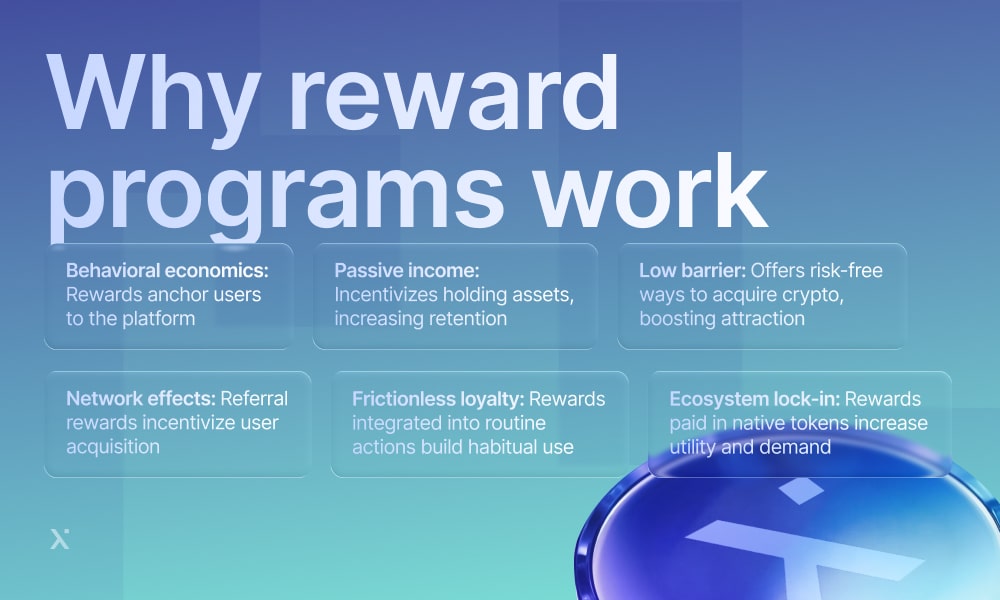
The emergence of crypto assets has changed the way people interact with financial value. Loyalty and reward systems allow cryptocurrency to move beyond its role as an alternative currency. Crypto rewards offer the following benefits:
Behavioral economics and habit formation
Reward programs integrate smoothly into users’ daily financial routines (checking balances, spending, and swapping tokens). The low effort required to earn incremental rewards helps form strong habitual engagement. Members observe that the value of their incentives increases and get motivated to consistently participate in various engagement initiatives. Gamification features help build emotional connections. Users feel they are losing something valuable if they churn.
Power of passive income
Crypto incentives are distributed as digital tokens. These tokens tend to gain value over the years, allowing participants to engage directly with the expanding digital asset ecosystem. Wallet holders accumulate digital rewards in the form of passive income. Besides, they may become true stakeholders of the brand.
Low entry barriers
Initiatives like “learn-and-earn” allow users to acquire crypto risk-free while educating them about new projects. This gentle onboarding removes the intimidation of buying crypto and turns curiosity into ownership and engagement. Moreover, it boosts broader crypto literacy through everyday activities.
Viral growth
Referral programs increase user acquisition. Members can earn incentives in a variety of cryptocurrencies. This creates opportunities for participants to broaden their digital holdings, engage with multiple blockchain networks, and investigate the prospects of newer digital assets. Because satisfied customers naturally share their positive experiences, startups benefit from organic word-of-mouth marketing. Retaining and engaging customers through these programs is usually cheaper than acquiring new ones.
Ecosystem lock-in
Strategic use of native tokens that are usable for fees, upgrades, or exclusive benefits increases their utility and creates circular demand. This motivates users to hold, spend, and earn within the ecosystem. They become more connected to the platform and align their success with its growth.
Global accessibility
Crypto rewards can be accessed and utilized globally without constraints. Reward programs create a universal exchange with versatile reward redemption. Blockchain’s immutable ledger provides these programs with tamper-proof records that eliminate hidden rules and reduce fraud. For businesses, this means faster reconciliation cycles, reduced auditing costs, and verifiable data that supports ISO and GDPR-compliant transparency.
| Psychological principle | How it works | Business outcome |
| Habit formation | Rewards are integrated into routine actions (spending, checking balance). | Creates daily active users and habitual engagement. |
| Passive income | “Set it and forget it” earning through staking or lending incentivizes holding. | Reduces user churn and capital flight. |
| Lowered barrier to entry | Programs like “Learn & Earn” offer risk-free, educational crypto acquisition. | Attracts curious newcomers who might otherwise be intimidated. |
| Viral network effects | Generous referral bonuses reward users for bringing in their friends. | Drives low-cost, high-trust user acquisition. |
| Ecosystem lock-In | Rewards are often paid in the wallet/platform’s native token, which can be used for premium features. | Increases utility and demand for the native token, building a moat. |
Real-world implementations
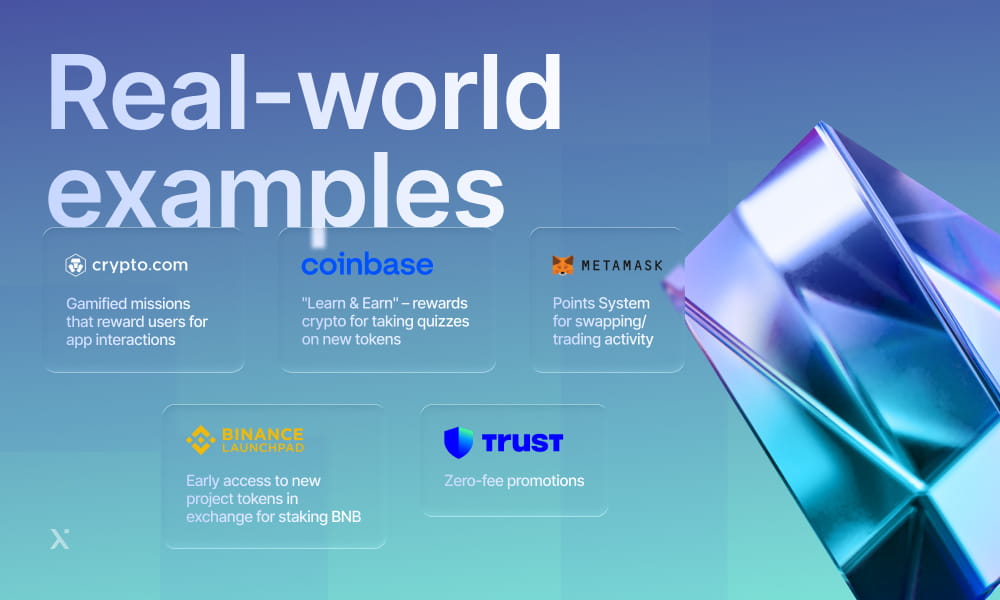
A reward program in crypto wallets might be considered successful if the revenue generated outweighs the expenses. However, because wallet providers rarely disclose internal financial data, we must look at external indicators. A strong indicator of a program’s success is the wallet’s ability to sustain high user engagement and popularity long after the incentive period ends. Here are a few examples of cases that demonstrate this trend:
Binance Launchpad
Binance has boosted platform interaction through its Launchpad, which rewards users with tokens from emerging projects in exchange for locking up their BNB. This strategy yielded impressive results: BNB reserves held by users jumped by 45% following these campaigns. Additionally, the platform experienced a wave of new users who joined specifically to participate in these staking-based token offerings.
Trust Wallet
Trust Wallet ran a “first purchase free” promotion: depositing cryptocurrency using the Ramp Network through the Trust Wallet app without commission for 7 days in June, 2023. The results were impressive:
- 300% increase in new user registrations
- Over 200% increase in transaction volume thanks to integration
- 153% increase in average transaction size
- Repeat transactions and increased revenue
In the long run, the initiative demonstrated an increase in fund rate, enhanced customer retention and user engagement.
Such campaigns of temporarily reducing or waiving transaction fees are parts of various wallets’ loyalty programs.
Crypto.com
The Crypto.com Rewards Hub (previously called Missions) was introduced in 2021. Users interact with various features within the Crypto.com App, such as activating security measures, executing trades, and finishing educational modules.
Coinbase
Coinbase provides an educational incentive program called “Learn and Earn.” Participants can view brief educational content about certain cryptocurrency initiatives and then complete a simple assessment to receive a reward in that digital asset. The arrangement benefits both sides, Coinbase provides complimentary rewards to its community, and the projects become known to a broader user base. The rewards are generally modest (between $3 and $5), but they represent an effortless method for users to acquire digital tokens at no cost.
MetaMask
MetaMask has piloted points-based systems where users get points for swaps and in-wallet activities. The scores and progress are reflected in the dashboards of the MetaMask mobile app and extension. These points have been convertible to future airdrops or perks.
| Platform/Program | What makes it successful | Key metric/Outcome |
| Binance Launchpad | Rewards users with tokens from emerging projects in exchange for locking up BNB. | 45% jump in BNB reserves; influx of new users joining specifically to stake. |
| Trust Wallet | Ran a 7-day zero-commission “first purchase free” promotion for deposits via Ramp Network. | 300% increase in new registrations; >200% volume increase; 153% larger average transactions; enhanced retention. |
| Crypto.com Rewards Hub | Incentivizes users to interact with core app features (e.g., activating security, trading, learning). | Sustained user interaction and feature adoption across the platform. |
| Coinbase “Learn and Earn” | Provides modest crypto rewards to users who watch educational content and pass simple assessments. | Projects reach a broader audience; users effortlessly acquire $3–$5 in free digital tokens. |
| MetaMask Points System | Awards points for executing swaps and completing in-wallet activities. | Engagement driven by points converting into future airdrops or exclusive perks. |

What You Should Know About the True Cost of Building a Crypto Wallet Like MetaMask
Announcing Our Native Canton Console Wallet: Fast, Secure, and Ready to Use

How Permissioned Blockchains Transform Business: A Detailed Overview
Designing a reward system with insights from PixelPlex
A successful loyalty program rewards users for the actions they already take. Another ingredient of success is to motivate people to use all the possibilities of the platform, such as swapping, transferring assets, adopting security features, etc. A good program is transparent, easy to join, and scales its perks based on how actively a person engages with the ecosystem.
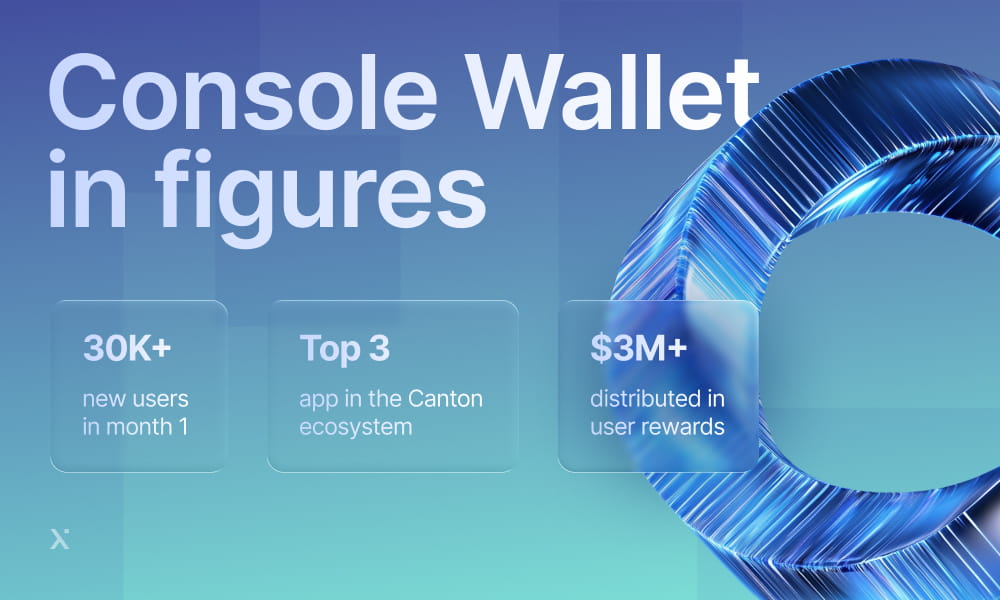
Console Wallet by PixelPlex demonstrates a practical example of this approach. The rewards program relies on gamification, daily tasks, and a transparent leaderboard.
The Console Wallet campaign structure
During a 30-day challenge period, users complete specific on-chain and off-chain tasks. They earn points and climb a public leaderboard, competing for a 200,000 CC total prize pool. The rewards are distributed among both top competitors and casual users:
- Leaderboard rewards (10,000 CC): This is a fixed prize pool reserved for the top 10 performers.
- Community pool (190,000 CC): The remaining participants share this pool proportionally based on their score. To ensure fairness and broad distribution, rewards from this tier are capped at 500 CC per user.
To move up the leaderboard, users interact with the wallet’s features. Points reset daily for recurring tasks, creating a habit loop. The missions include:
- Daily habits: Making daily CC transfers of at least 5 CC on the Canton Network (50 points) or locking CC tokens for the duration of the event (25–300 daily points, depending on the tier).
- Platform usage: Swapping a minimum of 181 CC to or from USDC (20 points) and downloading the Console mobile app to make an on-chain transfer (100 points).
- Ecosystem expansion: Purchasing and holding a Canton Name Service (CNS) domain (100–150 points).
- Community & security: Joining the official Telegram group (100 points) and installing the Web3 Antivirus browser extension to block scams and drainers (300 points).
Therefore, the program provides rewards for specific user actions, which motivates active engagement. Users get a transparent system where they know how to increase their share of the rewards. At the same time, businesses apply this gamified approach to retain users and increase cross-product adoption. Passive token holders transform into daily participants, which brings companies consistent transaction volume and a loyal user base that drives long-term ecosystem growth.
The ROI timeline for reward programs
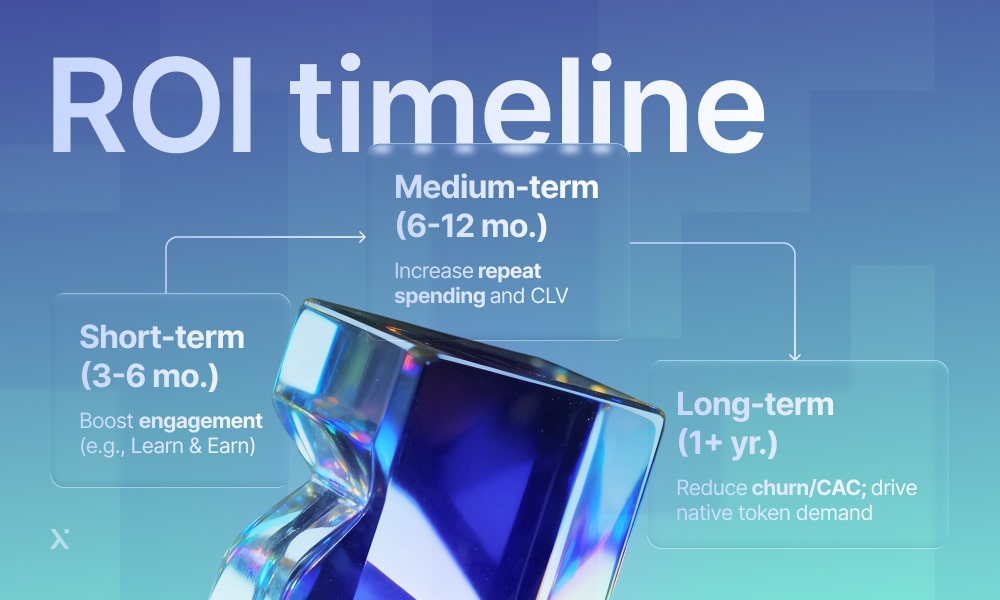
The ROI timeline depends heavily on the program conditions. However, we tried to outline a general framework. A crypto wallet rewards program’s ROI might be divided into three phases.
- In the short-term (3-6 months), the main goal is to achieve a direct boost in user engagement (surges in daily active users, completion of “learn-and-earn” modules, and initial referral-driven growth).
- In the medium-term (6-12 months), increased retention transforms into a higher customer lifetime value as users habitually use the wallet for staking, swaps, and spending.
- Finally, the long-term (1+ years) payoff demonstrates reduced customer acquisition costs and churn due to a loyal user base. The rewards paid in a platform’s native token create a powerful, self-reinforcing economic loop that drives utility and demand.
| Timeframe | Primary goals & user behaviors | KPIs | Long-term foundation |
| Short-term (3-6 months) | Boost initial engagement and education. Users try features, complete quests, and tell friends. | Daily active users, referral rate, quest completion rate | Establishes initial habit loops and user data. |
| Medium-term (6-12 months) | Increase asset retention and spending. Users hold more assets for staking, use cards regularly. | Total value locked in staking, card spending volume, customer lifetime value | Builds a sticky, financially engaged user base. |
| Long-term (1+ years) | Achieve sustainable growth and ecosystem strength. Loyal users are costly to replace, and native token demand is organic. | Reduced customer acquisition cost, lower user churn rate, native token utility & velocity | Creates a defensible, growing financial ecosystem. |
To ensure the program remains profitable as it matures, businesses must be aware of a few key variables:
- The compounding wait: It is common for the most significant financial benefits to only become visible after 2 years, when the compounding effects of repeat user behavior overshadow the high up-front fixed costs of platform implementation and staffing.
- Redemption cost shifts: If user behavior changes or the value of the rewarded tokens fluctuates, the actual cost of fulfilling rewards can unexpectedly shift, which may temporarily flip your ROI if not forecasted correctly.
- Avoiding false signals: Do not confuse short-term, promo-driven activity spikes with sustained value. Success requires shifting your focus toward long-term metrics, actively tracking year-over-year cohort retention and repeat frequency to prove the program’s lasting financial impact.
Rewards as an ecosystem engine
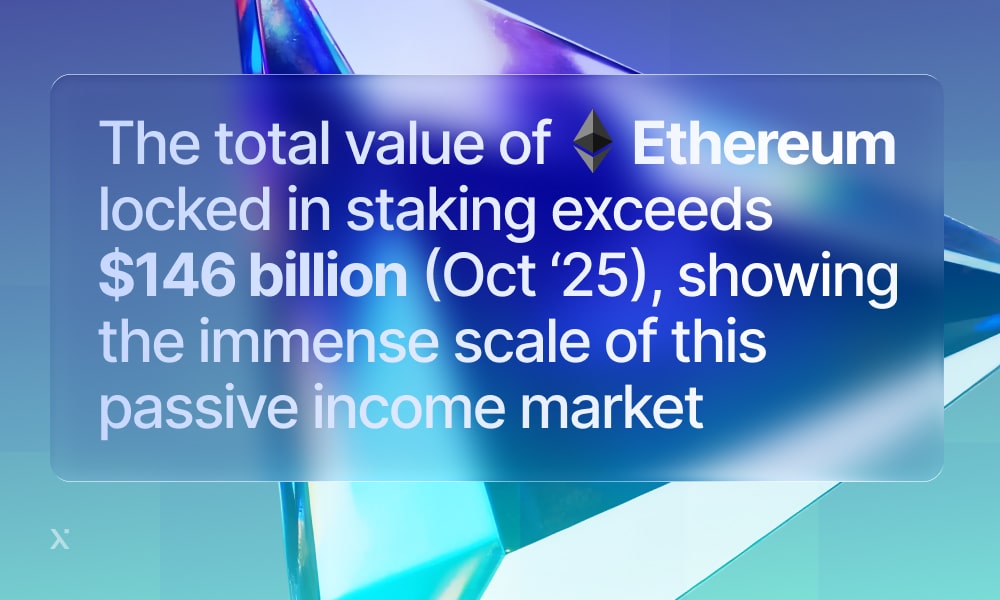
Approximately $146 billion in staked ETH is a testament to the massive scale of the passive income incentive model that wallet programs help facilitate. That means implementing rewards programs in crypto wallets is a working approach to building loyal audiences. The future of crypto wallet rewards lies in a fully integrated loyalty ecosystem. Imagine a program that seamlessly combines the most effective mechanisms into a single, tiered user journey:
- Staking as the foundation: Users lock assets to earn a base APY, securing their status as high-value holders and unlocking higher reward tiers.
- Spend-to-amplify: Every purchase with a linked card earns cashback, but the rate is boosted based on the user’s staking tier.
- Engagement loops: Educational quests about new DeFi protocols or features grant token rewards and deepen product adoption.
- Viral growth engine: Referral bonuses are supercharged, rewarding both the referrer and the referee with benefits from the unified points pool.
All these activities feed into a single, unified loyalty points system. The points form a key to the ecosystem, where users benefit from premium services like reduced trading fees, exclusive NFT access, governance voting power, or even real-world partner perks. This model is more than a reward system, it creates a powerful ‘virtuous cycle’ where every user action reinforces loyalty, utility, and network growth.
This “ideal” rewards program seamlessly blends multiple reward types and therefore requires a foundational layer that can privately connect disparate systems. It is not enough to simply know how to build a crypto wallet. Technologies like the Canton Network and DAML smart contract language become essential.
Canton.Network wallet development services allow developers to create a network of networks with guaranteed privacy and atomic settlement across institutions. DAML’s focus on rights and obligations is perfect for encoding complex reward rules. Imagine a wallet where your staking rewards from a DeFi protocol, your cashback from a coffee purchase, and your airline miles from a travel partner are all tracked and settled instantaneously on a shared, private ledger built with DAML on Canton. This isn’t science fiction, it’s the logical result of the frictionless, programmable loyalty in Web3, which solves the siloed data and settlement delay problems that plague today’s programs. Our blog post Canton.Network Explained describes the potential of the network in combating current DeFi challenges.
Networks like Canton give businesses the tools they need to build Web3 loyalty programs that actually work.
The table below summarizes how blockchain helps solve the most common issues of traditional loyalty programs:
| Traditional loyalty issue | Blockchain solution | Resulting outcomes |
| Fragmented & unredeemable points | Points become liquid, tokenized digital assets. | Users can spend points anywhere (e.g., trading airline miles for coffee), boosting engagement and redemption rates. |
| Fraud & hidden rules | An immutable, distributed ledger records every transaction in real-time. | Eliminates fraud, reduces auditing/reconciliation costs, and guarantees points cannot be arbitrarily devalued. |
| Privacy risks | Uses anonymized or pseudonymized on-chain data architecture. | Brands gain real-time behavioral insights for targeted marketing while remaining strictly compliant with laws like GDPR. |
| Programs act as cost centers | Introduces true digital ownership and secondary market trading. | Transforms loyalty into a profit driver, slashing customer acquisition costs and increasing customer lifetime value. |

Inside Crypto Wallet MVP Development: Process, Costs, and Real-World Lessons
Custodial vs. Non-Custodial Wallet: Everything You Need To Know

The Rise of Blockchain in Marketing: Benefits & Challenges
Conclusion
To sum up, our main idea was that crypto wallets have successfully evolved from simple key holders into dynamic platforms for engagement and growth. The reward programs that we discussed in this article, manage to create powerful habits, build loyal communities, and lock users into thriving financial ecosystems. As we see it in PixelPlex, the programs will mature, and those companies offering the most seamless and valuable rewards will receive the most users.
If you decide to transform a loyalty program with blockchain, partnering with an experienced development firm (like PixelPlex) becomes essential, as you will need a secure, compliant, and economically viable architecture.
Firms like PixelPlex help businesses mitigate the technical and financial risks of Web3 by:
- Designing sustainable tokenomics: Creating reward structures that balance liquidity and long-term value, protecting the program from extreme volatility and speculative crashes.
- Ensuring ironclad security: Developing robust smart contracts and tamper-proof ledgers that protect both the brand’s liability and the users’ assets.
- Simplifying the user experience: Building intuitive and user-friendly interfaces that hide the complexities of blockchain and allow everyday consumers to earn and spend rewards without a steep learning curve.
- Navigating compliance: Architecting data storage and transactional frameworks that align with current privacy and financial regulations.
The future points toward fully integrated systems where every financial action, from securing a network to buying a latte, contributes to a unified and personal financial journey. The wallet is becoming the central command center for the entire Web3 financial life. If you are ready to step into this approaching future, we will be happy to assist you – just contact us.

We find them very agile and able to analyze and envision the project for us. Though the project is still on track for its second phase, PixelPlex has already demonstrated great analytical skills and a good command of the timelines and processes. They promptly attend to issues that could delay the development and are able to quickly scale their team at the client’s request.

Christophe Simon
IT Coordinator, Mainston International OU
FAQ
Daily earnings vary widely (from a few cents to a few dollars) depending on the reward type, your holdings, and your activity. Keep in mind that staking returns are calculated annually (e.g., 3–10% APY), which means your actual daily payout is a small fraction of the yearly percentage. Cashback offers 1–5% per purchase, and learn-and-earn programs provide small, one-time amounts. For platforms that combine several earning options in one place, DeFi wallet development also involves presenting these reward mechanisms and potential returns clearly to users.
No, only cryptocurrencies that use a Proof-of-Stake (PoS) or similar consensus mechanism support staking. Major examples include Ethereum, Cardano, Solana, and Polkadot. Bitcoin does not support native staking.
Key challenges include balancing sustainable reward economics, ensuring security against exploits, managing regulatory compliance (especially for token distributions), and creating a user-friendly experience that doesn’t dilute the core utility of the wallet or token.
Choose reputable platforms with strong security records, use non-custodial wallets for control over your keys, understand the risks (e.g., slashing in staking, smart contract risk in DeFi), and never share your private keys or seed phrase.
In most jurisdictions, yes, you should. Rewards are typically treated as taxable income at their fair market value when received. Subsequent sales or trades may also trigger capital gains tax. We recommend consulting a local tax professional for specific advice.
It is important to pay attention to the following criteria:
- Security and reputation
- Supported reward types (staking, cashback, etc.) that match your goals
- Fee structure
- Ease of use
- Regulatory compliance in your region
- Quality of customer support