
The digital asset world is moving fast. By the start of 2025, the number of global crypto users topped 620 million, and forecasts for 2026 suggest we will see that number climb past 750 million. This shift explains why SafePal became such a hit.
With so much capital flowing into decentralized finance, people are getting worried about where they keep their keys. They want something more than just a simple app. They want the ironclad feel of hardware combined with the ease of a mobile screen. SafePal offers a hybrid experience that feels safe but acts fast.
When you look at the market today, the demand for high-quality crypto wallet development is higher than ever. Many businesses want to replicate the SafePal success story because it hits the sweet spot of security and usability.
At PixelPlex, we have watched these trends closely. Our team wrote this deep dive because we want to share the technical reality of building such a complex tool. If you are planning to enter this space, our crypto wallet development experts are ready to turn these blueprints into a functional product that users can trust with their life savings.
Don’t just look at the current market leaders. Focus on the friction points they haven’t solved yet, like complex recovery processes or slow cross-chain swaps.

Ethereum DApp Development: How It Works and What You’ll Pay
DeFi Staking Platform Development: Complete Guide to Tech Stack, Process, and Costs
SafePal ecosystem: What is it?
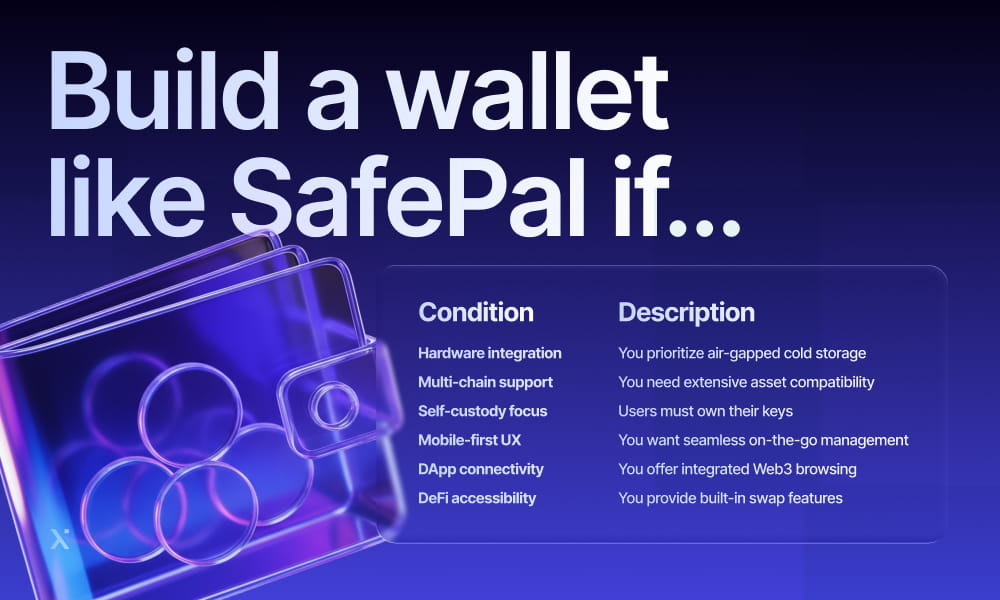
SafePal isn’t a single thing. It is actually a trio of products that work together. You have the hardware wallet (S1), the mobile app, and the browser extension. Unlike wallets that use Bluetooth or USB, SafePal often uses air-gapped QR code communication. This means the private keys never touch a device connected to the internet. It is a big deal for people who are paranoid about remote hacks.
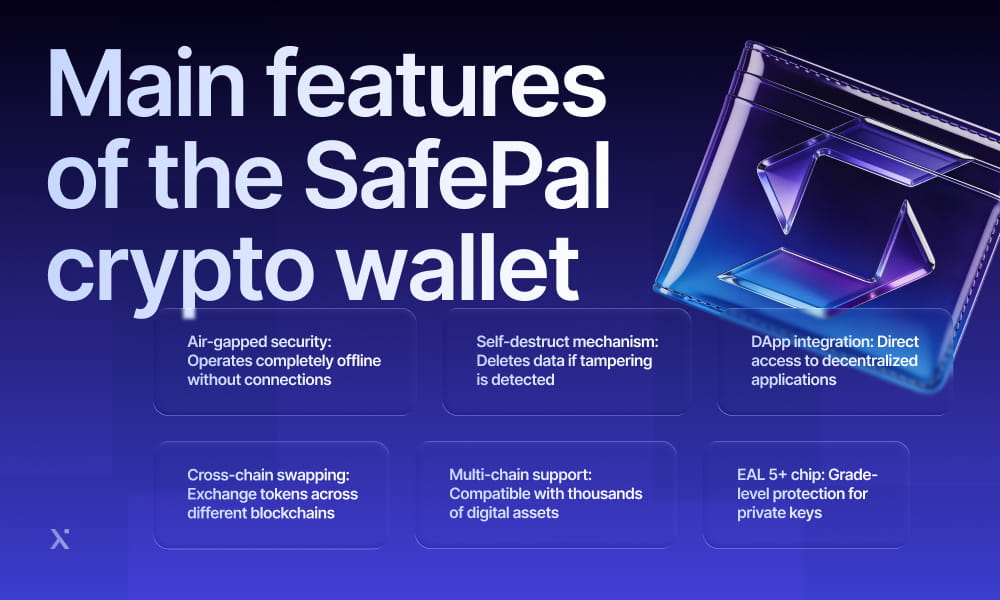
The mobile app acts as the command center. It manages the interface, shows balances, and connects to decentralized apps. However, the signing transactions function stays on the hardware side if you own the physical device. This layered approach is a hallmark of professional crypto wallet development. It requires a deep understanding of how to sync data without exposing vulnerabilities. Building this means you aren’t just making an app, you are building a secure communication protocol between hardware and software.
Many users appreciate that it supports a massive variety of blockchains. From Bitcoin to the newest layer-2 solutions, it tries to be a one-stop shop. For a developer, this means maintaining dozens of different node connections and API integrations. It is a massive task that requires a dedicated team of engineers who understand the nuances of different consensus mechanisms and transaction formats.
How SafePal stands apart from Trust and Ledger
Air-gapped security vs. Bluetooth connectivity
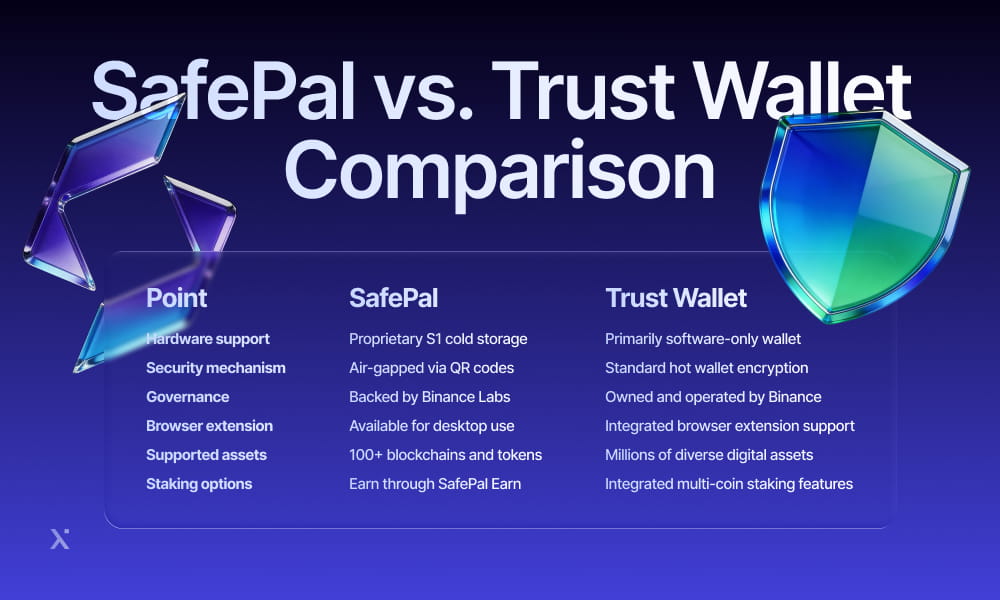
Ledger uses Bluetooth for its Nano X model, which is convenient but makes some purists nervous. SafePal goes for the air-gapped method. Transactions are signed by scanning QR codes between the phone and the hardware. This physical barrier is a key selling point. When we handle crypto wallet development, we often discuss these trade-offs with clients.
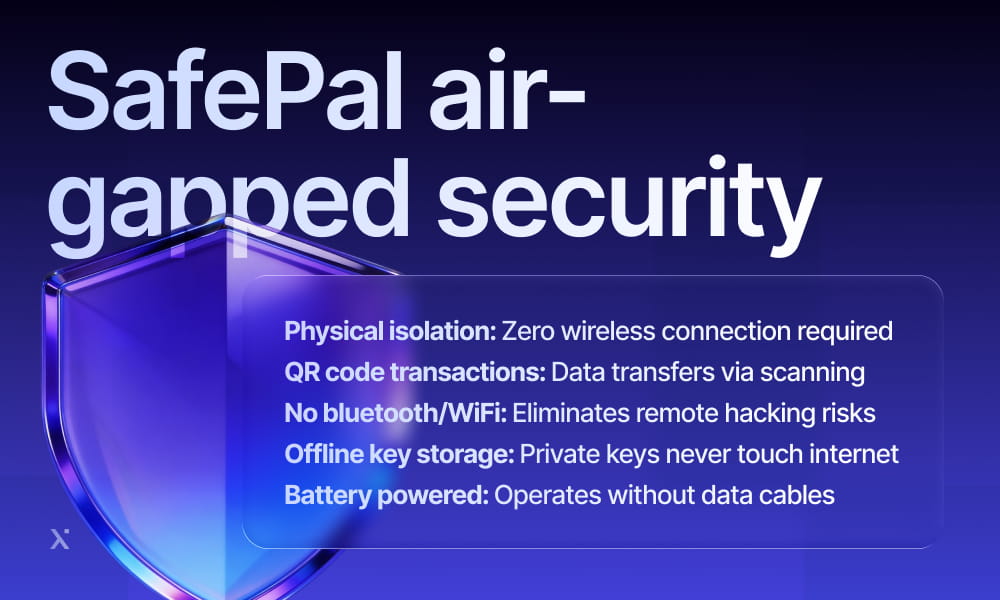
Do you want the speed of Bluetooth or the “ghost” presence of an air-gapped system? SafePal chose the latter, which defines its brand identity as a “cold” storage specialist even when you are using the “hot” app.
Integrated tokenized ecosystem
SafePal has its own utility token, SFP. This isn’t common for hardware-first companies. Trust Wallet has TWT, but Ledger doesn’t have a native token for its ecosystem. The SFP token is used for governance, staking, and discounts. Adding a token layer increases the complexity of the project. You need to consider white label crypto wallet development options if you want to launch quickly, but a custom token requires a bespoke economic model.
The price point strategy
SafePal entered the market as a budget-friendly hardware option. While Ledger can be expensive, the S1 was priced to be accessible. This lowered the barrier to entry for millions of users. In your own crypto wallet development journey, you have to decide if you are a luxury brand or a mass-market tool. SafePal proved that you can offer high security at a lower price if you optimize your supply chain and focus on software-led growth.
DApp interaction and ease of use
Trust Wallet is famous for its smooth dApp browser. SafePal took this and refined it for a hardware-linked environment. It feels more like a mobile-first experience than Ledger’s desktop-heavy history. Users can jump into DeFi development projects directly from the SafePal interface. This seamless transition between “cold” security and “hot” utility is what makes it a powerhouse in the modern crypto landscape.
Multi-platform synergy
SafePal ensures that the mobile app, extension, and hardware all feel like parts of one brain. Ledger has Ledger Live, and Trust is mostly mobile. SafePal’s ability to stay consistent across all three platforms is a technical feat. It requires synchronized state management across different codebases. If you are looking for custom Web3 wallet development, ensuring this cross-platform harmony should be your top priority.
Own or Rent a Mining Pool: What Fits Your Goals?
The Real Cost of Stablecoin Development: What You Pay For and Why
Tech stack for a SafePal clone
Frontend architecture: The face of the wallet
React Native (recommended)
For a project like this, React Native is often the winner. It allows you to maintain one codebase for both iOS and Android. This is crucial for keeping costs down while ensuring the UI stays the same across devices. Since a wallet is very UI-heavy with many buttons and lists, a cross-platform tool saves hundreds of hours. Our crypto wallet development team often suggests this for startups that need to move fast without sacrificing the “native” feel.
Flutter (the high-performance alternative)
Flutter is great if you want extremely smooth animations. It compiles to machine code, which can make the charts and transaction lists feel more responsive. If your goal is to stand out with a beautiful, unique design, Flutter gives you more control over every single pixel. It is a strong choice for Web3 app development where branding is everything.
Swift and Kotlin (the Native route)
Sometimes, you just need to go native. If you are doing deep hardware integrations or using specific biometrics that cross-platform tools struggle with, writing in Swift (iOS) and Kotlin (Android) is the safest bet. It is more expensive but provides the best stability. This is the gold standard for high-end crypto wallet development where performance is the only metric that matters.
TypeScript for logic
No matter the framework, TypeScript is a must. It catches errors before the code even runs. In the eWallet app development process, a small bug could mean a user sends money to the wrong address. Type safety adds a layer of protection that simple JavaScript lacks. It makes the whole development cycle more predictable and professional.
Tailwind CSS / styled components
Keeping the styling clean and modular is important. Using modern CSS frameworks helps the team build reusable components. This speeds up the process when you need to add new pages for NFT marketplace development features later on. A clean frontend is easier to audit for security flaws too.
Backend infrastructure: The Engine
Node.js with NestJS (recommended)
The backend needs to handle thousands of requests per second. Node.js is famous for its non-blocking nature, making it perfect for real-time price updates and transaction tracking. NestJS adds a structured layer on top, which helps in scaling the project. When we engage in crypto wallet development, we prefer tools that allow for modular growth. NestJS fits this perfectly.
Go (Golang) for high-speed processing
If you plan on having millions of users, Golang web development is the beast you need. It is incredibly fast and handles concurrent tasks like a pro. Many blockchain nodes are written in Go, so using it for your backend makes integration smoother. It is a top-tier choice for private blockchain development or high-frequency transaction environments.
PostgreSQL for relational data
While the blockchain stores the transactions, your backend needs to store user preferences, notification settings, and metadata. PostgreSQL is reliable and handles complex queries well. You need a rock-solid database that won’t lose user settings during a spike in traffic. Reliability is the soul of any finance-related backend.
Redis for caching
Crypto prices change every second. You cannot hit the main database every time a user wants to see the price of ETH. Redis stores this data in memory for lightning-fast retrieval. It reduces the load on your main servers and keeps the app feeling snappy. Fast response times are a key part of successful crypto wallet development.
AWS or Google Cloud (infrastructure)
Hosting your backend on a reliable cloud provider is non-negotiable. You need auto-scaling features that can handle the sudden market pumps when everyone logs in at once. Using services like AWS Lambda or Kubernetes ensures your wallet stays online 99.9% of the time. Security at the cloud level is just as important as the code itself.
Most wallet hacks happen through the backend or the API, not the blockchain itself. Always use rate limiting and API keys to protect your data streams.

The Ultimate Guide to Web3 DAO Platform Development

The New Hunger Games for Hash: Why 2026 Bitcoin Mining Demands Volcanoes and Satellites
Advanced features to make your wallet shine
Biometric authentication and multi-factor security
FaceID and fingerprint scanning are expected now. But you should go further. Implementing a “duress PIN” that opens a fake, empty wallet can save users in dangerous situations. In our crypto wallet development projects, we prioritize these “human-centric” security features. They provide peace of mind that a simple password cannot match.
Cross-chain swaps and aggregators
Users hate leaving the app to swap tokens. Integrating a DEX aggregator allows them to find the best price across Uniswap, PancakeSwap, and others without ever closing your app. This requires complex smart contract logic but adds massive value. It turns your wallet into a trading hub, which is great for user retention.
NFT gallery and management
NFTs are not just pictures anymore; they are tickets, identities, and assets. A dedicated section where users can view, send, and even list their NFTs for sale is a must. High-quality crypto wallet development includes smooth rendering of high-res assets and metadata. You might even consider dApp development integrations to allow users to use their NFTs in games directly from the wallet.
Staking and yield farming hub
Passive income is a huge draw. An interface that lets users “one-click” stake their assets into various protocols is very popular. You handle the complex transaction signing behind the scenes. This feature requires deep blockchain consulting to ensure the protocols you integrate are safe and reputable.
Fiat onramp and offramp
The hardest part for new users is getting money into the system. Partnering with services like MoonPay or Simplex allows users to buy crypto with a credit card. This is essential for mass adoption. When building crypto payment solutions, making the entry point as easy as possible is the key to success.
Push notifications for price alerts and on-chain activity
Users want to know when their transaction is confirmed or when Bitcoin hits a certain price. A custom notification engine that monitors the blockchain in real-time is a high-level feature. It keeps users engaged and brings them back to the app multiple times a day. This is a core part of crypto wallet development for retail audiences.
Social recovery and cloud backups
Losing a seed phrase is the #1 reason people lose money. Implementing social recovery (where friends can help you get back in) or encrypted cloud backups can prevent these tragedies. It is a delicate balance between security and convenience. We always suggest these features to make the crypto wallet development process more user-friendly for beginners.
| Feature | Difficulty (1-10) | Development time (Weeks) | Priority |
| Biometrics | 3 | 2-3 | High |
| DEX swaps | 8 | 6-10 | Medium |
| NFT gallery | 5 | 4-6 | Medium |
| Fiat gateways | 6 | 5-7 | High |
| Social recovery | 9 | 8-12 | Low |
Canton Network 2026’s DeFi Boom: Top Profitable Solutions to Build
Complete Guide to Web3 Wallet Development and Its Costs
Essential integrations for a modern wallet
Block explorer
A wallet doesn’t live in a vacuum. It needs to talk to the rest of the world. First, you need block explorers like Etherscan or BscScan to verify transaction statuses. Without them, your wallet is blind. Then there are price oracles. Chainlink is the standard here. It provides accurate, tamper-proof price data so your users always see the correct balance in USD or EUR. This is a vital step in crypto wallet development.
Customer support
You also need to think about customer support tools. Integrating a secure, encrypted chat or ticketing system helps users when they get stuck. Don’t forget about business intelligence solutions. You need to know which features are being used and where users are dropping off. This data helps you improve the product over time. However, privacy is king, so all tracking must be anonymous and non-invasive.
Hardware wallet option
Finally, consider integrating with hardware manufacturers if you aren’t building your own. Supporting Ledger or Trezor via Bluetooth or USB can broaden your user base. It shows that your software is versatile. In the world of crypto wallet development, being an open and collaborative player usually pays off more than being a closed garden.
Why We Choose Canton: Building an Enterprise DApp SDK from the Ground Up
Zero-Leakage Vaults: Building High-Stakes Canton Network Wallets
Steps to build a SafePal-like wallet
Step 1: Discovery and strategic planning
Before writing code, you need to know who you are building for. Is this for pro traders or grandmas? We look at the competition, define the unique value proposition, and map out the user journey. This stage sets the tone for the entire project. Careful planning prevents expensive pivots later. It is the most important part of crypto wallet development.
Step 2: Architecture and security design
Here, we decide how the keys will be stored. Will it be a non-custodial system? (Always recommended). We design the “vault” logic and the communication protocols. Security must be baked in from day one, not added as an afterthought. We also plan the database schema and the API structure to ensure everything is scalable.
Step 3: UI/UX design and prototyping
Crypto is confusing. The design’s job is to make it simple. We create wireframes and then high-fidelity mockups. We test the flow of sending and receiving tokens to make sure it is foolproof. A good design can make or break crypto wallet development. Users will quickly leave an app that feels clunky or scary.
Step 4: Smart contract and core logic coding
This is where the heavy lifting happens. We write the code that generates mnemonic phrases, signs transactions, and interacts with various blockchains. If you are building an ecosystem like SafePal, this includes the hardware-software handshake logic. We also build the integration layers for different coins.
- Develop hierarchical deterministic (HD) wallet logic.
- Implement BIP-39 for mnemonic seed phrases.
- Create transaction construction and broadcasting modules.
- Build the multi-sig support if required for enterprise use.
Step 5: Backend and API development
While the app handles the keys, the backend handles the data. We build the services that fetch balances, history, and prices. This needs to be incredibly fast and secure. We often use transaction monitoring software logic here to help users track their funds across multiple chains. It is the backbone of the whole operation.
Step 6: Integration of third-party services
We connect the fiat gateways, the DEX aggregators, and the price oracles. Each integration needs to be tested to ensure it doesn’t slow down the app. This is also when we add things like data science development tools for advanced analytics if the client wants to offer personalized insights to users.
Step 7: Rigorous testing and security audits
You cannot launch a wallet without an audit. We perform internal testing, but we also recommend a third-party security audit and risk management check. We look for every possible way a hacker could get in. We run stress tests to see how the backend handles heavy loads.
- Unit testing for every core function
- Penetration testing on the API and backend
- User acceptance testing (UAT) with a small group
- Load testing for the notification system
Step 8: Deployment and continuous maintenance
Once everything is green, we launch on the App Store and Google Play. But the work doesn’t stop there. Blockchain protocols change, and new vulnerabilities are discovered every day. Ongoing crypto wallet development means constant updates, patching bugs, and adding new coins as they become popular. You are building a living product.
App stores have strict rules for crypto apps. Ensure your documentation and security disclosures are crystal clear to avoid rejection.

Building Strategic Value with Blockchain FinTech App Development
OTC Crypto Exchange Development: From RFQ to Settlement
What’s the real cost of development?
Let’s talk numbers. Building a high-quality wallet is not cheap because the stakes are incredibly high. If a social media app crashes, people are annoyed. If a crypto wallet crashes, people lose money. That responsibility reflects in the price of expert crypto wallet development. We break it down into tiers so you can see where your budget might fit.
| Package | Estimated price | Timeline | Key features |
| MVP (Startup) | $40,000 – $70,000 | 3-4 Months | Single chain, Basic UI, Send/Receive, Seed phrase |
| Basic (Standard) | $70,000 – $150,000 | 5-7 Months | Multi-chain, Biometrics, Fiat on-ramp, Basic DEX swap |
| Enterprise (SafePal-level) | $150,000 – $400,000+ | 8-14 Months | Full ecosystem, HW integration, Advanced DeFi, NFT hub |
If you are just starting, we suggest MVP development. It lets you test the market without spending half a million dollars. You can always add the “SafePal-level” features later as your user base grows. Most of the cost goes into senior-level engineering and security measures that are simply not optional in this industry.
Making your wallet convenient
Most crypto apps are too hard to use. To win, your wallet must be “invisible.” The user should feel like they are using a bank app, not a terminal for a spaceship. This means using human-readable addresses (like ENS) and giving clear feedback. When a transaction is pending, show a progress bar. When it fails, explain why in plain English. This attention to detail is what sets apart professional crypto wallet development.
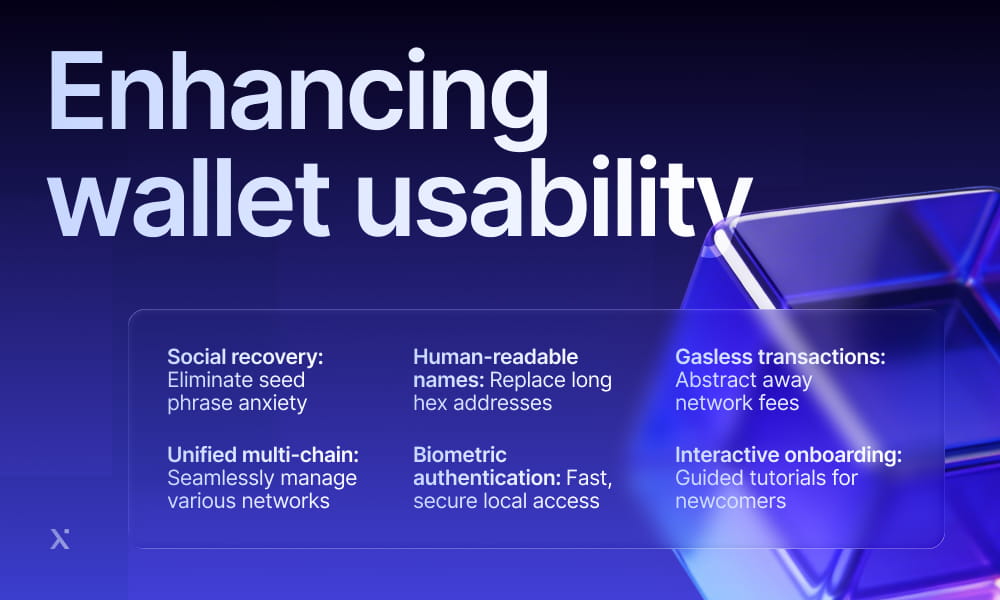
Don’t forget the onboarding. The first five minutes determine if a user stays or deletes the app. Give them a tour. Explain why they need to write down their seed phrase. Use friendly language. At PixelPlex, we spend a lot of time on the “psychology” of the interface. We want users to feel empowered, not intimidated. High-quality crypto wallet development is as much about empathy as it is about code.
Add a “simulated transaction” feature. Let users see exactly what will happen and what fees they will pay before they hit the final “confirm” button.
6 challenges you will face during development
Maintaining multi-chain synchronicity
Every blockchain has its own rules, speed, and quirks. Keeping all of them working perfectly in one app is a nightmare. One chain might update its node version, and suddenly your wallet stops showing balances for that coin. This requires a dedicated “dev-ops” approach to crypto wallet development. You need constant monitoring to catch these issues before users do.
Scalability during market volatility
When the price of Bitcoin moves 10% in an hour, everyone opens their wallet at once. If your backend isn’t ready, it will crash. Handling this sudden surge in traffic is a massive technical challenge. It requires smart caching and load-balancing strategies. Scalability is a silent killer of many crypto wallet development projects that didn’t plan for success.
The “Seed Phrase” UX dilemma
How do you make a user write down 12 words without making them hate you? It is a friction point that causes many people to quit. Finding creative ways to encourage safe backup habits is hard. You have to balance “maximum security” with “minimum annoyance.” It is a constant battle in the world of crypto wallet development.
Regulatory compliance and KYC
Depending on where you operate, you might need to implement “Know Your Customer” rules. This adds a lot of friction and cost. You need experts who understand both the tech and the law to ensure your crypto wallet development stays on the right side of the authorities.
Protection against sophisticated phishing
Hackers are getting smarter. They create fake versions of your app or send fake “security alerts” to your users. Your app needs features that help users stay safe, like warning them when they interact with a known malicious contract. Protecting your users’ funds is an ongoing war. It never ends.
Keeping up with the pace of innovation
The crypto world moves faster than any other industry. New protocols, new token standards, and new security threats appear every week. If you stop moving for a month, you are already outdated. Continuous crypto wallet development is the only way to stay relevant.
| Challenge | Potential impact | Solution strategy |
| Chain sync issues | Incorrect balances | Redundant node providers (Infura, Alchemy) |
| High traffic spikes | App downtime | Auto-scaling cloud infrastructure |
| Security vulnerabilities | Loss of funds | Regular third-party audits and bug bounties |
| User error (lost keys) | Permanent loss | Social recovery and educational onboarding |
More Than Just Storage: How Crypto Wallet Rewards Programs Build Loyalty and Drive Growth

What You Should Know About the True Cost of Building a Crypto Wallet Like MetaMask
Why partner with PixelPlex for your wallet build?
Our portfolio is a testament to this expertise. We built the Qtum Wallet, which provides secure, native mobile experiences for both Android and iOS users.
We also developed Canton Loop, the first self-custodial wallet for the Canton Network. It didn’t just work – it thrived, helping to generate 31.3M Canton Coin in revenue.
Console Wallet – a desktop powerhouse for the same network that saw $160,000 in revenue in just two months and earned “Featured App” status.
These aren’t just projects to us, they are success stories we are proud to have been a part of.
Never compromise on the quality of your developers. In crypto, “cheap” code is usually the most expensive thing you will ever buy because of the security risks involved.
Beyond these, our deep bench of experts can assist with financial software development and complex integrations that others might shy away from. We handle everything from the initial spark of an idea to the final security audit. Our goal is to build a product that stands the test of time and becomes a staple in your users’ daily lives. If you want a SafePal-style ecosystem that actually works, we have the tools and the talent to make it happen.
FAQ
SafePal utilizes air-gapped QR code communication, ensuring that private keys never interact with an internet-connected device or wireless signal.
Businesses are eager to replicate the success of hybrid ecosystems that offer the ironclad security of hardware combined with a seamless mobile experience.
The ecosystem consists of a trio of integrated products: the S1 hardware wallet, a mobile application, and a browser extension.
React Native is highly recommended because it allows developers to maintain a single codebase for both iOS and Android while keeping costs down.
A duress PIN is a security feature that opens a fake, empty wallet to protect the user’s actual funds in dangerous physical situations.
It allows users to swap tokens at the best available market prices across multiple decentralized exchanges without ever leaving the wallet interface.
Losing a seed phrase is the most common cause of lost funds, and social recovery allows trusted friends to help a user regain access to their assets safely.
An enterprise-grade ecosystem similar to SafePal typically costs between $150,000 and $400,000+, depending on the complexity of hardware and software integrations.
We provide continuous maintenance, regular security audits, and constant patching to protect against new vulnerabilities and protocol changes.