An NFT wallet is the only place where people carefully store pictures of monkeys worth way more than their laptops. But how do we design one that protects not just these digital creatures, but an entire gallery of modern art in someone’s pocket?
NFTs shook the world in 2021, and here we are five years later, still talking about this phenomenon. What started as a wave of extremely expensive digital art and collectibles has evolved into a broader ecosystem that includes gaming assets, tokenized memberships, digital identity, and intellectual property rights.
While the hype has obviously cooled, the underlying technology continues to mature. It pushes developers to focus on usability, security, and real-world value. As NFTs become more widely used, creating reliable, secure, and user-friendly wallets is essential for supporting the next generation of digital ownership.
PixelPlex has been delivering NFT development services from day one and growing with the ecosystem — so we’ve put together this article to share the insights and practical tips we’ve learned along the way.
What is an NFT wallet?
An NFT wallet is a digital wallet that allows you to store, manage, and interact with non-fungible tokens, or shortly — NFTs. While a traditional crypto wallet handles cryptocurrencies, an NFT wallet is designed to support unique digital assets such as artwork, collectibles, and in-game items.
Technically, NFTs aren’t stored directly inside the wallet — they actually live on the blockchain through careful NFT smart contract development, while the wallet holds the private keys that prove ownership and give access to them. This means the wallet acts more like a secure gateway to your digital collection rather than a storage box.
A well-designed NFT wallet also includes features like gallery-style previews, metadata display, and clear transaction details to make managing digital assets simpler and more intuitive.
Complete Guide to Web3 Wallet Development and Its Costs

Web3 Development Cost: Breaking Down What Really Drives the Price
What technologies are used in NFT wallet development?
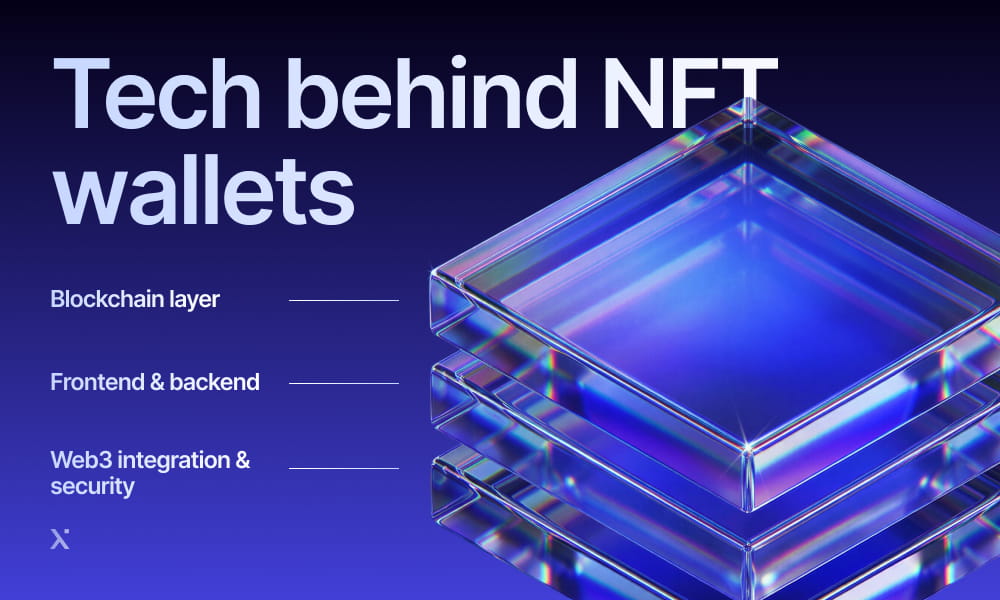
From a technology perspective, NFT wallet development can be divided into three main areas: the blockchain layer, frontend and backend development, and Web3 integration along with security solutions.
First, let’s take a look at the most popular blockchains that developers and businesses typically choose when building NFT wallets.
| Blockchain | Key features | Why it’s popular for NFT wallets |
| Ethereum | ERC-721 & ERC-1155 support, large NFT ecosystem | Most widely used NFT blockchain, strong community and marketplace support |
| Solana | Fast transactions, low fees | Great for high-volume or microtransaction NFTs |
| Polygon | Layer-2 on Ethereum, low gas fees | Combines Ethereum compatibility with cheaper transactions |
| Tezos | Energy-efficient, low-cost transactions | Popular among eco-conscious artists and developers |
| Flow | Designed specifically for NFTs and gaming | Used by NBA Top Shot and other large NFT projects |
Now, we move on to the frontend and backend tech stack. The frontend is what users interact with like the galleries, transaction buttons, and dashboards, while the backend handles the logic behind the scenes, including APIs, databases, and server-side operations that make sure everything runs smoothly and securely.
| Layer | Common technologies | Role in NFT wallet development |
| Frontend | React, Vue, Angular, Flutter | User interface, NFT galleries, transaction flow |
| Backend | Node.js, Python, Go | Handles server-side logic, APIs, database management |
| Database | PostgreSQL, MongoDB | Stores user info, transaction history, metadata |
| APIs | REST, GraphQL | Connects frontend and backend, external services |
| Mobile support | Swift (iOS), Kotlin/Java (Android) | Enables mobile wallet apps with native performance |
Last but not least, Web3 integration and security solutions. They make it possible for NFT wallets to interact directly with the blockchain as well as protect users’ assets.
| Component | Technologies & tools | Purpose |
| Web3 libraries | web3.js, ethers.js | Enable blockchain interactions in frontend and backend |
| Wallet connection | WalletConnect, MetaMask SDK | Connects users’ wallets to dApps |
| Encryption | AES, RSA, elliptic curve cryptography | Protects private keys and sensitive data |
| Authentication | Multi-factor auth, biometric login | Ensures secure user access |
| Smart contract auditing | MythX, OpenZeppelin, CertiK | Verifies smart contract security before deployment |

From Code to Confidence: Inside Smart Contract Audit Pricing
Web3 Smart Contract Development: Building the ‘Brain’ of Your Web3 Project
For businesses looking to create their own NFT wallets, professional blockchain development services can provide the expertise you need. They help pick the right blockchain, develop secure smart contracts, build intuitive frontends, and integrate Web3 functionality. With these services, NFT wallet development projects and any other NFT-related solutions can be launched smoothly while delivering a great user experience.
NFT wallet vs crypto wallet: what’s the difference?
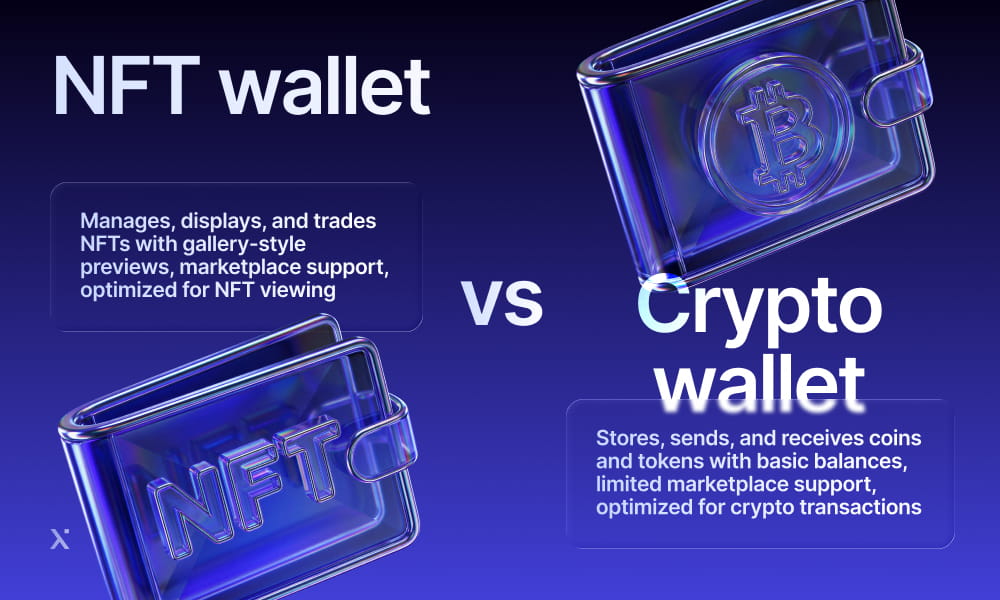
Is there any? Well, that’s a bit tricky. For anyone exploring crypto wallet development, it’s important to understand that many crypto wallets today can also handle NFTs, so the lines are blurry.
The key distinction lies in the type of assets they’re optimized for. A typical crypto wallet is primarily designed to store and send cryptocurrencies such as Ethereum, Bitcoin, SOL, BNB, and others. However, because NFTs are often built on the same blockchains as these coins, the wallet can also manage them. Technically, the wallet doesn’t treat NFTs differently — it just holds the unique token IDs that represent your NFTs on the blockchain.
Specialized NFT wallets, on the other hand, may offer extra features like easy viewing of digital art, gallery-style interfaces, or marketplace integrations to make it simpler to manage, showcase, and trade NFTs compared to a standard crypto wallet. This is especially relevant for teams planning NFT marketplace development in Dubai, where wallet functionality often needs to be connected with trading, ownership, and user asset management.
| Aspect | Crypto wallet | NFT wallet |
| Primary purpose | Store, send, and receive crypto | Manage, display, and trade NFTs |
| Asset types | Coins and tokens | NFTs and digital collectibles |
| Display interface | Basic token balances | Gallery-style NFT display, previews of art |
| Marketplace integration | Limited or external only | Built-in marketplace support or easy linking |
| Optimization | Crypto transactions | NFT viewing, showcasing, and trading |
Some of the most widely used crypto wallets, including MetaMask, Trust Wallet, and Coinbase Wallet, aren’t limited to handling cryptocurrencies — they can also store NFTs. However, their interfaces are primarily built for managing coins, so NFT features are minimal or add-on.
Let’s see the examples of NFT wallets designed specifically to make managing, viewing, and trading NFTs easier.
| NFT wallet | Key features |
| Rainbow | Mobile-first wallet with gallery-style NFT showcase |
| AlphaWallet | Ethereum-focused, optimized for NFTs and tokenized assets |
| Magic Eden Wallet | Solana-based, integrated directly with NFT marketplace features |
| Enjin Wallet | Supports gaming NFTs, collectibles, and Ethereum assets |
How do NFT wallets generate revenue?
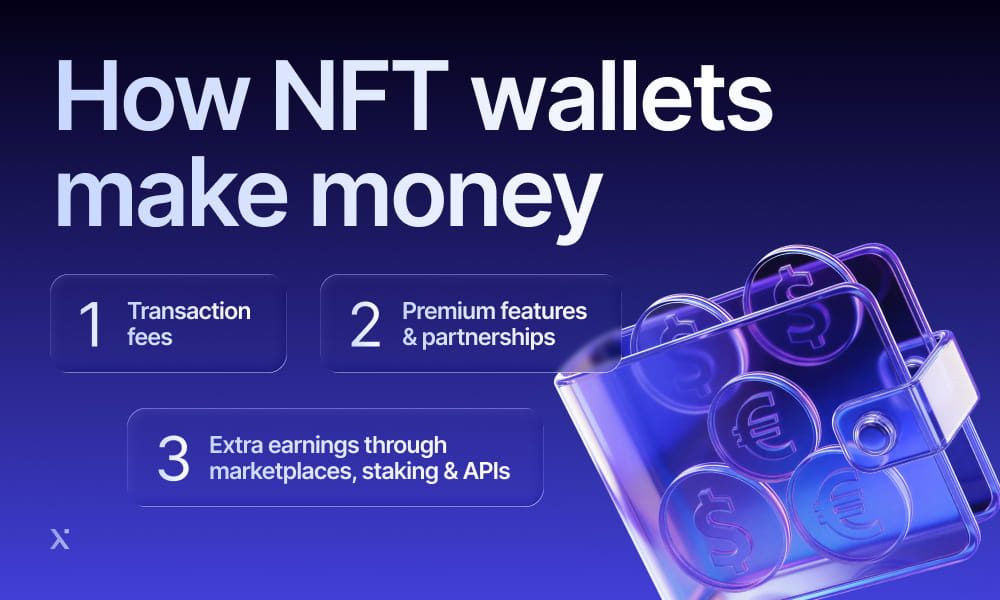
If your business is considering building its own NFT wallet, it’s important to understand the monetization potential. Beyond simply storing digital assets, NFT wallets can become powerful revenue engines through multiple channels, such as:
1. Transaction fees
This is the most direct revenue model that charges fees on user activity. This can include:
- Swap fees when users trade tokens within the wallet
- NFT purchase and sale commissions for marketplace integrations
- Gas fee, which adds a small margin on network fees
- Cross-chain bridge fees for moving assets between blockchains
Even small percentages can scale quickly with growing transaction volume.

More Than Just Storage: How Crypto Wallet Rewards Programs Build Loyalty and Drive Growth
Canton Network 2026’s DeFi Boom: Top Profitable Solutions to Build
2. Premium features and partnerships
NFT wallets can also offer paid upgrades and strategic partnerships like:
- Premium subscriptions, offering advanced analytics, portfolio tracking, and alerts
- Early access to NFT drops for paid members
- White-label marketplace integrations
- Brand partnerships with NFT projects and creators
- Sponsored listings or promoted collections inside the wallet
These models work especially well when your wallet builds a strong user base.
3. Additional revenue streams
Beyond core fees, there are several more indirect monetization paths:
- In-app NFT marketplace commissions
- Token launchpad hosting fees
- Staking or yield aggregation margins
- Fiat on/off-ramp referral commissions
- API access for developers
- Custodial services for enterprise clients
| Revenue stream | How it works | Best for |
| Transaction fees | Charge % on swaps, trades, transfers | Active trading wallets |
| Gas fee markups | Add small margin to network fees | Multi-chain wallets |
| Premium features | Paid subscriptions for advanced tools | Active NFT traders needing analytics |
| NFT marketplace commission | Take cut from NFT sales | Wallets with marketplace |
| Partnerships & sponsorships | Promote projects or drops | Large user base |
| Fiat on/off-Ramp referrals | Earn from payment providers | Mainstream adoption |
| Staking/yield margins | Share of staking rewards | DeFi-enabled wallets |
| API & enterprise services | Charge developers & businesses | Platform-focused wallets |
All in all, the best monetization strategy for your NFT wallet development depends on your business model and target audience. In most cases, the strongest approach is combining two or three complementary streams — for example, using transaction fees for baseline income and premium features or partnerships to support growth.
Well, that’s also a good idea, but ads should be implemented very carefully. Overloading the interface with promotions can hurt user trust, so it’s better to use subtle formats like sponsored NFT collections or featured drops that stay relevant to users.
NFT wallet development: step-by-step process
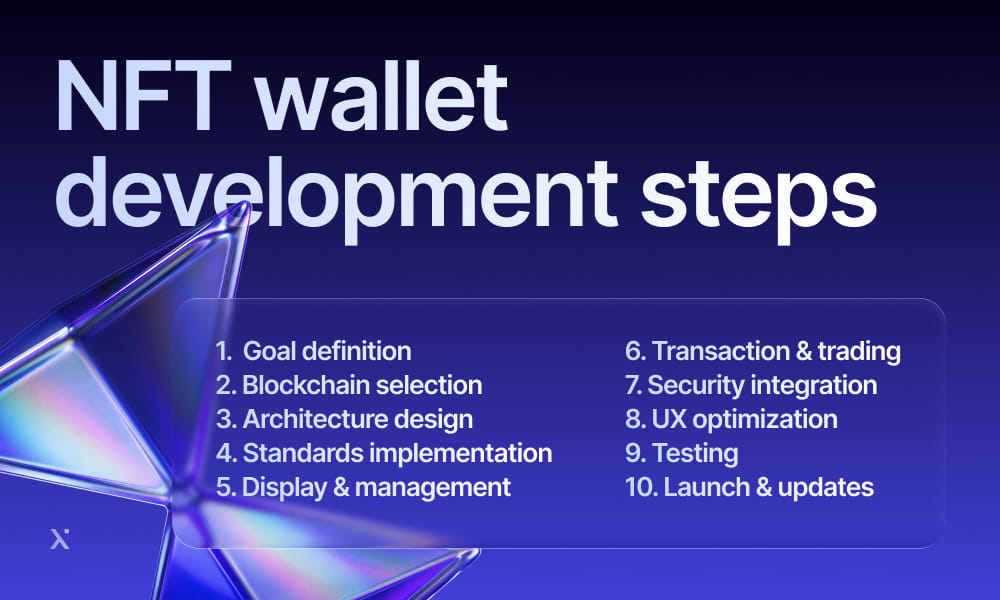
The process of NFT wallet app development is quite similar to building a regular crypto wallet, but there are a few important differences though. A typical crypto wallet focuses on sending, receiving, and storing tokens. An NFT wallet, on the other hand, also needs to handle metadata, media display, marketplace integrations, and collection management.
You’re not just working with balances — you’re working with images, traits, ownership history, and sometimes even in-app trading. That means extra attention to UI, indexing, and compatibility with NFT standards like ERC-721 or ERC-1155.
Below is how NFT wallet development usually goes:
1. Define your goals and target users
First, you need to decide who your wallet is for and what problems it solves. You will outline whether you’re targeting NFT collectors, traders, gamers, or enterprises. This step helps you prioritize features and avoid building unnecessary functionality.
2. Choose supported blockchains
Next, you need to select the networks your wallet will support. Here, you will decide between options like Ethereum, Polygon, Solana, or a multi-chain approach. This decision affects development complexity, fees, and available NFT ecosystems.
If you’re working with specialized NFT wallet development services, they can also help you evaluate which blockchains best match your business goals and timeline.
How to Select The Best Blockchain Platform for Your Project

Blockchain Development Cost in 2026: What Goes Into the Price Tag
3. Design wallet architecture
At this stage, you need to determine whether your wallet will be custodial or non-custodial. Here, you will define how private keys are generated, stored, and secured. This is also where you plan backend services, indexing, and metadata handling.
4. Implement NFT standards support
Now you need to add support for NFT token standards. Your developers will integrate ERC-721, ERC-1155, or other relevant formats so the wallet can correctly recognize and manage NFTs.
5. Build NFT display and management features
This is where your wallet starts to feel like a real NFT product. You need to create galleries, collection views, and asset details. Here, you will handle images, videos, metadata, traits, and ownership information in a clean and user-friendly way.
6. Add transaction and trading functionality
Next, you need to enable sending, receiving, and possibly trading NFTs. Here, you will integrate marketplace APIs or build in-app swap capabilities, which are also central to white-label NFT marketplace development. This allows users to interact with NFTs without leaving the wallet.
7. Integrate security features
Security is critical. You need to implement encryption, biometric login, seed phrase protection, and transaction confirmations. You will also have to consider phishing protection and suspicious contract warnings.
8. Optimize user experience
At this stage of NFT wallet development, you refine navigation, loading speeds, and onboarding. Here, you will simplify wallet creation, add tooltips, and make NFT browsing smooth and intuitive, which is especially important for new users.
9. Test across networks and devices
Before launch, you need thorough testing. Check NFT rendering, transactions, network switching, and edge cases. This step helps avoid broken images, missing metadata, or failed transfers.
Skipping proper testing can lead to costly fixes and a poor user experience later.
10. Launch and plan ongoing updates
Finally, you release the wallet and continue improving it. Your team will monitor user feedback, add new chains, integrate marketplaces, and introduce monetization features over time. NFT ecosystems evolve quickly, so regular updates are essential.
| Step | What to do |
| Define goals & users | Decide who your wallet is for — collectors, traders, gamers, or enterprises |
| Choose blockchains | Pick networks like Ethereum, Polygon, Solana, or multi-chain. Balance complexity, fees, and ecosystems |
| Design architecture | Decide custodial vs non-custodial and plan key storage and backend. Security is key |
| Implement NFT standards | Add ERC-721, ERC-1155, or other formats to provide marketplace compatibility |
| Build NFT display | Create galleries and collection views. Keep it clean and user-friendly |
| Add transactions | Enable sending, receiving, and trading NFTs via APIs or in-app swaps |
| Integrate security | Add encryption, biometrics, and seed phrase protection |
| Optimize UX | Refine navigation, loading, and onboarding for smooth browsing |
| Test thoroughly | Check rendering, transactions, and edge cases |
| Launch & update | Release, monitor feedback, add chains, integrate marketplaces, and update regularly |
Custodial vs. Non-Custodial Wallet: Everything You Need To Know
Zero-Leakage Vaults: Building High-Stakes Canton Network Wallets
How much does it cost to develop an NFT wallet?
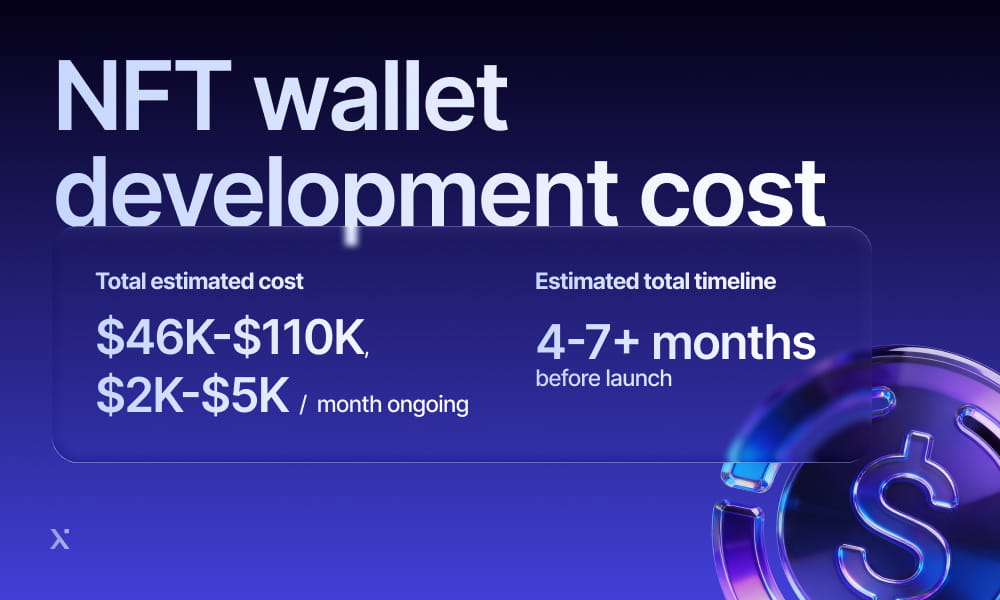
NFT wallet development costs can vary a lot. Features and complexity play a big role — things like NFT display, trading, marketplace integrations, and premium tools can increase the price.
Supported blockchains matter too, since multi-chain wallets are more expensive than single-chain ones. Design and UX also contribute, especially if you want custom interfaces, galleries, smooth onboarding, and animations.
Working with NFT wallet development services can help you avoid unnecessary expenses by guiding you through best practices, choosing the right tech stack, and optimizing development timelines.
| Stage | Estimated cost | Timeline |
| Planning & requirements | $3K-$7K | 1-2 weeks |
| Blockchain integration | $5K-$15K | 2-4+ weeks |
| Wallet architecture & backend | $10K-$25K | 3-6+ weeks |
| NFT standards & display | $8K-$20K | 2-4 weeks |
| Transactions & marketplace | $7K-$15K | 2-3 weeks |
| Security implementation | $5K-$12K | 2-3 weeks |
| UI/UX design | $5K-$10K | 2-4 weeks |
| Testing & QA | $3K-$7K | 1-2 weeks |
| Launch & maintenance | $2K-$5K/month | Ongoing |
Why choose PixelPlex for NFT wallet development?
PixelPlex is an NFT wallet development company that witnessed the NFT boom, developed specialized NFT marketplaces for clients, and also worked on their own crypto wallets. Here are a few key factors that make PixelPlex a strong choice for NFT wallet development:
- Over a decade of blockchain expertise
- 450+ successfully delivered projects
- Solutions used by 10M+ users
- Security-focused development approach
- End-to-end delivery and support
- Scalable, customizable wallet solutions
PixelPlex also offers white-label crypto wallet development services that help businesses launch branded wallets faster and more cost-effectively. These solutions are customizable, feature-rich, and come with built-in security and compliance support.
How to Build a Crypto Wallet: a Complete Guide

What You Should Know About the True Cost of Building a Crypto Wallet Like MetaMask
Conclusion
NFT wallet app development has evolved far beyond simple storage and has become an important part of the digital asset ecosystem. NFTs continue to expand into gaming, art, and identity, so having a wallet that is secure, advanced, and visually appealing is essential for both creators and collectors.
With the right approach, businesses can build wallets that, most importantly, safeguard assets while also supporting new revenue models and ecosystem growth. PixelPlex’s experience in NFT wallet development enables these solutions to meet real-world needs today and quickly adapt to the demands of tomorrow.
FAQ
NFT wallets often store only metadata and links to media files (images, videos) on decentralized storage like IPFS or Arweave. This ensures NFTs remain verifiable without bloating the wallet.
Gas fees impact every NFT transaction, including sending, buying, or minting. NFT wallets need to display fees clearly and provide tools like automatic estimation, batching, or layer-2 support to help users manage costs efficiently.
Developers who provide NFT wallet development services make sure these wallets are future-proof by designing them with multi-chain support, compatibility with evolving NFT standards like ERC-721 and ERC-1155, a modular architecture for easy updates, and a strong focus on security and scalability.
Multi-chain NFT wallets use modular blockchain connectors or APIs to interact with different networks. This enables users to manage their NFTs across Ethereum, Solana, Polygon, and more in a single interface.
Yes, advanced NFT wallets can integrate staking, lending, or fractional ownership, allowing users to earn rewards or collateralize NFTs while keeping them secure.
Wallets implement security measures like URL verification, phishing warnings, transaction review prompts, and hardware wallet integration to protect users from scams. Still, users should remain cautious, double-check addresses, and never share their private keys or seed phrases with anybody.