Starting a crypto exchange sounds glamorous until you sit down and try to price it. Founders come to us with a screenshot of Bybit and a simple question, "how much for something like that?"
And the honest reply is, “well, it depends.” So we decided to unpack the whole thing here, from features to the actual dollar figures.
By the end of 2025, roughly 741 million people owned crypto around the world, a jump of over 12% in a single year. That’s a lot of wallets looking for a place to trade. When demand grows like that, new platforms keep popping up, and the ones that win are usually the ones built properly from day one.
The wider market backs this up. Analysts put the crypto market at around $2.96 trillion in 2025, with forecasts pointing to nearly $8 trillion by 2030. Numbers like these are why so many entrepreneurs ask us about cryptocurrency exchange development in the first place.
Since we field this question almost weekly, our crypto exchange and crypto wallet development team put together this guide. We build exchanges and wallets for a living, so we’d be happy to help with your build or just talk through your idea, and that’s the whole reason this article exists.
The Real Price Tag Behind a Kraken-Style Exchange: A Builder's Field Guide
Cracking the Coinbase Code: What It Takes to Build Coinbase-Like Exchange
What is Bybit?
Bybit is a centralized crypto exchange that launched back in 2018 and grew fast. It started out focused on derivatives, the kind of leveraged trading pros love, and later added spot trading, staking, and a bunch of other products. Today it serves more than 78 million registered users across 241 countries and regions.
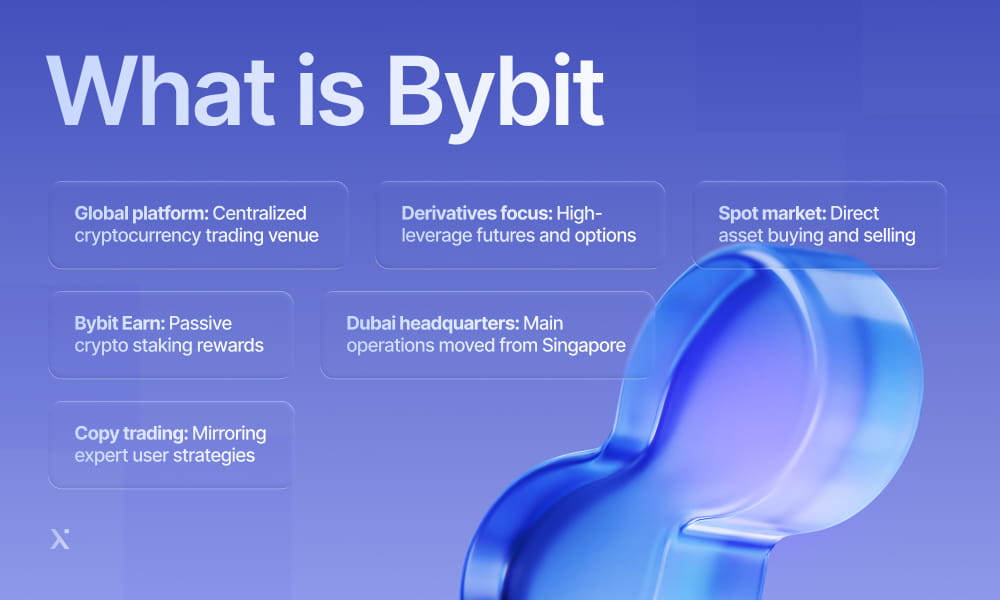
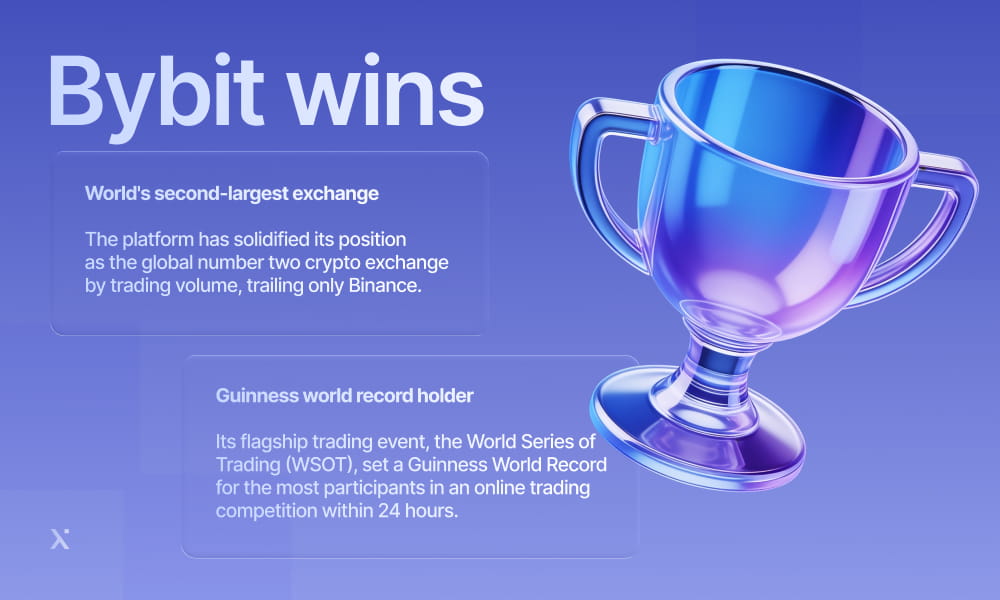
When people picture a “serious” trading platform, Bybit is often what comes to mind. It handled about $1.5 trillion in trading volume during 2025 and finished the year as the second-largest exchange by volume. Even after a rough patch early in 2025, the platform clawed its way back to the top, which tells you something about how sticky a well-built exchange can be.
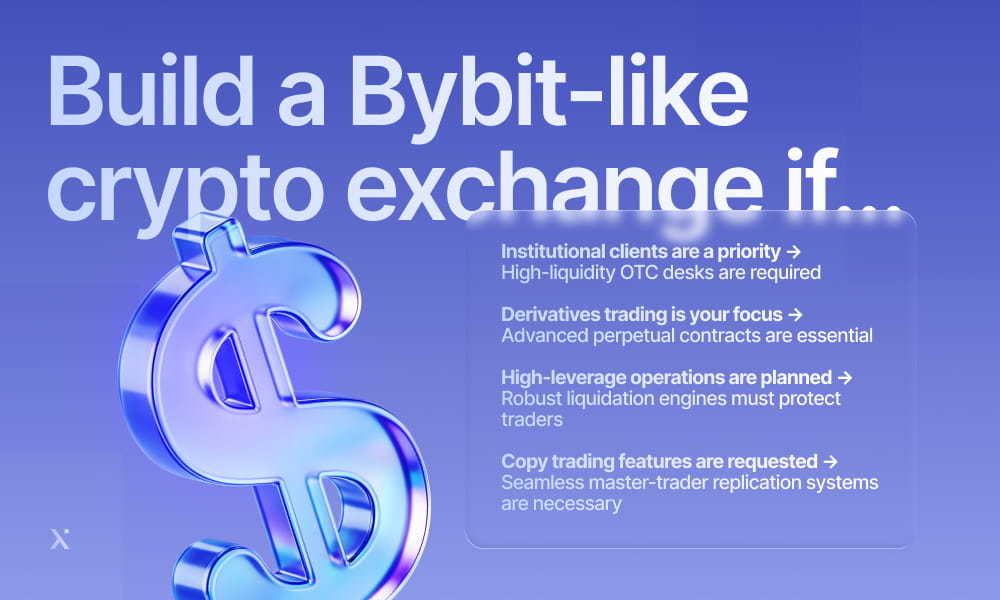
So when a client asks for a Bybit-like platform, they usually mean a fast, reliable, feature-rich exchange that both newcomers and pros can use. That’s the target we’ll keep in mind throughout this piece on cryptocurrency exchange development.
In February 2025, Bybit suffered the biggest exchange hack ever, losing around $1.4 billion in Ethereum, yet it kept operating and recovered its market position within months. Security isn’t a nice-to-have. It’s the difference between a bruise and a funeral.
What makes Bybit different from other crypto exchanges?
Plenty of exchanges look similar on the surface. Under the hood, though, the good ones have a few things that set them apart. Below are five that made Bybit stand out, and any team doing cryptocurrency exchange development should study them closely.
A matching engine built for speed
Bybit’s trading engine can process a huge number of orders per second without choking. Speed matters because traders abandon platforms that lag during volatile moments, and volatile moments are exactly when volume spikes. A sluggish engine loses you money and reputation at the same time.
Deep liquidity from day one
An empty order book scares users away. Bybit solved this early by partnering with market makers and pooling liquidity, so orders fill quickly at fair prices. New platforms often underestimate how hard this part is.
A derivatives-first mindset
While many exchanges started with simple spot trading, Bybit leaned into perpetual contracts and futures. That attracted a professional crowd willing to trade large volumes, which fed back into liquidity and revenue.
A genuinely usable interface
Complex products, simple screens. Bybit managed to make leverage and margin approachable without dumbing everything down. Beginners can find their footing, and veterans get the depth they want.
Serious risk controls
Insurance funds, liquidation systems, and layered security aren’t glamorous, but they keep the platform alive during chaos. This ties directly into security audit and risk management, which we treat as a core part of any exchange, never an afterthought.
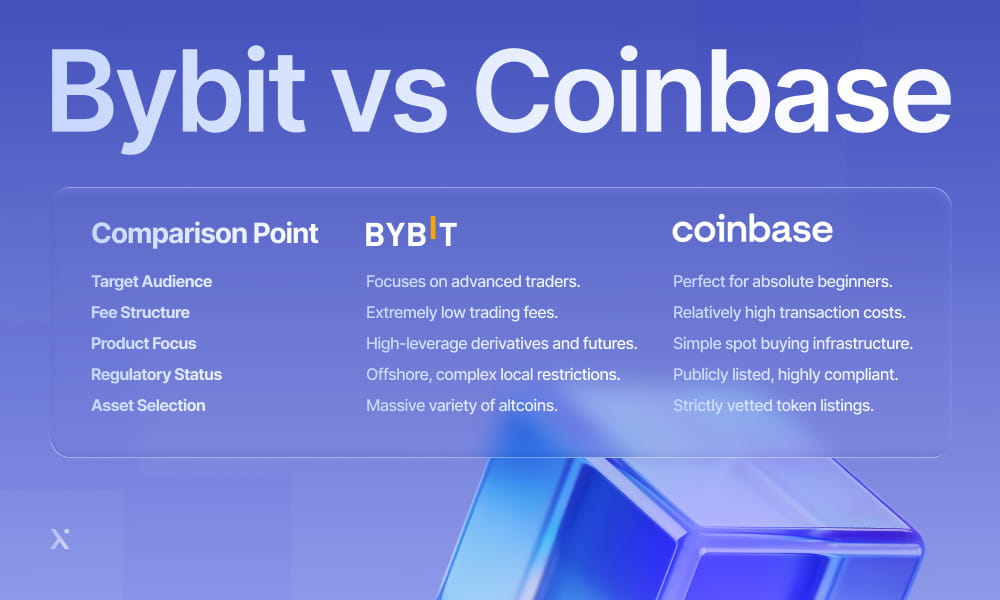
Bybit vs another major crypto exchange

Counting the Crypto Millions: Development Costs of Binance-Like Crypto Exchange

What is the Cost to Develop a Crypto Wallet App Like Ledger?
Which tech stack do you need to build a Bybit-like exchange?
Now to engineering. There’s no single “correct” stack, but there are combinations that have proven themselves. Picking the right tools early saves you painful rewrites later, and it keeps your cryptocurrency exchange development timeline predictable.
Let’s split this into frontend and backend, since the two solve very different problems.
For the frontend
The frontend is what your users touch, so it has to feel quick and never freeze while prices update every fraction of a second.
React
Our usual first pick. It’s mature, has a massive community, and handles fast-changing data well. Most trading dashboards you admire are built on it.
Vue.js
A lighter option if your team prefers a gentler learning curve. Great for smaller teams who still want a snappy interface.
Angular
A heavier, more opinionated framework. It suits large organizations that like strict structure and long-term support.
Svelte
The newcomer that compiles away a lot of overhead. Pages load fast, and the code stays tidy, though the talent pool is smaller.
TypeScript (as the base layer)
Whatever framework you choose, adding TypeScript catches bugs before they reach users. On a financial platform, that safety net pays for itself.
Recommended frontend stack and alternatives
| Technology | Role in Stack | Pros | Cons | Verdict / Best For |
| React | Core Framework | Rich ecosystem, virtual DOM for fast updates, massive talent pool | Can become bloated if dependencies aren’t managed well | Primary Choice for dynamic, real-time trading charts |
| Vue.js | Core Framework | Lightweight, gentle learning curve, clean documentation | Fewer large-scale enterprise plugins compared to React | Alternative for rapid prototyping and smaller, agile teams |
| Angular | Core Framework | Full-featured out-of-the-box, highly structured, secure | Steep learning curve, heavier bundle size, slower to write | Alternative for enterprise-level institutional brokerages |
| Svelte | Core Framework | No virtual DOM overhead, compile-time optimization, ultra-fast | Small community, harder to find experienced developers | Experimental option for ultra-lightweight mobile-web views |
| TypeScript | Language Layer | Static typing catches syntax and logic errors before compile | Slight build-time overhead, requires developer discipline | Non-Negotiable layer to ensure transaction-data integrity |
What is the Cost to Develop a Crypto Wallet App Like Coinbase?

The Real Price Tag of Launching a SafePal-Style Crypto Ecosystem
For the backend
The backend does the heavy lifting: matching orders, moving funds, checking balances, and keeping everything consistent even under load.
Go
Fantastic for high-throughput systems like a matching engine. It’s fast, handles concurrency gracefully, and stays readable.
Node.js
Excellent for real-time features and APIs. If your team already lives in JavaScript, it keeps everything in one language.
Rust
When you want raw performance and memory safety, Rust is hard to beat. It’s a favorite for the most performance-critical pieces.
Java
A battle-tested choice for large financial systems. Banks have trusted it for decades, and it scales well.
Python (for analytics and support services)
Not ideal for the core engine, but wonderful for data work, reporting, and machine-learning tasks that sit alongside the exchange.
Whichever route you take, the backend usually leans on solid financial software development practices, because you’re handling real money and can’t afford sloppy shortcuts.
Recommended backend stack and alternatives
| Language / Tech | Primary Role | Execution Speed | Concurrency Model | Ideal Use Case |
| Go (Golang) | Core Matching Engine & Microservices | Extremely Fast | Channels & Goroutines (Built-in) | Low-latency order matching, API gateways, and wallet listeners |
| Rust | Ultra-Low Latency Critical Paths | Fastest | Safe, thread-safe memory management | High-performance trading logic and memory-safe smart wallets |
| Node.js | Websockets & API Routing | Moderate | Event-driven (Single-threaded event loop) | Powering real-time order book streaming and user notifications |
| Java | Core Ledger & Bank Integrations | Fast | Multithreading (Native) | Heavy-duty accounting systems and multi-tier institutional backend |
| Python | Analytics, Reporting & ML | Slow | Process-based (GIL bottleneck) | Fraud detection engines, backtesting scripts, and financial reporting |
Don’t chase the trendiest tool. Chase the one your engineers can maintain at 3 a.m. during an incident. A boring, well-understood stack beats a shiny one nobody fully grasps.
Advanced features worth adding
A basic exchange lets people buy and sell. A great one keeps them coming back. Here are seven features that push a platform from “fine” to “favorite,” and each adds real weight to your cryptocurrency exchange development roadmap.
Spot and derivatives trading
Offer both, and you serve two very different audiences under one roof. Spot for the cautious, derivatives for the bold.
Staking and earn products
Users love passive income. Letting them stake idle assets keeps funds on your platform instead of drifting elsewhere.
A built-in wallet
A smooth wallet experience matters enormously. Many teams pair the exchange with custom Web3 wallet development so users can hold, send, and receive without leaving the app.
Advanced order types
Stop-loss, take-profit, trailing stops, and conditional orders give traders control. Pros won’t take you seriously without them.
A mobile app
Most trading now happens on phones. A polished mobile experience isn’t optional anymore, and it often drives the majority of your volume.
Copy trading
Beginners follow experienced traders automatically. It lowers the barrier to entry and creates a nice community effect.
Fiat on-ramps and off-ramps
Let people move between regular money and crypto easily. Smooth crypto payment solutions here can make or break your signup numbers.
Advanced features and what they add for users
| Advanced Feature | Target User Segment | Value Added for Users | Business Benefit for the Platform |
| Derivatives & Margin | Pro / Leveraged Traders | Up to 100x leverage on perpetual contracts | Significantly higher trading volume and trading fee revenue |
| Staking & Earn | Passive Holders | Generates yield on idle assets without leaving the app | Boosts asset retention and Total Value Locked (TVL) |
| Web3 Wallet Integration | Self-Custody Users | Simple transfers between exchange accounts and Web3 | Higher platform engagement and native ecosystem utility |
| Advanced Order Types | Day & Swing Traders | Precise risk management (trailing stops, conditional limits) | Increases trader activity and loyalty to the exchange |
| Dedicated Mobile App | Mass Retail Market | Desktop-grade trading experience on-the-go | Drives over 70% of daily active user (DAU) engagement |
| Copy Trading Engine | Retail Beginners | Automate trades by mimicking verified top performers | Lowers barrier to entry, highly viral marketing/social loop |
| Fiat Payment Gateways | New Crypto Entrants | Direct purchases with VISA/Mastercard, bank transfer | Unlocks a critical user acquisition channel and boosts sign-ups |

Daml Smart Contract Audit Cost in 2026: A Guide to Pricing and Peace of Mind
What Happens to Your Budget When Building a Trust Wallet Alternative?
Integrations you may want to consider
An exchange rarely lives alone. It talks to dozens of external services, and choosing the right ones early keeps everything humming. A few worth thinking about:
- Liquidity providers and market makers, so your order book never looks empty
- KYC and AML providers, to verify identities and stay compliant
- Payment gateways, for smooth fiat deposits and withdrawals
- Blockchain nodes and APIs, to read and write on-chain data reliably
- Analytics and monitoring tools, so you always know what’s happening
For the compliance side, many clients bolt on transaction monitoring software to spot suspicious activity before it becomes a legal headache. Getting this in place early is far cheaper than retrofitting it later.
Regulators care less about your slick UI and more about whether you can track dirty money. Budget for compliance from the start, because bolting it on afterward always costs more and hurts more.
How to develop an exchange like Bybit
People imagine one giant coding sprint, but real cryptocurrency exchange development happens in stages. Skipping steps is how projects blow past their budgets. Here’s the path we usually follow, broken into eight steps.
Step 1: Research and planning
Start by defining who you’re building for and which markets you’ll serve. This shapes everything else, from features to licensing. A little blockchain consulting at this stage saves a fortune later.
Step 2: Sort out compliance and legal
Figure out where you’ll register, what licenses you need, and which rules apply. Boring? Sure. Skippable? Absolutely not.
Step 3: Design the architecture
Decide how the pieces fit together, the matching engine, wallets, databases, and APIs. This blueprint keeps the whole build coherent.
Step 4: Build the core trading engine
This is the heart of the platform. It matches buyers with sellers instantly and accurately, even under heavy load. Key things to nail here:
- Ultra-low latency, so orders fill in milliseconds
- Rock-solid accuracy, because a mismatched trade is a nightmare
- Horizontal scaling, so the engine grows with your users
Step 5: Develop wallets and security layers
Set up hot and cold storage, multi-signature controls, and key management systems, working alongside a certified Daml smart contract audit company to verify on-chain permissions and asset transfer logic. This step overlaps heavily with proper security audit work to catch weak spots before launch.
Step 6: Create the user interface
Turn the design into real, responsive screens. Focus on clarity, since confused users don’t trade.
Step 7: Test everything, twice
Load testing, security testing, and plenty of real-world scenarios. What to hammer hardest during this phase:
- Peak-load behavior, mimicking a market crash with everyone trading at once
- Security penetration attempts, trying to break in before hackers do
- Edge cases in withdrawals and deposits, where money bugs love to hide
Step 8: Launch and keep improving
Go live, watch closely, and iterate. The first weeks reveal things no test ever will, so stay ready to patch and tune.
Launch quietly with a small group of beta users before your big public opening. They’ll surface real problems while the stakes are low, and their feedback is worth more than any focus group.

Own or Rent a Mining Pool: What Fits Your Goals?

DeFi Vaults Explained: How to Turn Lazy Crypto Into an Automated Yield Machine
What’s the cost of development?
Here’s the part everyone scrolls to. I’ll be upfront, prices swing widely depending on features, region, and how custom you want things. Still, we can group most projects into three packages, and each one changes the shape of your cryptocurrency exchange development budget.
Broadly, a lean MVP tends to start around $50,000 or so, a solid mid-tier build lands in the low-to-mid six figures, and a full enterprise platform can run past $500,000. Let’s break down what each buys you.
MVP package
This is your proof of concept. You get core spot trading, a basic wallet, user registration, and simple security. It’s enough to test the market without emptying your bank account. If speed matters most, our MVP development approach gets you live quickly, then you expand based on real feedback.
Basic package
Now you add KYC/AML, more coins, better order types, a mobile app, and stronger security. This is where most serious startups land. It feels like a real product, and it can compete for genuine users.
Enterprise-grade package
The full Bybit-style experience: derivatives, staking, copy trading, deep liquidity integrations, and bank-level security. This is a big investment, but it’s built to handle millions of users and heavy volume.
Care and support packages sit on top of each tier. Think of ongoing maintenance, security updates, new features, and monitoring. As a rule, expect annual upkeep to run somewhere between 15% and 20% of the initial build cost, so plan for it rather than being surprised by it.
Development cost by package with care packages
| Package Tier | Est. Cost Range | Key Inclusions | Timeline | Care & Support Package (Annual) |
| MVP (Proof of Concept) | $50,000 – $100,000 | Core spot engine, basic UI, hot/cold wallet essentials, 5–10 major assets. | 3–4 Months | ~15% of build cost ($7.5k – $15k/yr) |
| Basic (Market Entry) | $150,000 – $350,000 | Fully compliant KYC/AML flow, basic mobile app, advanced orders, 50+ assets. | 6–9 Months | ~15–20% of build cost ($22.5k – $70k/yr) |
| Enterprise-Grade (Bybit-Style) | $500,000+ | High-TPS derivatives matching engine, staking, copy trading, deep MM liquidity, native mobile apps. | 12+ Months | ~20% of build cost ($100k+/yr) |
If your ambitions lean toward a global, high-volume platform, CEX development is usually the model that fits, since centralized exchanges give you the speed and control Bybit relies on.
Compliance can quietly eat 20 to 30% of your first-year budget, and it recurs every year after. It’s the least exciting line item and one of the most important, so give it the respect it deserves.
How to make your exchange user-friendly and convenient
A powerful engine means nothing if people can’t figure out your app. Good cryptocurrency exchange development treats usability as a feature, not decoration. A few things that genuinely help:
- Fast onboarding, so signup and verification take minutes, not days
- Clear, uncluttered screens, where beginners aren’t overwhelmed by charts
- Helpful defaults, with sensible settings out of the box
- Responsive support, because trust grows when someone answers fast
- Smooth mobile flow, since most users live on their phones
Small touches add up. A friendly tooltip here, a confirmation screen there, and suddenly people feel safe moving real money. To sharpen the experience even further, some teams layer in business intelligence solutions that reveal where users get stuck, then fix those exact spots.
Watch a first-time user try to make a trade without helping them. Wherever they hesitate or frown, that’s your next fix. Real people beat assumptions every single time.
Challenges you’ll face during development
We won’t pretend this is easy. Building an exchange throws real problems at you, and knowing them ahead of time softens the blow. Here are six that trip up most teams.
Security threats
Exchanges are honeypots for hackers. One breach can end your business overnight, as plenty of platforms have learned the hard way. Constant vigilance is the price of staying open.
Regulatory complexity
Rules differ by country and keep shifting. Staying compliant across jurisdictions is a moving target that demands ongoing attention and legal help.
Liquidity from scratch
A new exchange has no traders and no order flow. Bootstrapping liquidity so early users get decent prices is genuinely hard, and it often means paying for it.
Scalability under load
Everything works fine with 100 users. At 100,000 during a market crash, weak systems crumble. Building for scale from the start avoids costly rewrites.
Performance and latency
Traders expect instant execution. Even small delays cost trust and money, so every millisecond in the matching engine counts.
Ongoing maintenance
Launch is the beginning, not the finish line. Updates, patches, and new features never really stop, which is why solid cryptocurrency exchange development plans for the long haul. For high-throughput data crunching behind the scenes, data science development can keep your analytics sharp as you grow.
Common development challenges and ways to handle them
| Core Challenge | Immediate Risk | Primary Mitigation Strategy |
| Security Threats | Loss of user funds, complete platform bankruptcy | Split funds between multi-sig cold storage (95%) and dynamic hot wallets (5%). Run continuous third-party audits and bug bounties. |
| Regulatory Shifts | Heavy regulatory fines, regional geoblocking mandates | Design a modular KYC/AML compliance engine. Partner with dynamic, geo-aware compliance providers (e.g., Sumsub, Chainalysis). |
| Liquidity Deserts | Wide order book spreads, high price slippage, trader abandonment | Partner with institutional market makers (MMs) and deploy API-connected liquidity bridges to aggregate volume from major exchanges. |
| System Spikes & Scalability | Match-engine delays and server crashes during market volatility | Adopt a microservices architecture, deploy auto-scaling Kubernetes clusters, and run comprehensive volume stress-testing. |
| Matching Latency | Trade front-running, high cancellation slippage | Build the core engine using low-level, high-concurrency environments (Go/Rust), and locate physical servers close to liquidity pools. |
| Post-Launch Maintenance | Degraded software performance, security vulnerabilities | Set aside 15-20% of your initial budget for specialized DevOps support, performance monitoring tools, and regular security patching. |

Canton Network Reward System: How Canton Coin Pays Developers to Build Real Value

Building the Unbreakable Exchange: A Developer's Guide to Canton Network
Why PixelPlex is a strong choice for crypto exchange development
We’ve been building blockchain products since long before it was fashionable, and exchanges are firmly in our wheelhouse. Over the years we’ve shipped several serious trading platforms, so we know where the bodies are buried. Below are three from our portfolio that show what we bring to cryptocurrency exchange development.
Crypto exchange for professional traders
We built a high-performance platform aimed at experienced traders who demand speed and depth. It combines advanced trading tools with a clean, capable interface.
- A fast matching engine tuned for heavy volume
- Advanced order types and margin features for pros
- Strong security layers protecting user funds
Crypto exchange for novice traders
On the other end, we designed an exchange that welcomes newcomers without scaring them off. Simple, friendly, and still fully featured underneath.
- An intuitive interface that eases beginners in
- Streamlined onboarding and verification
- Built-in guidance so first trades feel safe
Crypto trading arbitrage bot and platform
We also created an automated arbitrage platform that spots price gaps across markets and acts on them. Smart, fast, and hands-off for the user.
- Automated trading across multiple exchanges
- Real-time price analysis and execution
- A flexible platform traders can configure
Beyond exchanges, our range covers a lot of ground. If you want to launch fast, a white label crypto exchange development shortcut gets you to market quickly, and from there you customize at your own pace. Whether you’re after a fully custom cryptocurrency exchange development build or something more niche, we’ve likely done a version of it before.
A few more places we can help
Exchanges rarely exist in isolation, so plenty of clients pair their build with related work. That includes digital collectibles, permissioned ledgers, broader on-chain apps, smart contract platforms, and decentralized finance products. Each one strengthens the overall product in its own way, and we can fold any of them into your roadmap when the time is right.
Wrapping up
An exchange like Bybit didn’t appear overnight, and yours won’t either. Still, with the right plan, the right stack, and a team that’s done it before, the path becomes a lot less scary. The market keeps growing, users keep arriving, and there’s real room for well-built platforms.
If any of this sparked ideas, our crypto exchange and wallet developers would genuinely enjoy talking it through with you. That’s precisely why we wrote this guide, to make cryptocurrency exchange development feel approachable rather than overwhelming, and to show you we’re ready to help whenever you are.
FAQ
A basic version usually takes three to six months, while a full-featured platform can run well past a year.
Expect anywhere from around $50,000 for an MVP to over $500,000 for an enterprise-grade build, depending on features you can review in our cryptocurrency exchange development service.
Yes, in almost every jurisdiction, and the exact requirements depend on where you register and operate.
Honestly, it’s a tie between security and bootstrapping liquidity, since both directly decide whether users trust and stay on your platform.
It depends on your goals, though most Bybit-style platforms are centralized for the speed and control that model offers, and if you’d rather tokenize real-world assets alongside trading, asset tokenization is worth exploring.
Cold storage, multi-signature wallets, encryption, and regular audits form the backbone of a serious security setup, and smart contract pieces are best handled through proper dApp development.
For sure, from wallets to NFT marketplace development and analytics, we cover the whole ecosystem around your platform.
Yes, if you’d rather connect buyers and sellers directly, our P2P crypto exchange software development covers that model end to end.
No problem, we handle DEX development as well, so you’re never locked into a single architecture.