Insurance has always been built on trust, but Web3 rewrites the rules by replacing blind trust with transparent code. Suddenly, claims aren’t “approved” behind closed doors — they’re executed by smart contracts in real time.
Web3 insurance app development is quickly becoming a way for insurance companies to modernize their services and build stronger customer trust. However, building a reliable application is so much more than simply integrating blockchain features, which is why securing strategic blockchain technology consulting is vital for setting a proper architectural baseline. In reality, it demands a deep understanding of compliance, security, user experience, and the unique operational challenges of the entire insurance sector.
We have years of experience in Web3 app development across different industries, including insurance as well. In this article, we share useful insights and practical tips to help you better understand Web3 insurance app development and its potential.
Why Web3 insurance solutions are the future
The traditional insurance industry is one of the largest financial sectors in the world, yet a lot of it still runs on old systems and manual processes. At the same time, people now expect financial services to be fast, digital, and available anywhere.
As DeFi, crypto assets, and digital ownership continue to grow, traditional insurance companies face increasing pressure to adapt to these new developments as well. In response, Web3 insurance platforms provide faster, more transparent, and automated solutions tailored to the digital economy. For platforms that also need a ready-made way to give users access to DeFi services, white label DeFi wallet development can provide the wallet infrastructure required for asset management, transactions, and interaction with decentralized protocols.

Web3 Development Cost: Breaking Down What Really Drives the Price

Web3 Development: What It Takes to Build the Future
Problems in the traditional insurance sector
The current insurance ecosystem faces several major issues:
- Slow claims processing: claims can take weeks or months due to manual verification and paperwork.
- Lack of transparency: customers often have no idea how premiums are calculated or why their claims are suddenly denied.
- High operational costs: multiple intermediaries = higher administrative expenses.
- Fraud and data manipulation: insurance fraud costs billions annually because centralized systems are vulnerable to tampering and false claims.
- Limited global accessibility: many people in developing economies remain uninsured because traditional providers cannot efficiently serve low-income or cross-border markets.
- Poor trust between users and insurers: customers frequently view insurance companies as opaque institutions that prioritize profit over payouts.
- Inefficient payout systems: international claims and settlements often involve banks, delays, and currency conversion issues.
- Inability to insure emerging digital assets: traditional insurers are not designed to cover crypto wallets, NFTs, smart contracts, or DeFi protocols.
How Web3 insurance apps solve these problems
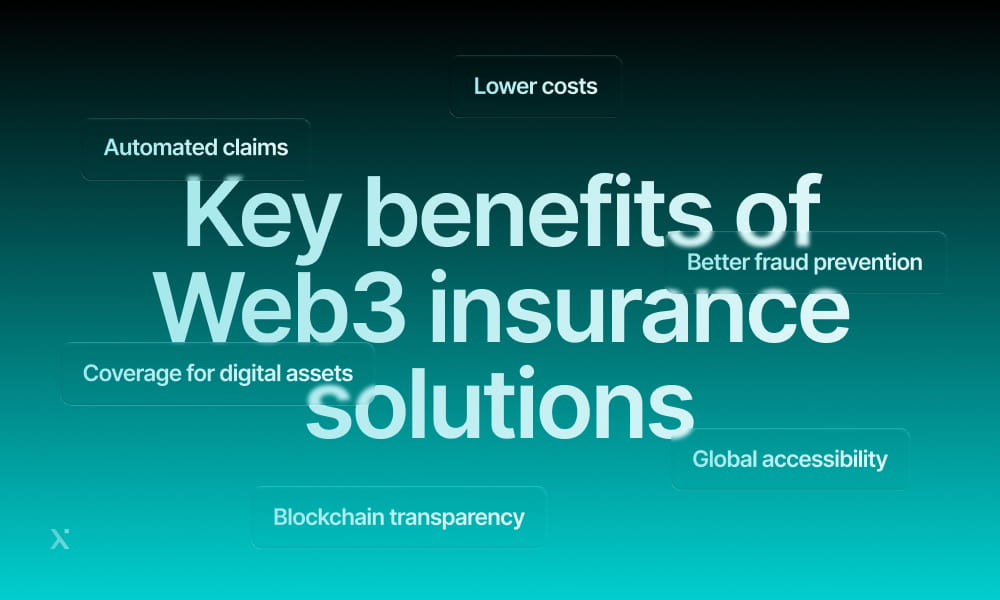
Web3 insurance solutions use blockchain technology, smart contracts, decentralized governance, and tokenized ecosystems to create a more efficient and transparent insurance model. Here is what they offer:
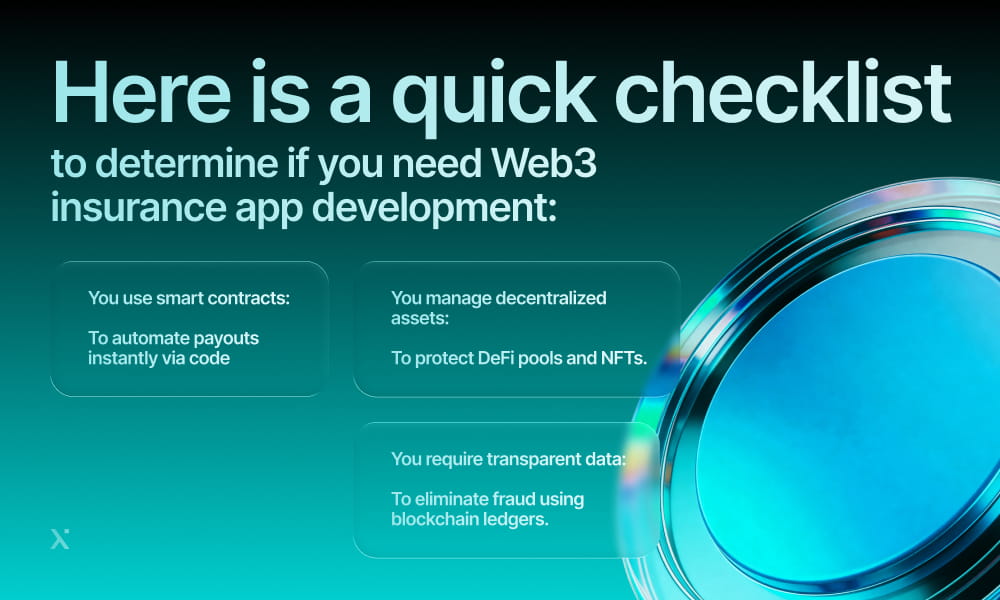
- Automated claims: smart contracts can instantly process payouts when conditions are met. This reduces delays and paperwork.
- Blockchain transparency: policies, reserves, and payouts are recorded on-chain, making the system more trustworthy.
- Lower costs: automation reduces the need for intermediaries, so it helps lower expenses.
- Global accessibility: users can access coverage from anywhere in the world without having to rely on ordinary banks or insurance providers.
- Better fraud prevention: real-time blockchain data and oracles improve claim verification and reduce manipulation.
- Coverage for digital assets: Web3 insurance can protect crypto wallets, NFTs, DeFi protocols, and other blockchain-based assets.

Web3 Smart Contract Development: Building the ‘Brain’ of Your Web3 Project

Smart Contract Development Cost Demystified: What Every Business Should Know
Web3 vs Web2: key differences in insurance app development
Insurance apps built on Web2 follow traditional centralized systems, where companies control data, processes, and payouts. Web3 insurance apps, on the other hand, use blockchain technology and smart contracts to automate processes, increase transparency, and reduce reliance on intermediaries. This shift changes how trust, efficiency, and accessibility are handled in insurance systems.
In the following table, we highlight the key differences between Web2 and Web3 insurance models.
| Area | Web2 insurance apps | Web3 insurance apps |
| Control | Centralized companies manage all operations | Decentralized protocols and smart contracts handle the operations |
| Claims processing | Manual review, slow approvals | Automated, near-instant execution |
| Transparency | Limited visibility for users | Fully verifiable on blockchain |
| Costs | High due to intermediaries | Lower due to automation |
| Trust model | Relies on institutions | Based on code and public ledgers |
| Accessibility | Region and bank dependent | Global and permissionless |
| Asset coverage | Traditional assets only | Includes crypto, NFTs, DeFi assets |
| Fraud risk | Higher due to centralized databases | Reduced through blockchain verification |
Web3 insurance improves on Web2 by using smart contracts and blockchain to automate claims and reduce reliance on intermediaries. This makes the system faster, more transparent, and more accessible across global markets. It is especially important for covering digital-native risks like crypto assets, NFTs, and DeFi protocols that traditional insurance cannot properly support.
As this space evolves, Web3 development services will play a key role in building secure, scalable, and user-friendly insurance platforms that can bring these solutions into real-world adoption.
Real-world examples of successful Web3 insurance platforms
Web3 insurance platforms are not something theoretical. They are already being used in the market to provide decentralized, transparent, and automated coverage solutions.
Below, we share some of the most successful examples that show how blockchain-based insurance really works.
Nexus Mutual
Nexus Mutual is one of the most well-known decentralized insurance platforms built on Ethereum. It was launched in 2019 and allows users to buy coverage against smart contract failures and other DeFi risks. The platform uses a community-driven model where members participate in risk assessment and claim voting.
InsurAce
InsurAce is a multi-chain DeFi insurance protocol launched in 2021. It provides coverage for risks across different blockchain ecosystems. It offers portfolio-based insurance products that allow users to protect multiple assets under one policy. The platform emphasizes low premiums and cross-chain compatibility.
Bridge Mutual
Bridge Mutual is a decentralized, peer-to-peer insurance platform launched in 2020. It covers smart contract risks, stablecoins, and exchange hacks while allowing users to provide liquidity to underwriting pools and earn rewards. The system is fully decentralized, with community governance playing a key role in decisions.
Unslashed Finance
Unslashed Finance is a crypto insurance protocol launched in 2021 that offers coverage for a wide range of risks, including custodial risks and exchange failures. It operates with pooled capital and flexible coverage options for both institutional and retail users. The platform focuses on transparency and capital efficiency through smart contracts.
Insurwave
Insurwave is a blockchain-based marine insurance platform developed through a collaboration between EY and Guardtime and launched in 2018. It was designed to digitize and streamline marine hull insurance for global shipping companies. The platform uses distributed ledger technology to improve transparency, reduce administrative work, and enable real-time data sharing between insurers, brokers, and ship operators.
| Name | Details |
| Nexus Mutual | Ethereum-based insurance platform offering coverage for smart contract risks with community-driven governance. |
| InsurAce | Multi-chain DeFi insurance platform providing portfolio-based coverage across blockchain ecosystems. |
| Bridge Mutual | Peer-to-peer insurance platform covering crypto risks like smart contract failures and exchange hacks. |
| Unslashed Finance | Crypto insurance protocol offering flexible coverage for custodial and exchange risks using pooled capital. |
| Insurwave | Blockchain marine insurance platform improving shipping insurance with real-time data and distributed ledger tech. |
How the Web3 insurance app development process works
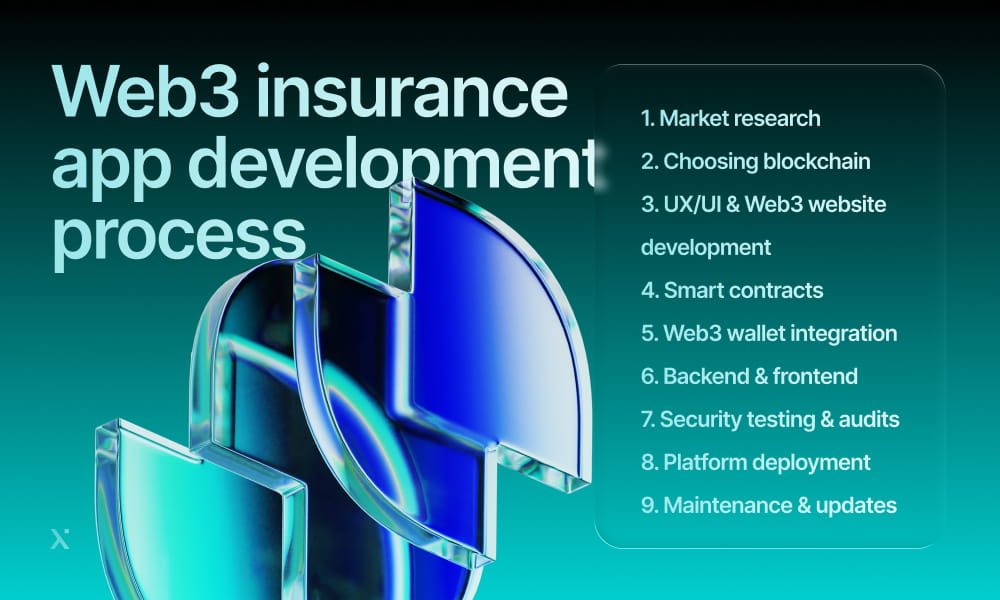
Developing a Web3 insurance platform involves several stages, from planning the architecture to integrating blockchain features and testing the final product. Let’s take a closer look at each of them.
Step 1. Market research and project planning
You can start by identifying your target audience, business goals, and the type of insurance services you want to offer. At this stage, it is important to study competitors, understand market demand, and define the main features of the platform. This will help you create a clear roadmap for development and reduce future risks.
Step 2. Choosing the right blockchain technology
Here, you will need to select the blockchain network that best fits your project requirements. For example, popular choices include Ethereum, Polygon, and Binance Smart Chain. The selected blockchain should offer strong security and provide low transaction costs for users.
Comparing DApps Across Protocols: Why Your Blockchain Choice Can Break Everything

Ethereum DApp Development: How It Works and What You’ll Pay
Step 3. UX/UI and Web3 website development
At the stage of Web3 website development, developers build a website that users will interact with, while designers create a simple and user-friendly interface. You will need to make a platform that will be responsive, fast, and easy to navigate on both desktop and mobile devices.
Developers also integrate blockchain functionality so users can purchase insurance policies, manage accounts, and submit claims directly through the platform. At the same time, designers work on wireframes, user journeys, and app layouts to ensure the platform feels intuitive and accessible, even for users with little crypto experience.
Step 4. Smart contract development
Smart contracts are the core of Web3 insurance applications. Your developers will create automated contracts that handle policy management, claim verification, and payment processing. These contracts reduce manual work and increase transparency because all transactions are securely recorded on the blockchain and remain there forever.
Step 5. Web3 wallet development and integration
A Web3 insurance app also needs secure wallet functionality. Developers can integrate popular crypto wallets like MetaMask or choose specialized Web3 wallet development services to create custom wallet solutions for the platform. This allows users to connect their wallets, manage digital assets, make payments, and securely interact with blockchain services.
Complete Guide to Web3 Wallet Development and Its Costs

What You Should Know About the True Cost of Building a Crypto Wallet Like MetaMask
Step 6. Backend and frontend
Here, developers build the technical infrastructure of the platform. The frontend controls what users see and interact with, while the backend manages databases, APIs, notifications, and overall system operations. This stage ensures that all platform components work together smoothly.
Step 7. Security testing and smart contract audits
Security is one of the most important parts of Web3 insurance app development. You will need to test the platform for vulnerabilities, bugs, and smart contract risks. Professional security checks and smart contract audits will make the application safe, reliable, and ready for public use.
Step 8. Platform deployment
Once testing is completed, the platform is deployed to the selected blockchain network. Developers launch smart contracts, configure servers, and publish the website and application for users. Performance monitoring tools are also added to guarantee smooth operation after launch.
Step 9. Maintenance and future updates
Once your platform is up and running, don’t forget about regular maintenance and updates. They are necessary to keep the platform secure and competitive.
You can improve features, add new insurance services, and optimize performance based on user feedback and market trends. Continuous support will help your platform grow over time.
| Step | What to do |
| 1. Market research & planning | Define audience, goals, and insurance features; analyze competitors and market needs. |
| 2. Choosing blockchain | Select a blockchain like Ethereum or Polygon based on security features and costs. |
| 3. UX/UI & Web3 website development | Build a responsive Web3 site with a simple interface and blockchain integration for user actions. |
| 4. Smart contract development | Create automated contracts for policies, claims, and payments. |
| 5. Web3 wallet integration | Integrate or build wallets for secure access, payments, and asset management. |
| 6. Backend & frontend | Develop system architecture, APIs, databases, and user-facing interface. |
| 7. Security testing & audits | Test vulnerabilities and audit smart contracts for safety and reliability. |
| 8. Platform deployment | Launch the platform on blockchain and enable monitoring tools. |
| 9. Maintenance & updates | Update features, fix issues, and improve performance over time. |
What is the cost of building a Web3 insurance app?

The cost of Web3 insurance app development depends on several factors such as project complexity, chosen blockchain, feature set, security requirements, and whether you include custom wallet development or only integrations. For example, a Solana-based insurance platform may also require a Solana smart contract audit to verify contract logic and reliability before launch. More advanced platforms with multi-chain support, smart contract audits, and full-scale UI/UX design will naturally require a higher budget.
Below is a general overview of estimated development costs:
| Development stage | Estimated cost range |
| Market research & planning | $5,000-$15,000 |
| UI/UX & Web3 website development | $10,000-$40,000 |
| Smart contract development | $15,000-$60,000 |
| Web3 wallet integration/development | $10,000-$50,000 |
| Backend & frontend development | $20,000-$80,000 |
| Security testing & audits | $10,000-$50,000 |
| Deployment & maintenance | $5,000-$20,000 |
Overall, a basic Web3 insurance app may start from around $60,000, while more advanced enterprise-level platforms can exceed $250,000 depending on scope and security needs.
Interested in the Web3 world across other industries as well? You can also explore how blockchain is reshaping gaming, from digital ownership to in-game economies. Check out Web3 game development to learn more.

Planning Web3 App Development Cost: Team, Timeline, And Hidden Expenses

DApp Development: How It Works and What It Costs
Why you need to choose PixelPlex for Web3 insurance app development
Building a Web3 insurance platform requires a strong balance of blockchain expertise, security, and user-friendly design. As one of the leading Web3 consulting firms, PixelPlex focuses on delivering end-to-end development services that cover everything from architecture and UX/UI design to smart contract development, custom multi-currency crypto wallet development, testing, and mainnet deployment.
Whether you are building a simple MVP or a complex multi-chain insurance ecosystem with advanced tokenomics and audit requirements, we tailor the solution to your business goals.
The cost of Web3 insurance app development at PixelPlex starts from $40,000, depending on project complexity and required features. For more advanced systems that involve multiple smart contracts, custom token models, or third-party security audits, we provide a detailed custom estimate.
Just like the blockchain technology we build on, our approach is transparent, reliable, and focused on long-term trust with our clients.
Conclusion
Web3 insurance app development is shaping a new direction for the insurance industry by introducing transparency, automation, and decentralization.
In the long term, the most effective insurance systems will likely bring together blockchain transparency, smart contract automation, AI-based risk modeling, decentralized governance, and global liquidity pools to build more efficient and resilient protection models.
Instead of fully replacing traditional insurance, Web3 insurance is expected to develop alongside it as a parallel layer of financial protection for the decentralized economy. It provides a faster, more accessible, and more transparent alternative to legacy systems, helping connect traditional finance with the evolving world of digital assets.
FAQ
A typical Web3 insurance app is built on a smart contract layer, a blockchain network, and an off-chain data layer (oracles). The smart contracts handle policies and payouts, while oracles feed real-world data into the system.
Key components include smart contracts, decentralized storage, oracle integration, a user-facing dApp interface, wallet connectivity, and a reliable backend for analytics and monitoring, which can be powered by scalable Oracle Cloud Infrastructure services.
Ethereum is the most widely used due to its maturity and developer ecosystem, but alternatives like Polygon, Arbitrum, and Avalanche are often preferred for lower gas fees and faster transactions.
Smart contracts automate policy issuance, premium collection, and claim payouts, reducing manual intervention and increasing transparency and trust in the system.
Security relies on audited smart contracts, decentralized architecture, encryption, multi-signature wallets, and continuous monitoring for vulnerabilities or exploits.
Yes, hybrid models are emerging where Web3 platforms handle automation and transparency while traditional insurers manage underwriting and compliance layers.
What are the main challenges in building Web3 insurance platforms?
Challenges include oracle reliability, smart contract vulnerabilities, regulatory uncertainty, scalability issues, and user adoption barriers.
A strong team typically includes blockchain developers, smart contract auditors, frontend dApp developers, backend engineers, DevOps specialists, and security experts.