
The financial world is going through a massive makeover, and the tech behind it is finally catching up with the big promises made years ago. Canton Network – the big player of nowadays’ DeFi scene. But no DeFi lives without a secure crypto wallet.
You might have seen the recent data showing that tokenized real-world assets could reach a staggering $16 trillion by 2030, which is exactly why banks and big players are looking at the Canton Network. In fact, recent industry surveys highlight that roughly 45% of top-tier financial institutions are actively exploring private blockchain solutions to handle their sensitive data without letting the whole world peek at their balances.
Here at PixelPlex, our Canton Network development team spends much time figuring out how to make these complex systems work for actual people, and we wrote this guide to share what we have learned from our own experience. Whether you are a startup or a massive enterprise, understanding how to build a gateway into this ecosystem is the first step toward staying relevant in the new economy.
We have noticed that many businesses struggle to find clear answers on where to start. Because of this, we decided to break down the entire process of Canton Network wallet development so you can see what goes on under the hood.
Why Canton Network is the best option for DeFi
You have your bank, your broker, and your clearinghouse, and they all have their own separate books that they have to manually sync up at the end of the day. It is slow, it is prone to errors, and it is expensive. The Canton Network changes that by letting these different systems work together without sacrificing privacy.
In most public blockchains, your transaction data is basically out there for everyone to see. If a major bank moves a billion dollars, the whole world knows. That is a total deal-breaker for a private fund or a regulated institution. Canton allows for a “network of networks” where you get the speed of a blockchain plus the privacy of a private vault. This is why we often suggest that clients looking into private blockchain development take a serious look at Canton.
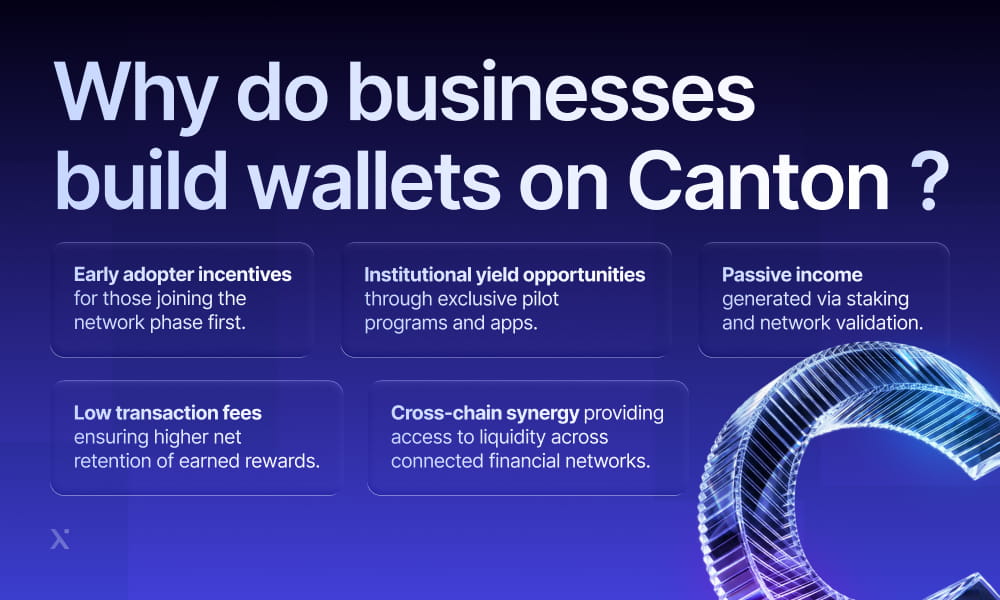
When we talk about decentralized finance, we usually think of high fees and slow confirmations. Rarely do we see a network that handles institutional-scale transactions with such grace. It is the best place for DeFi because it uses Daml, a language specifically designed for rights and obligations. This means you are moving actual legal contracts that are baked into the code instead of digital tokens.

More Than Just Storage: How Crypto Wallet Rewards Programs Build Loyalty and Drive Growth

Blockchain Development Cost in 2026: What Goes Into the Price Tag
Here is why Canton is currently leading the market:
- Granular privacy controls: Unlike public chains where everything is transparent, Canton uses a “need-to-know” basis. Only the parties involved in a transaction can see the details. This is essential for DeFi development where trade secrets and client confidentiality are non-negotiable.
- True atomic composability: You can link transactions across different sub-networks. This means you can swap a digital bond for a stablecoin across two different ledger applications in one single, “all-or-nothing” step. No more worrying about one side of the trade failing.
- Regulatory-friendly architecture: Because it was built for finance, it handles KYC and AML requirements natively. It doesn’t try to bypass the law but builds the law into smart contracts. This makes Canton Network smart contract development a dream for compliance teams.
- Daml-powered safety: Daml is an abstraction layer that prevents many of the common coding errors seen in Solidity. It focuses on who can see what and who can do what, making the code much more readable and secure.
- Scalability: Since the network is composed of many parallel sub-networks, it doesn’t slow down when one specific application gets busy. This is vital for maintaining high-frequency operations.
For any firm looking to stay safe while moving fast, a security audit and risk management plan is vital before launching on such a powerful network. The stakes are simply too high to leave anything to chance.
Canton Network vs. traditional blockchains
| Feature | Canton Network | Traditional public chains |
| Privacy | Selective disclosure (Very high) | Public by default |
| Language | Daml (Contract-focused) | Solidity or similar |
| Scalability | Horizontal (Parallel processing) | Sequential (Often slow) |
| Target user | Institutions and serious DeFi | Retail and hobbyists |
Why a Canton wallet is a money-maker
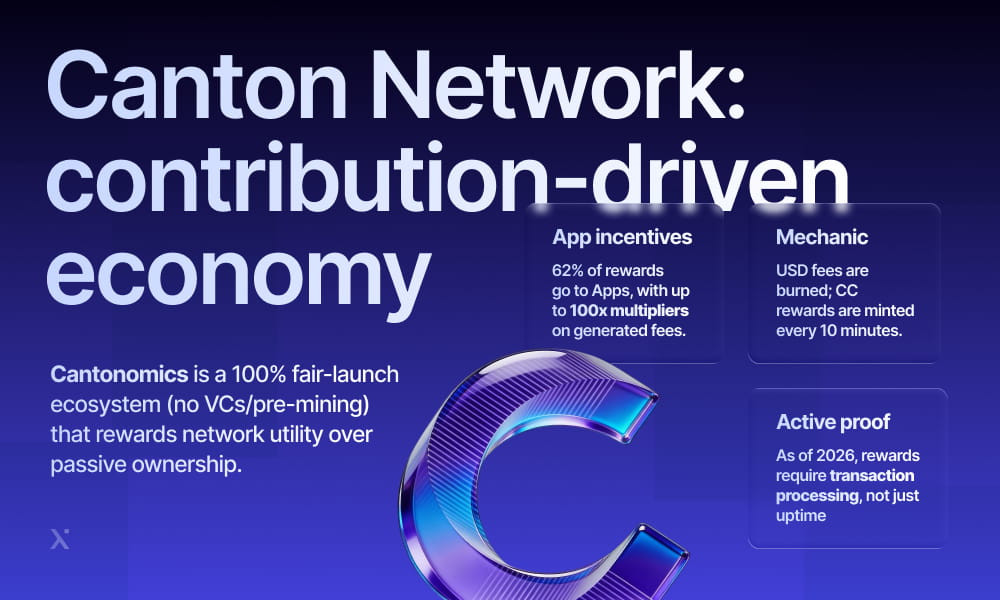
Building on this network is a strategic business move. The reward system is designed to favor those who actually provide value to the ecosystem. If you run a wallet that facilitates transactions, you can tap into incentives provided by the network participants who want to see liquidity grow. Unlike some other networks where rewards are a bit of a mystery, Canton makes it clear that if you help the network sync up, you get a seat at the table.
Rewards and incentives in the Canton ecosystem
| Participant | How they get paid | Why it’s profitable |
| Wallet Providers | Transaction fees & incentives | High volume from institutions |
| Node Operators | Staking and validation | Consistent passive income |
| DApp Creators | Usage fees | Direct access to deep liquidity |
Profitability here comes from the fact that you are servicing “high-value” users. We are talking about institutions moving millions. When you provide Canton wallet development services, you are positioning yourself as the middleman for these massive flows of capital.
- Network rewards: Participants often receive incentives for maintaining node connectivity and facilitating cross-sub-network transactions.
- Transaction fees: As the wallet provider, you can set custom fee structures for high-complexity Daml transactions.
- Deep liquidity access: By providing the interface, you become the primary entry point for institutional capital entering the DeFi space.
- Asset management fees: If your wallet integrates real world asset tokenization platform development, you can charge for the lifecycle management of these digital assets.
- Data insights: While the data is private for users, wallet providers can offer aggregated, anonymized business intelligence solutions to help institutions understand market trends.
Don’t just focus on the coins. The real value in a Canton wallet is how well it handles “Composability.” This means your wallet should be able to let a user take a loan in one sub-network and use it as collateral in another without any friction.

Top 10 Blockchain Development Companies in 2026

What You Should Know About the True Cost of Building a Crypto Wallet Like MetaMask
Case study: breaking ground with Console Wallet
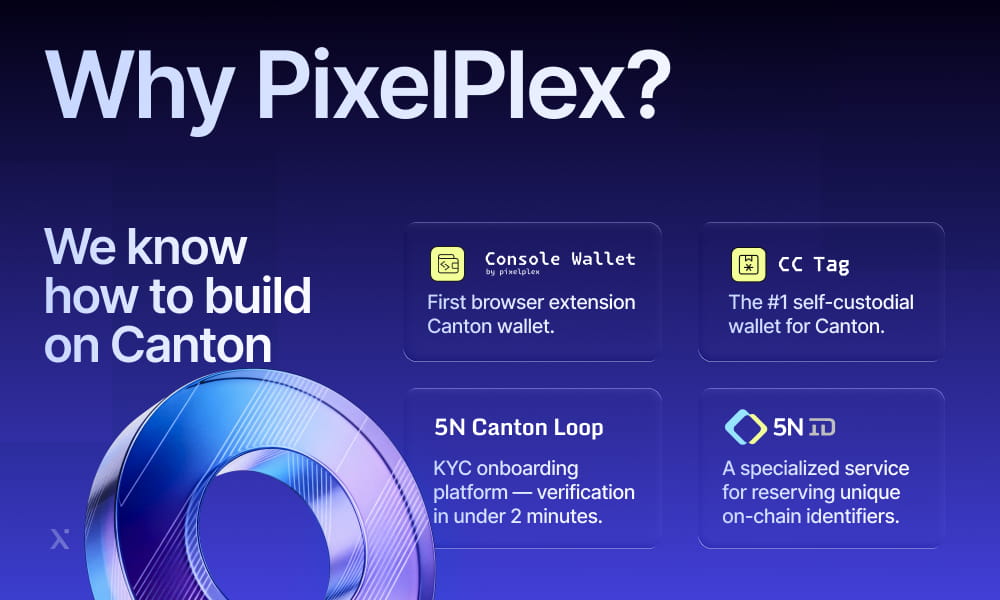
Before we dive into the “how-to,” let’s look at the “what.” Our flagship project, Console Wallet, is a prime example of what Canton wallet development looks like when done right. It is a browser extension that brings the familiar Web3 experience to the Canton Network, acting as a bridge for users who want advanced features without a steep learning curve.
Building the first-ever browser extension for this network was no small feat. We had to ensure that institutional security met retail-level usability.
Key achievements:
- It stands as the very first browser extension wallet on the Canton Network.
- It features native integration with CC View data indexer for instant data clarity.
- It offers complete wallet functionality, allowing users to sign, send, and manage assets seamlessly.
- Android/ iOS apps and Chrome/Firefox extension available, soon on TMA.
By building Console Wallet, we proved that the “network of networks” doesn’t have to be a backend-only world. It can have a face that users love.
The step-by-step development algorithm
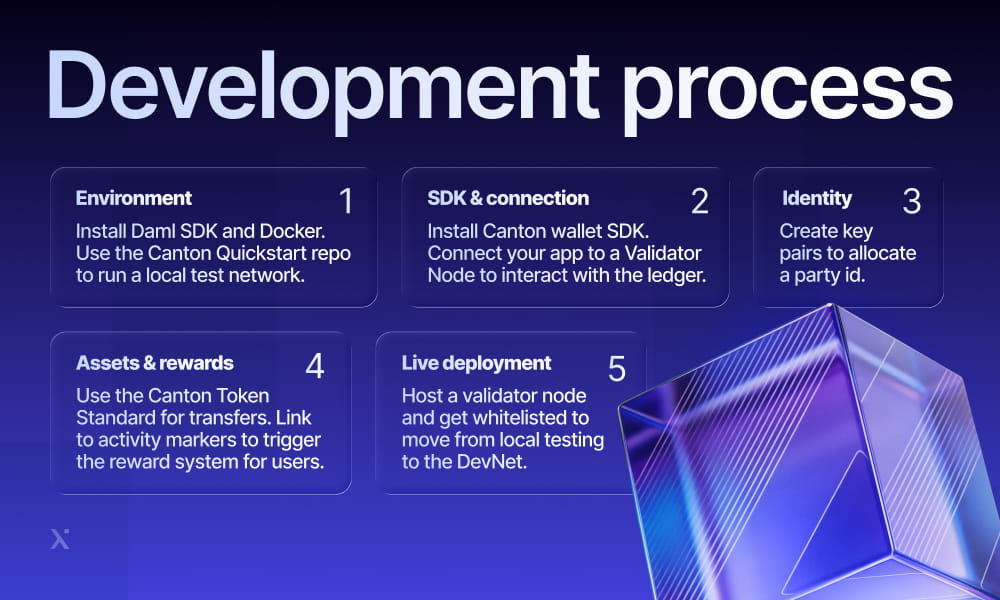
How do you build it? Here is the path we take every time we start a new Canton wallet development project.
Architecting the multi-party interaction
First, we map out the Daml Party structure. On Canton, every user is a “Party” on a specific participant node. We have to design the logic for how the wallet will manage these Party IDs. Unlike Ethereum where you just have a public key, here you need to handle the relationship between the wallet and the participant node. If you need expert advice here, blockchain consulting can help you avoid making expensive mistakes in the architecture phase.
Designing the security vault
For a browser extension, we use the Web Crypto API to handle encryption. We implement a “Zero-Knowledge” architecture where the backend never sees the user’s master password or seed phrase. Everything happens locally in the extension’s background script.

DeFi Vaults Explained: How to Turn Lazy Crypto Into an Automated Yield Machine

DAML Development for Business: A Practical Guide to Building Multi-Party Applications
Developing Daml logic and ledger handshakes
This is the core. We use Daml development to create the templates that the wallet will “exercise.” For example, if a user wants to transfer an asset, the wallet doesn’t just send a transaction; it exercises a “Transfer” choice on a specific contract ID. This requires the wallet to keep track of the current “Active Contract Set” (ACS).
Possible tech stack for wallet development
| Component | Technology | Why we love it |
| Frontend | TypeScript / React | Stable and bug-resistant |
| Backend | Node.js / Nest.js | Great for scaling fast |
| Mobile | Flutter | One codebase for two platforms |
| Database | PostgreSQL | Rock-solid data integrity |
Building the extension
We use TypeScript to build the extension’s message-passing system. When a website (or a dApp) wants to talk to the wallet, we use an injected content script that communicates with the wallet’s background script. This ensures that the dApp never gets direct access to the sensitive wallet logic. If you are looking for professional crypto wallet development services, this is the phase where you want the most experienced coders.
Flutter implementation
We take the business logic and wrap it in Flutter. Our Flutter development team ensures that the mobile version of the wallet is tied directly to the key encryption layer. This way, the user can sign complex Daml contracts seamlessly.
Integration with the Indexer
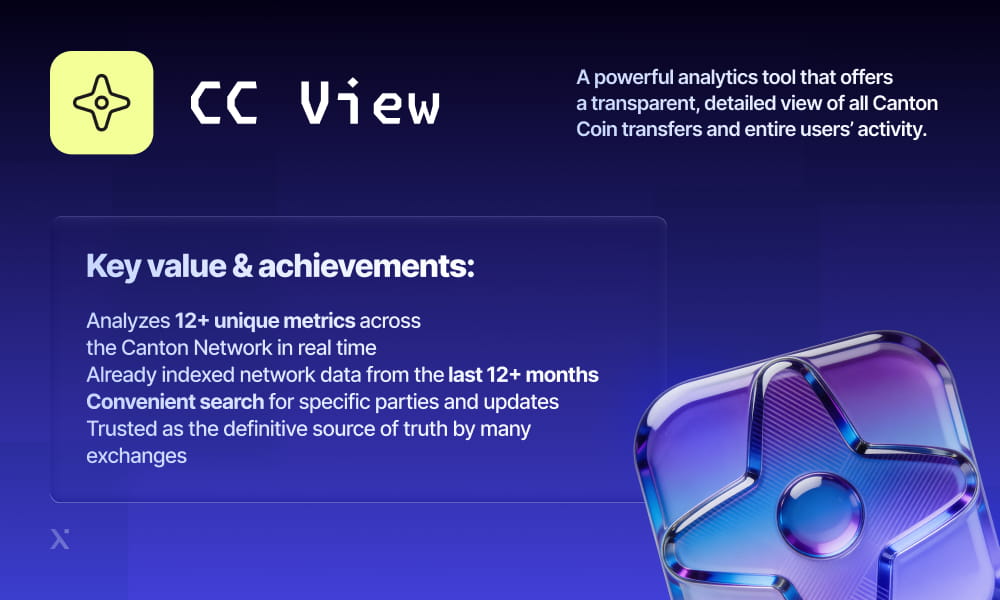
A wallet is blind without an indexer. We connect the frontend to our CCView API. Instead of the wallet asking the ledger “what do I own?” (which is very slow), it asks CCView, which responds in milliseconds with a fully formatted list of assets and their history.
CCView API integration
Integrating with the CCView API is what makes our wallets feel like they are from the future. Most developers struggle because they try to query the Canton Ledger API directly for every single UI update. The Ledger API is built for the heavy lifting of state transitions and privacy, not for the lightning-fast data retrieval that a modern mobile app requires.
The architecture of a seamless sync
Our integration process follows a very specific logic to ensure the user never waits more than a few milliseconds for their data.
- Webhooks for real-time updates: We set up listeners so that the second a contract state changes on the ledger, CCView pushes a notification to the wallet backend. This keeps the balance updated without the app constantly polling the server and draining the user’s battery.
- Granular querying by template: We use the API to filter by specific Daml templates. This means if a user only wants to see their “Bond” assets, the API returns just that data. By avoiding bloated responses, we keep the mobile app fast even on slower cellular networks.
- History reconstruction: Since the Canton ledger doesn’t easily store the history of a closed contract, CCView fills that gap. It allows the wallet to show a “Transaction History” that actually makes sense to a human, complete with timestamps and status changes.

Canton Network Reward System: How Canton Coin Pays Developers to Build Real Value

Building the Unbreakable Exchange: A Developer's Guide to Canton Network
Making addresses human with ANS
One of the coolest things we do during Canton wallet development is integrating the Address Name Service (ANS). Nobody wants to copy and paste a long string of random characters that looks like a cat walked across a keyboard. Users want to send money to “alice.canton” or “pixelplex.vault”.
Using the CCView API, we implement a check-as-you-type feature. For example, by calling the ans_availability endpoint, the wallet can instantly tell a user if a name they want to register is already taken. This involves a simple GET request to https://api.ccview.io/v1/ans/availability/{name}. If the name is free, the user can claim it right there. Seldom do you see such a smooth onboarding experience in the crypto world.
Implementing search and monitoring
For institutional clients, we often go a step further. We integrate transaction monitoring software capabilities directly into the UI using CCView’s search endpoints. This allows a compliance officer to search for specific parties or contract IDs across the entire network history.
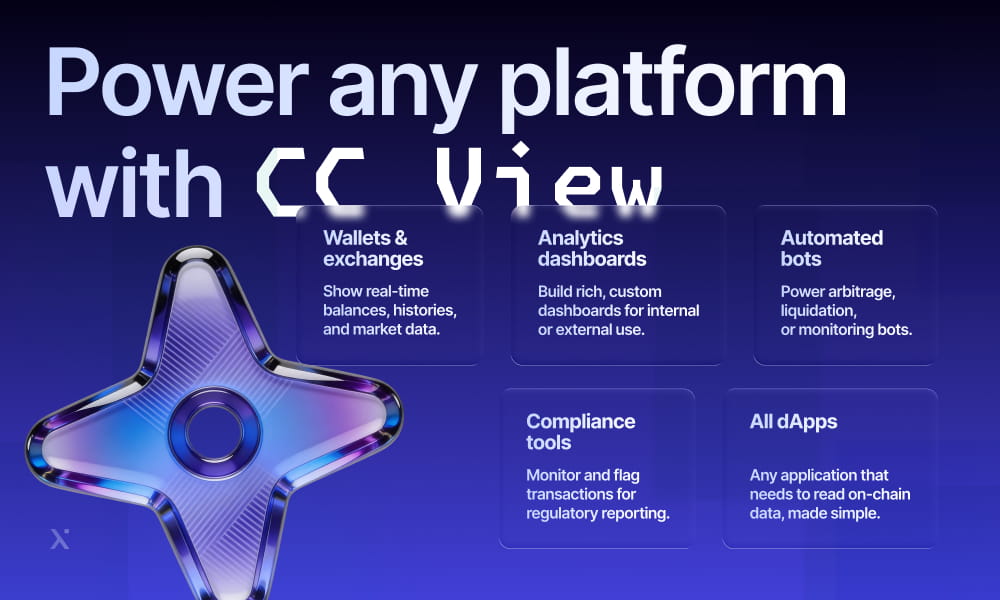
The integration usually involves three main steps for the developer:
- Authentication: Obtaining a secure API key from the CCView dashboard.
- Schema mapping: Mapping the Daml contract fields to the JSON response provided by the API.
- Local caching: Storing the API response in a local database on the phone (like Hive or SQLite) so the app works even if the user goes into a tunnel.
CCView key metrics
| Metric type | What it tracks | Business value |
| Transaction volume | Total movement of assets | Measures network health |
| Active parties | Unique users/entities | Tracks adoption rates |
| Contract updates | Changes in state | Monitors DApp activity |
| Latency | Speed of indexing | Ensures real-time accuracy |

A Network of Networks: How Canton Is Redesigning Financial Infrastructure
How to Build a Crypto Wallet: a Complete Guide
The PixelPlex track record
Our experience isn’t limited to just one flavor of tech. We have navigated the nuances of both public and permissioned ledgers, which gives us a unique perspective when helping clients choose the right path for their digital asset strategy.
Other wallets we’ve built
Canton Loop
With the Canton Loop project, we pushed the boundaries of asset cycling and liquidity management. The goal here was to create a seamless environment where assets could move between different sub-networks without friction.
Canton Loop
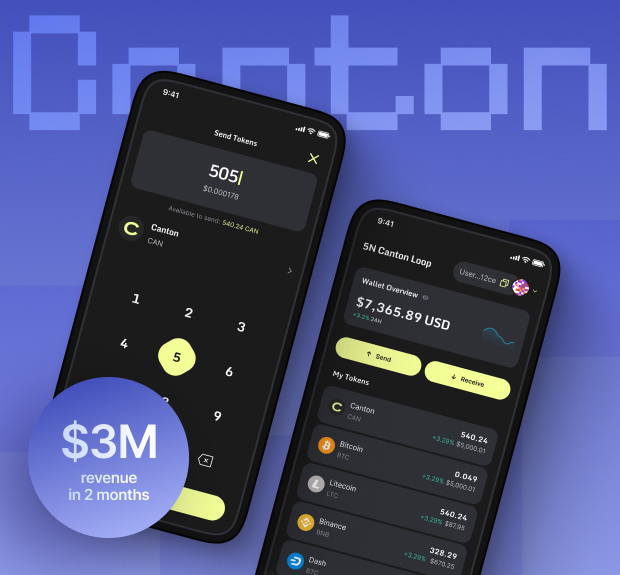
First self-custodial Canton wallet
TOP 10 Canton Coin Validator Leaderboard
$3M+ in revenue within 2 months since launch
Featured App status
Explore case studyQTUM wallet
Our team built the QTUM wallet for a global audience, focusing on high-speed crypto payment solutions. We had to ensure that the app was light enough to run on mid-range smartphones in emerging markets while still being secure enough to hold millions in assets. This balance of performance and security is something we bring to every Canton project we touch.
Read more: QTUM case study
Echo wallet
This project involved deep smart contract development to integrate a Layer 2 protocol into a user-friendly interface. It taught us how to handle the “wait times” associated with different blockchain layers. In the Canton world, this translates to how we handle the synchronization between the local participant node and the broader network.
Read more: Echo case study
Mantra wallet
We built the UI to handle voting, staking, and complex governance proposals. On Canton, governance is key because the network is composed of many independent but interoperable parties. We used this experience to ensure our Canton wallets can handle the multi-signature approvals and policy updates that institutional users require.
Read more: Mantra DAO case study
| Project name | Key feature | Status |
| Console Wallet | Browser-based institutional access | Live |
| Canton Loop | Seamless asset cycling | Live |
| QTUM Wallet | Mobile-first crypto management | Live |
| Echo Wallet | Smart contract layer integration | Live |
| Mantra Wallet | Community-governed DeFi | Live |
Users love “one-click” actions. If you can take a complex DeFi process (like staking and then moving rewards) and turn it into a single button in your Canton wallet development, your user retention will go up. People don’t want to see the plumbing – they just want the water to run when they turn the faucet.

DAML Development Services: Everything You Need to Know

Canton.Network Explained: How It Solves DeFi's Biggest Risks
Future with Canton
The trend is clear: businesses are tired of the “wild” nature of public blockchains. They want the benefits of decentralization but with the guardrails of a regulated environment. We are moving away from the era of “move fast and break things” toward an era of “move fast and stay compliant.” Canton provides the only architecture where privacy is a first-class citizen, which is exactly why it’s gaining so much traction.
The rise of institutional exchanges
We expect to see a huge surge in Canton Network exchange development over the next few years. These won’t be like the retail exchanges of today where anyone can list anything. Instead, they will be highly regulated, lightning-fast gateways for moving tokenized stocks and bonds.
These exchanges will require wallets that can handle complex “Atomic Swaps,” ensuring that assets only change hands once all conditions are met perfectly.
Seamless system integration
As more companies realize they need to connect their existing ERP and CRM systems to the blockchain, blockchain integration services will become the norm. The wallet will act as the “identity” and the “authorized signer” for these corporate systems. Rather than having a separate data for blockchain, companies will use Canton as a synchronization layer.
Global tokenization standard
We are also seeing a big push for tokenization services across all industries. From real estate to luxury watches, every high-value asset is going to have a digital twin. A Canton wallet is the perfect place to hold these assets because it respects the legal requirements of each asset class, such as transfer restrictions or dividend distributions.
Canton makes it possible to have “smart” assets that know who is allowed to own them. If you want to jump in and understand the code behind these assets, we have even written a Canton Network smart contract development guide that explains the backend logic in more detail.
The multi-network universe
Eventually, we won’t just be talking about one network. We will see a massive ecosystem of specialized sub-networks (one for real estate, one for carbon credits, one for inter-bank settlements) talking to each other. Your wallet will be the passport that lets you travel between these different worlds.
| Trend | Impact | Why it matters |
| Institutional onboarding | Trillions in new liquidity | Moves DeFi into the mainstream |
| Inter-network atomic swaps | Zero-risk asset trading | Removes the need for trusted bridges |
| Regulatory compliance Tech | Automated KYC/AML | Makes legal teams happy |
| Corporate identity wallets | B2B trust without intermediaries | Slashes operational costs |
Keep an eye on the “Privacy-Preserving Audit” features. Regulators are starting to love Canton because they can verify that everything is above board without having to see every single private detail of a bank’s customers. This balance is the “Holy Grail” of modern finance.

Inside Crypto Wallet MVP Development: Process, Costs, and Real-World Lessons

Beyond Hype: Building Strategic Value with Blockchain FinTech App Development
Bringing it all together
Building a wallet is like baking a gourmet cake. If you forget one ingredient, the whole thing falls apart and everyone leaves the party unhappy. As a professional Canton wallet development company, we have the recipe down to a science. Whether you are building from scratch or looking for Canton wallet development services to upgrade your current app, we are here to help.
If you are feeling inspired but aren’t sure where to start, our team would be more than happy to jump on a call and help you map out your path.
For more tips on costs and timelines, don’t forget to check out our other Canton Network wallet development guide which goes into the nitty-gritty of budgeting for your project. The world of decentralized finance is waiting, and there has never been a better time to build. Let’s make something great together.
FAQ
Unlike transparent public chains, our Canton wallet development focuses on the “need-to-know” privacy model, ensuring institutional users can sign complex Daml contracts without exposing their entire balance to the network.
Yes, our Canton wallet development services leverage the network’s native atomic composability, allowing users to swap assets across different sub-networks in a single, secure, “all-or-nothing” step.
As a specialized Canton wallet development company, we have already built the network’s first browser extension, proving we can balance strict regulatory compliance with a seamless, user-friendly interface.
We implement a “Zero-Knowledge” architecture using the Web Crypto API, meaning the user’s master password and seed phrases are encrypted locally and never seen by our backend servers.
Absolutely, our wallets are designed to manage the entire lifecycle of tokenized assets – from bonds to real estate – governed by Daml smart contracts that bake legal rights directly into the code.
We integrate with the CCView API to index ledger data, providing users with millisecond-fast updates on their asset balances and transaction history without draining their device’s battery.
Yes, we build regulatory-friendly architectures that natively handle compliance requirements, allowing your legal team to define rules directly within the smart contract logic.
Our team uses Flutter for mobile development to wrap our secure business logic into a high-performance app, ensuring a consistent and secure experience across both iOS and Android.