In just a few years, social media has turned into the world’s meeting place — part marketplace, part megaphone. But behind the constant buzz, most platforms still run the show from the top down. They decide what’s seen, store every click, and cash in on the people keeping them alive. Many creators still struggle to earn a fair share. Users give up privacy just to stay connected, and advertisers chase numbers that rarely tell the whole story. These platforms run on attention, not trust. With every new scandal or algorithm change, people lose a bit more faith in them — and that trust is running out fast.
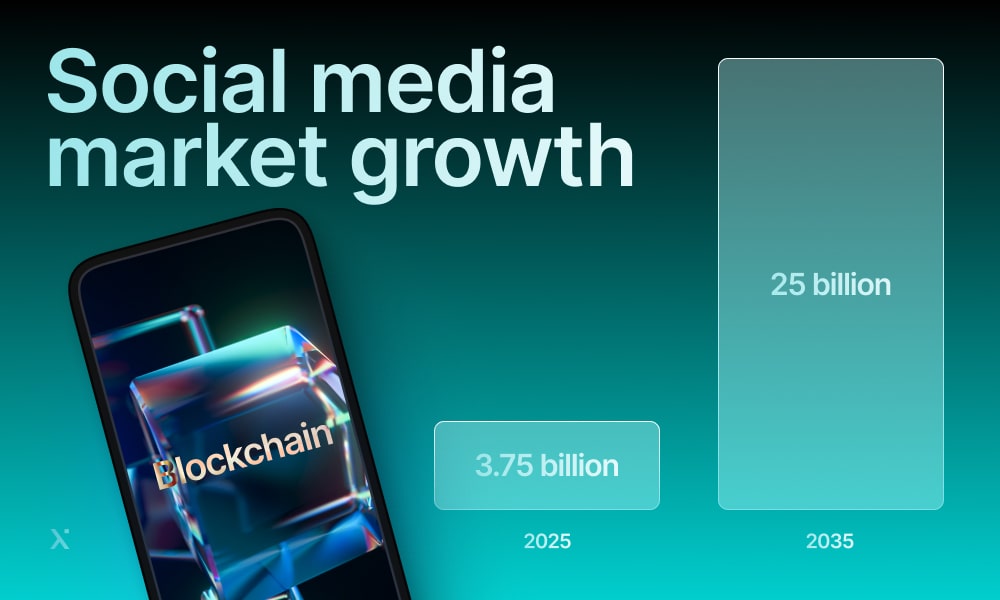
Blockchain offers a way out. By decentralizing data ownership and embedding transparency into every interaction, it redefines how social networks function. Latest reports project the global blockchain social media market to grow from USD 3.75 billion in 2025 to USD 25 billion by 2035, at ~21 % CAGR.
At PixelPlex, we turn blockchain ideas into real products that actually work and scale. As an enterprise blockchain consulting company in USA, our team has built everything from tokenized social features and blockchain-powered social media features to fully decentralized platforms, helping clients bring transparency and user ownership into the heart of online interaction. We’ve spent years studying how blockchain reshapes digital communities — not in theory, but through hands-on development and real business results.
This piece is for people building or running products — founders, PMs, anyone making big calls. If you’re curious how blockchain could change the way social platforms handle users, data, and revenue, you’re in the right place.

Web3 Development: What It Takes to Build the Future
A Comprehensive Guide to Blockchain Application Development
Why blockchain is the future of social media
Modern social media platforms are built on a centralized logic that prioritizes platform profit over user interest. Every post, click, and like feeds a system where data is the product, and users rarely have a say in how it’s used.
Billions of people now live part of their lives online. According to DataReportal, more than 5.2 billion social media accounts are active worldwide — up roughly 4% in a single year. At that scale, even the smallest flaws or manipulative tactics can spread fast, eroding trust and damaging how people connect and share information.
Censorship, biased algorithms, fake engagement, and confusing monetization models have become everyday realities. Creators work hard to prove their credibility, advertisers struggle to verify results, and users are trapped in systems that quietly collect and resell their data.
That setup made sense back when social media was new and nobody looked too closely at how it worked. Now the cracks are hard to ignore — stories about data leaks, silent bans, and algorithm games keep making the rounds. People are tired of it. They want something more genuine, a space that feels open and fair, built for the people who use it instead of the companies pulling the strings.
Centralized vs. blockchain-based social media
| Aspect | Centralized platforms | Blockchain-based platforms |
| Data ownership | Controlled by the platform, user data is stored on private servers | Owned by users; stored transparently on distributed ledgers |
| Content moderation | Platform dictates rules; opaque algorithmic moderation | Community-driven moderation via DAO or consensus voting |
| Monetization | Ad-based revenue; creators rely on platform payouts | Tokenized rewards; creators earn directly from engagement |
| User identity | Easy to fake; dependent on platform verification | Verifiable on-chain identity; transparent reputation system |
| Privacy | Data sold to third parties; minimal control for users | Zero-knowledge proofs and wallet-based identity protect user data |
| Trust model | “Trust the platform” | “Trust the protocol” |
| Engagement metrics | Manipulable (bots, bought likes) | Transparent, traceable engagement recorded on-chain |

Blockchain for Business: Beyond Cryptocurrency to Real-World Value
Blockchain Analysis Explained: Use Cases & Data Insights
The Rise of Blockchain in Marketing: Benefits & Challenges
Core advantages of blockchain for social media
User data ownership and privacy
In traditional social media, every post, message, and interaction becomes platform property the moment it’s uploaded. Users may have access to their content, but not ownership of it. Blockchain reverses that hierarchy.
Data stored on distributed ledgers is user-controlled and cryptographically secured. No entity can sell or repurpose it without explicit consent. Wallet-based identities enable users to verify themselves without disclosing personal details, while zero-knowledge proofs safeguard sensitive information during interactions.
For users and advertisers alike, this means privacy becomes an inherent feature — not a checkbox in a policy update.
Token-based monetization
Blockchain turns social interactions into real value. Instead of waiting for ad revenue or platform payouts, creators can get paid directly — through tokens or NFTs linked to how people engage with their content. NFT development enables platforms to design and deploy unique digital assets — from collectible badges to tokenized gifts — that enhance creator-fan interaction and brand loyalty.
Smart contracts automate these rewards: each like, comment, or share can trigger micro-transactions between wallets. Platforms can also integrate NFT gifts or limited-edition collectibles, allowing followers to support creators in transparent, verifiable ways. For the first time, value flows directly between people, not through corporate intermediaries.

How to Create, Sell, and Buy NFTs: Our Detailed Guide
NFT Launchpad Development: a Comprehensive Guide Based on PixelPlex’s Expertise
Transparency and content authenticity
In a decentralized network, every action is recorded and easy to trace. With blockchain technology, timestamps and origin data prove when and where something was posted — so no one can fake or quietly change it later.
That kind of transparency makes it a lot tougher to spread fake information and helps bring some trust back online. Advertisers can finally see what real engagement looks like, and users know the content in front of them is the real deal.
Community governance
Centralized moderation often leads to bias, censorship, or inconsistency. Blockchain replaces top-down decision-making with Decentralized Autonomous Organizations (DAOs) — governance systems where communities propose and vote on content policies, feature updates, or fund allocation.
DAO governance ensures that the rules evolve with the users, not against them. It also introduces accountability and participation, converting passive audiences into active stakeholders.
An Overview of DAOs: Are They the Next Big Thing?
A Complete Guide to the Development of DAO Tokenomics (With Real-Life Examples by PixelPlex)
Cross-platform interoperability
Web2 social networks exist in silos — each with its own user base, content format, and monetization logic. Blockchain breaks those barriers through open standards and interoperable smart contracts.
Users can carry their identity, reputation, and digital assets across platforms without having to start from scratch. A creator verified on one blockchain social app can instantly access communities on another blockchain social app. This not only enhances mobility but also drives a healthier, interconnected digital economy.
Key technical advantages at a glance
- No intermediaries between creators and audience
- Unforgeable engagement and reputation data
- Seamless NFT integration for gifting, collectibles, and loyalty systems
| Feature | Impact on users | Impact on creators/advertisers | Underlying mechanism |
| Data ownership | Users control and monetize their own data | Reliable audience analytics | Decentralized storage, wallet identity |
| Token economy | Earn tokens for engagement | Transparent reward distribution | Smart contracts |
| Privacy & security | Minimal data exposure | Compliance-ready infrastructure | Encryption, zero-knowledge proofs |
| Authenticity | Verified content origin | Reduced fraud and fake impressions | On-chain provenance |
| DAO governance | Participatory decision-making | Community-driven feature updates | Voting mechanisms |
| Interoperability | Cross-platform portability | Wider audience reach | Cross-chain protocols |
The road to mainstream adoption isn’t without obstacles. Most users still find crypto wallets and private key management unintuitive, while high network fees and limited scalability can hinder seamless interaction. Regulatory uncertainty around digital assets also slows corporate adoption.
Protecting Ideas: How Blockchain Is Becoming the Guardian for Your Creations

Blockchain in Payment Services: Trends, Technologies, and Development Best Practices
Integration process: how blockchain fits existing social networks
Bringing blockchain into social media doesn’t mean throwing everything out and starting over. It’s more about adding a new layer of trust and transparency on top of what’s already there.
How integration works in practice
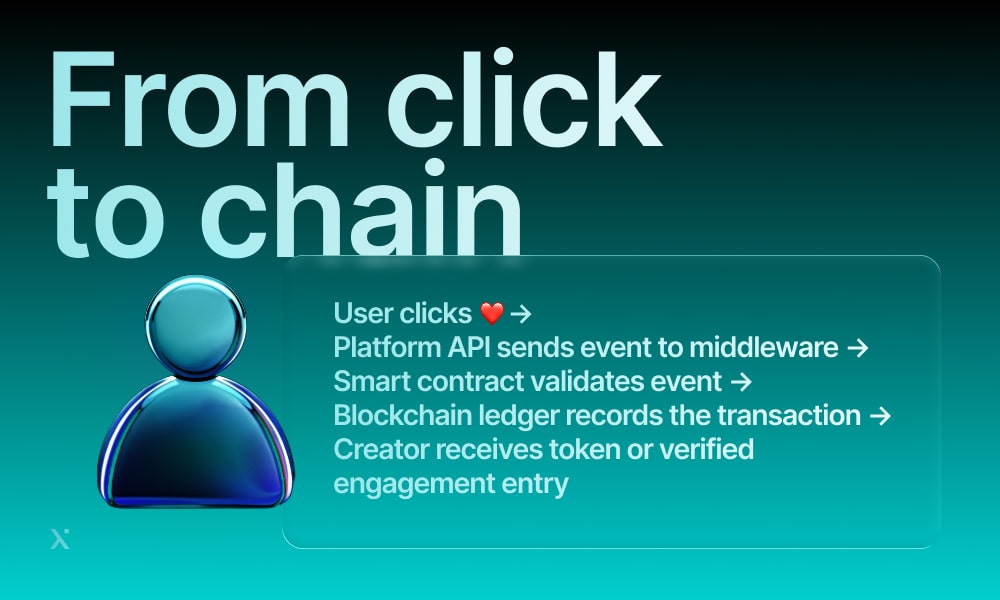
To connect a platform with blockchain, developers usually link its backend to a blockchain node using APIs or middleware tools. This bridge lets regular user actions — posts, likes, payments — interact with smart contracts on the blockchain in real time.
Smart contracts take care of the heavy lifting behind the scenes. They can issue token rewards, confirm identities, or log who created what and when. Meanwhile, the interface looks and feels the same to users — smooth and familiar — but now it’s backed by blockchain-level security and traceability.
For instance, a simple “like” or “share” can automatically trigger a blockchain entry, update token balances, or verify the authenticity of engagement.
Compatibility with existing social platforms
Most modern social media backends already support REST or GraphQL APIs. This enables seamless connection to blockchain networks, such as Ethereum, Polygon, or TON, without requiring a redesign of the entire infrastructure.
Content delivery, moderation, and user profiles can remain on existing databases, while the monetization and identity layers are moved to blockchain. Over time, as adoption grows, the blockchain components can expand, transforming a centralized network into a semi- or fully decentralized system.
The role of smart contracts and data oracles
Smart contracts are the backbone of blockchain social integrations. They execute engagement rewards, content verification, and governance actions without manual intervention.
To ensure real-world data stays synchronized, data oracles feed verified information from off-chain sources into the blockchain. For instance, they can pull external analytics, detect fake accounts, or validate ad metrics, all while maintaining transparency.
This blend of on-chain automation and off-chain data integrity allows legacy platforms to integrate blockchain progressively — one feature at a time — minimizing disruption while maximizing long-term scalability.
Best Smart Contract Use Cases Across Industries to Explore in 2025 and Beyond
Code, Capital, and Compliance: A Deep Dive into Canton Network Smart Contract Development
Integration steps and responsible technologies
| Step | Goal | Key technologies | Description |
| Assessment & architecture design | Identify blockchain-ready use cases (monetization, identity, analytics) | System audit tools, API mapping frameworks | Analyze existing platform architecture and define integration entry points |
| Blockchain layer setup | Establish an on-chain environment | Ethereum / Polygon / TON nodes, layer-2 protocols | Configure blockchain network, deploy smart contracts |
| API & middleware integration | Connect backend to blockchain logic | REST / GraphQL APIs, Web3.js, ethers.js | Bridge user actions and smart contract calls |
| Wallet & token integration | Enable user interactions with digital assets | Wallet SDKs, OAuth + Web3 login, custodial wallets | Simplify wallet setup, enable tipping and NFT gifting |
| Oracle connection & data sync | Ensure verified off-chain data flows on-chain | Chainlink, Band Protocol, custom data oracles | Pull external data (e.g., ad metrics, identity checks) |
| Testing & security audit | Validate smart contract reliability | Truffle, Hardhat, third-party audit services | Simulate engagement flows, verify transaction integrity |
| Gradual rollout & monitoring | Deploy blockchain features in stages | CI/CD pipelines, analytics dashboards | Start with small features (tipping, badges), then scale to governance and rewards |
Not necessarily. Integration can use custodial wallets or simplified sign-ins (via email or social login) that manage wallets behind the scenes. As blockchain literacy grows, users can transition to full self-custody.
Blockchain-based social media development from scratch
Integrating blockchain into an existing social platform can breathe new life into older systems. But some teams take it further — they build blockchain-native social networks from the ground up. That way, decentralization, transparency, and token-based features aren’t just add-ons — they’re part of the platform’s DNA from day one.
Building a social network on blockchain isn’t a quick job. It’s a full development cycle that covers everything from architecture design and protocol selection to wallet integration, decentralized UX design, and getting the community on board.
Blockchain social platforms must strike a balance between simplicity and transparency. Logging in should be easy — through a wallet, managed account, or email. Interfaces must clearly display rewards and transactions, without overwhelming users with technical details. Gamified elements, such as token challenges or NFT badges, keep users engaged and make the experience feel natural.
Blockchain social media app development stages
| Stage | Key objectives | Core activities | Responsible technologies |
| Discovery & planning | Define use case, goals, and tokenomics | Market analysis, concept validation | Business logic tools, Figma, Jira |
| Blockchain selection & architecture | Choose protocol and design system flow | Consensus setup, node infrastructure | Ethereum / Polygon / TON / Solana |
| Smart contract development | Build core logic for content, tokens, and governance | Write, test, and deploy contracts | Solidity, Rust, Vyper |
| Frontend & wallet integration | Ensure seamless user interaction | Web3 login, NFT display, real-time data | React, Web3.js, ethers.js |
| Security audit & optimization | Guarantee reliability and compliance | Pen-testing, bug bounties, audit reports | Hardhat, MythX, third-party auditors |
| Beta launch & community growth | Deploy MVP and gather feedback | Token distribution, DAO setup | CI/CD pipelines, DAO frameworks |
| Scaling & maintenance | Support multi-chain and high traffic | Layer-2 integration, analytics, upgrades | zk-Rollups, LayerZero, The Graph |
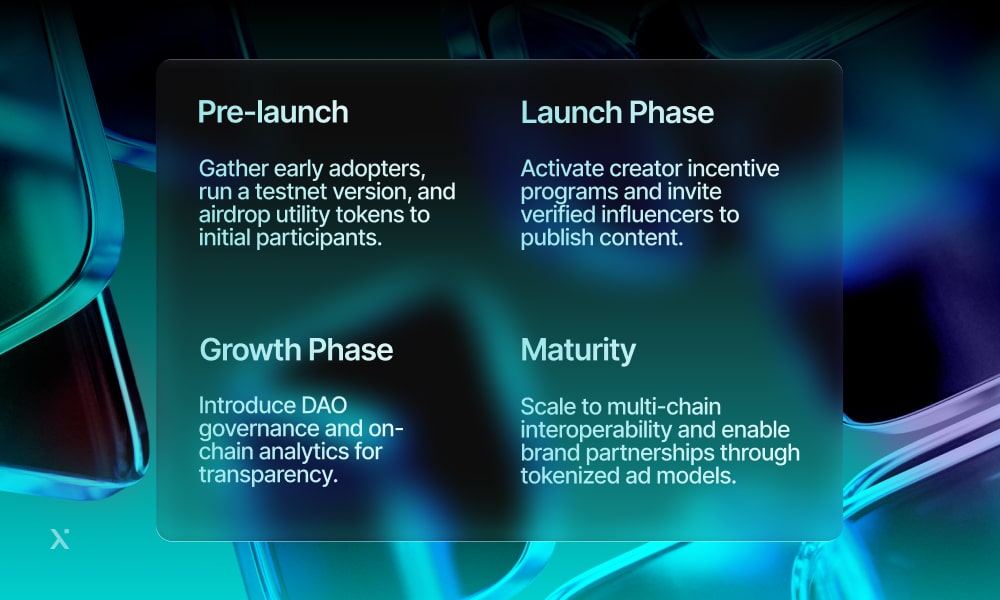
Community building and launch roadmap
Launching a blockchain-based social media platform means cultivating a loyal, invested community that grows alongside the product. Each development phase builds new layers of engagement and trust: from early testers validating the concept to DAO participants shaping its future. This roadmap illustrates how the platform evolves from a small group of adopters into a scalable, self-governing ecosystem.
Blockchain for social media: costs and ROI
Building or adding blockchain to a social platform isn’t a fixed-price job. The total cost depends on several factors — from the type of blockchain you choose to how complex the integration is. Each element influences not just the development budget but also how scalable, secure, and profitable the platform will be over time.
Key factors influencing cost
Blockchain type
Public blockchains like Ethereum or Polygon typically involve network fees (gas costs), while private or consortium chains require dedicated node hosting. Hybrid models balance transparency with performance but increase implementation complexity.
Feature set
Basic integrations such as crypto tipping or NFT gifting are relatively lightweight, while more advanced systems add time and cost.
Smart contract complexity
Smart contracts define business logic for engagement rewards, NFT ownership, and community governance. Their design, testing, and auditing directly impact the overall smart contract development cost, which can range widely depending on automation depth and the number of integrations.
Security audits
Security isn’t something you do once and forget about — it’s the backbone of any blockchain-powered social media platform. Every smart contract needs to be tested inside out to catch bugs or vulnerabilities before they become real problems. Independent audits may add to the upfront cost, but they save money and reputation down the line by keeping the system stable and secure.
Ongoing maintenance
Launching a blockchain-powered platform is only step one. After that, the real work begins — keeping everything running smoothly. Teams have to maintain blockchain nodes, update APIs, and adjust gas settings to manage costs. Regular security audits, performance optimizations, and quick user support are just as important. Together, these efforts keep the platform stable, secure, and enjoyable to use over the long haul.
Average cost ranges
| Scope | Estimated range (USD) | Description |
| Basic blockchain integration | 50,000 – 120,000 | Add tipping or NFT gifting via existing APIs |
| Mid-level integration | 150,000 – 300,000 | Include smart contract automation and limited DAO governance |
| Full blockchain social platform | 400,000 – 900,000+ | End-to-end design, tokenomics, smart contract suite, wallet integration, and community launch |
ROI justification
Blockchain integration isn’t just a tech upgrade — it’s an economic shift.
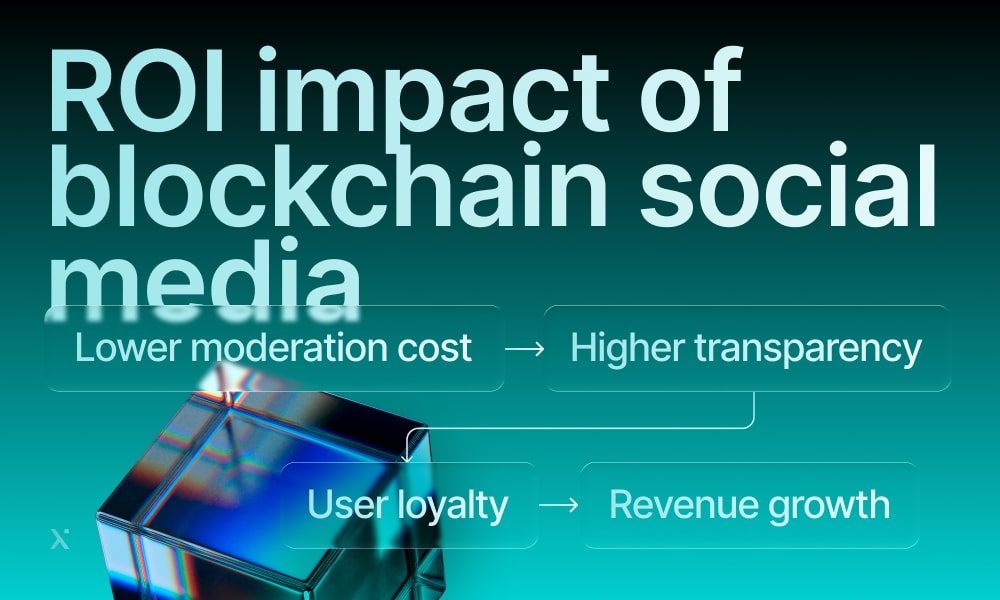
Over time, lower operating costs and new monetization models can easily outweigh the upfront investment, turning the platform into a sustainable, profit-generating ecosystem.
Crypto Payment Gateway: Costs, Benefits, Implementation

Smart Contract Development Cost Demystified: What Every Business Should Know
Success stories
The move toward decentralized social media is already changing how people interact online and how creators earn from their work. Early adopters have shown that blockchain technology can reshape creator economies, strengthen brand loyalty, and build real trust within communities.
Telegram and TON Ecosystem
Telegram’s integration with the TON Ecosystem stands as one of the most visible examples of blockchain’s commercial success in social networking. By embedding tokenized features directly into its platform, Telegram enabled peer-to-peer payments, NFT gifts, and community tipping without disrupting its familiar user experience.
The results were striking. Within months of launch, Telegram’s NFT gifts surpassed $57.7 million in primary sales across more than 357,000 unique wallets. Daily trading volumes hit roughly $3.5 million, with close to 10,000 active traders taking part in the ecosystem. According to market reports, the overall TON gift market capitalization now exceeds $150 million, showing that blockchain features can rapidly scale to mainstream social audiences.
Beyond collectible gifts, Telegram also introduced wallet integration, peer-to-peer token transfers, and decentralized mini-apps, turning its chat environment into a growing hub for Web3 activity. This use case demonstrates how NFT marketplace development and blockchain-native monetization can work even within a large, established platform, offering new income streams for creators and brands while maintaining user simplicity.

Why Should Your Startup Choose TON?
Telegram Open Network (TON): Comprehensive Guide, News, Insights & Updates
Steemit
Steemit was one of the first social platforms to bring blockchain into the mix. It rewarded people for creating and curating content using its own token, STEEM. Launched long before blockchain became a buzzword, Steemit showed that open, algorithm-free monetization could actually foster real community engagement. Its reward system later became a blueprint for newer, token-driven platforms built around fair content economics.
Lens Protocol
Built on Polygon, Lens Protocol reimagines social networking as composable infrastructure. Instead of a closed database, it offers an open, blockchain-based social graph where profiles, posts, and relationships are all NFT assets. Lens highlights the potential of modular, permissionless systems that empower both developers and users to co-create new digital experiences.
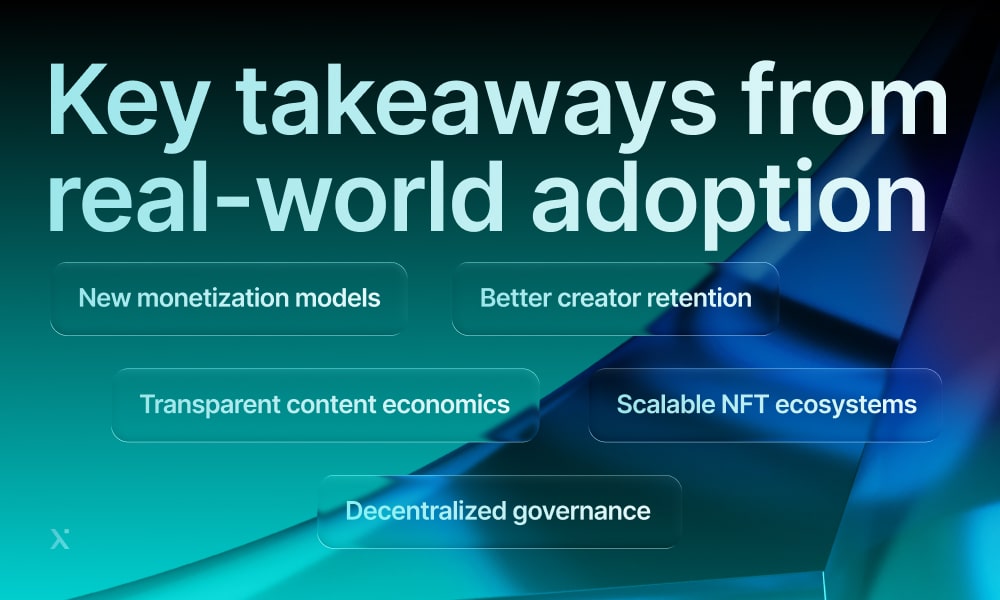
Why businesses choose PixelPlex
- Deep blockchain experience. We’ve spent years building blockchain solutions for different industries — from finance and gaming to social platforms — and know what actually works in production.
- Full-cycle development. Our team handles everything: consulting, architecture design, smart contract development, tokenomics, QA, and ongoing support after launch.
- Security comes first. Every project goes through thorough smart contract audits, vulnerability testing, and performance checks to ensure it’s safe, stable, and compliant.
- Tailored tokenomics. We design custom economic models that encourage growth, reward creators fairly, and keep users engaged over time.
- Cross-chain expertise. Whether it’s Ethereum, Polygon, TON, Solana, or BNB Chain, we know how to connect them into one smooth, interoperable ecosystem.
- NFT logic and marketplace expertise: Advanced implementation of NFT features built on solid technical infrastructure.
- Proven track record: Dozens of blockchain-powered platforms launched, with measurable ROI and rapid delivery.

Your RWA Platform in a Month? We Made It Happen
PixelPlex and the ICP Alliance Are Teaming Up to Build the Future of Web3
Market forecast: blockchain and social media by 2030
The next five years will define how blockchain for social media evolves from experimental adoption to global infrastructure. As digital ownership, data transparency, and tokenized engagement mature, blockchain will become the default backbone for content validation, monetization, and creator-driven ecosystems.
Key market drivers and trends
- AI integration: Artificial intelligence will enhance content discovery, while blockchain ensures traceability and authenticity, preventing the proliferation of deepfakes and algorithmic bias.
- AR and immersive experiences: Augmented reality layers will merge with blockchain-based identity, allowing users to own virtual assets and social personas across multiple platforms.
- Decentralized identity (DID): Blockchain will enable secure, portable digital identities, giving users control over their profiles across networks.
- Tokenized influence economy: The influencer model will evolve into tokenized ecosystems where reputation, engagement, and value are recorded transparently on-chain.
- Cross-platform interoperability: Multi-chain protocols will connect separate platforms into an open, composable social ecosystem.
By 2030, blockchain-powered social platforms will move beyond niche communities and become mainstream alternatives to today’s centralized networks. Brands will prioritize transparency and user trust overreach, creators will gain full control over monetization, and users will interact through self-sovereign identities rather than corporate data profiles.

Future of AI: Unveiling Its Impact on Industries and Society
The Future of Financial Services: 6 Impactful Blockchain Use Cases in Finance
Conclusion
The next chapter of social media will be built on decentralization, with blockchain making that shift real. When control moves from corporations to communities, trust and transparency come back to the center of online interaction. Platforms that follow this path earn loyal users, fairer monetization, and genuine authenticity.
For more than ten years, PixelPlex has been delivering advanced blockchain development services that help companies design secure, scalable, and profitable social ecosystems. Our team builds solutions that link token-based engagement, cross-chain networks, and DAO governance. Our goal is clear — to build social platforms that give real ownership to the people who use them, not the companies that run them.
FAQ
Blockchain records every interaction on an immutable ledger, making it impossible to manipulate or falsify engagement data. In a social media blockchain ecosystem, every post, like, or share is traceable to a verified source, which helps prevent fake engagement and misinformation.
Smart contract development automates key processes, including user rewards, NFT distribution, and DAO voting. These contracts ensure that creators and users are paid transparently and instantly, eliminating the need for intermediaries or manual oversight.
Yes. Altcoin development allows platforms to create native digital currencies for tipping, engagement rewards, or advertising credits. These altcoins can circulate within a single network or be traded across ecosystems, helping social platforms establish self-sustaining, tokenized economies.
Regulations around blockchain and digital assets are still taking shape. Platforms need to follow KYC and AML requirements, protect user data under regional privacy laws, and handle cross-border token transactions with care to stay compliant and trustworthy.
Blockchain analytics provides transparent and verifiable insights into engagement metrics and token circulation. For a social media blockchain, this means advertisers can confirm authentic interactions, and creators can measure the true value of their audience, creating a fairer digital economy for everyone.
In the near future, social platforms built on blockchain will move far beyond token rewards. New features like AI-driven moderation, decentralized identity, and cross-chain connectivity will give users more control and make interactions faster and more secure. As blockchain for social media continues to mature, these technologies will help create digital spaces built on trust rather than algorithms.