Dating apps remain popular, even though the classic "swipe and chat" format has become stale. Most people don't want to spend a lot of time messaging a stranger they may never meet. They prefer to quickly sense chemistry, assess their true personality early on, and feel safer until they're confident the connection is genuine.
That’s why metaverse dating apps development is getting real attention right now, not just hype clicks. Instead of making people squeeze chemistry out of profiles and long chats, it gives them an easy first step. Meet for a few minutes in a shared space, talk on voice, do a quick activity, and join a hosted event. You learn more in that short moment than you do in a week of messages.
In this article, we’ll unpack what metaverse dating apps development involves, from product formats and feature sets to timelines, costs, and the risks most teams underestimate.
Why do people keep using dating apps?
People tend to say they’re done with dating apps, right before they open one. That’s a better explanation for their staying power than most trend forecasts. While apps are certainly frustrating, they solve a real problem: meeting new people is harder than it seems, especially after graduating, leaving your close social circle, or simply after you’ve grown tired of wondering if someone is single.
Secondly, the old one-size-fits-all approach is quickly becoming a thing of the past. People no longer want to meet in a huge, random circle. They want something more focused and relevant: the same city, a similar lifestyle, shared values, a compatible schedule, and the same intentions. This is why niche apps continue to emerge, and major platforms are constantly adding new suggestions, tags, and signals based on interests. The message from users is clear: make filtering smarter so I don’t waste my time.
Many users come to us with caution. They expect to see at least a few fake accounts and at least one person trying something dubious. Therefore, security can’t be an optional feature; it’s fundamental. Metaverse dating is one way to establish yourself early on, allowing people to quickly interact instead of sifting through messages one after another.
How to Build a Metaverse Project Now
Embracing the Metaverse: What Should You Know About the Growing Trend?
Why people use dating apps (and what it means for product design)
| Driver | What’s changing | Product implication | Monetization opportunity |
| Convenience | People want results faster, with less effort | Reduce friction in onboarding and matching | Premium boosts, faster discovery |
| Better fit | Users want compatibility, not volume | Interest-based matching, prompts, deeper filters | Paid filters, curated matches |
| Social proof | Trust matters more than hype photos | Verification tiers, reputation signals | Verified badges, “trusted” profiles |
| Safety | Users expect protection by default | Reporting, anti-fraud, privacy controls | Safety features as a premium add-on (careful with UX) |
| Chemistry check | Texting feels like a waste of time | Add voice/video/interactive moments earlier | Events, paid access to experiences |
| Community | Dating overlaps with identity and lifestyle | Rooms, groups, themed events | Paid events, memberships |
Classic dating apps vs. metaverse dating
Traditional dating apps force us to spend hours swiping through people, but offer little in the way of real-life interaction. You might find the perfect match, but moving from a mutual like to a real-life meeting is always a gamble. At the initial stage, everything is based on messages and guesswork, which often causes the spark to fizzle out before it can ignite.
Metaverse dating adds an important intermediate step — the speed date. This isn’t a committed meeting, but simply a brief moment in a shared digital space right here and now. This time is enough to filter out dubious options and identify those truly worth meeting in real life.
This format provides algorithms with much more useful information: session duration, user returns, and their behavior in rooms. This data is invaluable for the recommendation system. But there’s one important caveat: security must be lightning fast. If the complaint or blocking mechanism is slow or hidden somewhere deep in the menu, users won’t tolerate the inconvenience and will simply leave the service. Over time, adaptive AI development can improve matching using real user behavior, not just profile fields, so the product gets smarter as the community grows.

AI Integration for Business: A Practical Guide to Efficiency and Profit
AI in Software Development: It's More Than Hype, It's the New Hammer
Traditional dating vs. metaverse dating
| Category | Classic apps | Metaverse apps | Business impact |
| First impression | Photos + bio | Presence + interaction | Higher-quality early decisions |
| Main activity | Swiping + messaging | Shared spaces + activities | More engagement per session |
| Communication style | Mostly asynchronous | Real-time by default | Faster chemistry checks |
| Matching signals | Profile data | Behavior + context signals | Better ranking over time |
| Time to “spark” | Can take days | Often minutes | Less churn from dead chats |
| Safety challenges | Mostly text-based | Voice + presence + proximity | Requires stronger moderation |
| Social discovery | Limited | Events, lounges, community spaces | More organic matches |
| Monetization | Subscriptions + boosts | Events, items, premium spaces | More flexible revenue paths |

The Opportunities of Banking in Metaverse: What Companies Must Know to Stay Competitive
Metaverse: Notable Use Cases
Why businesses bet on metaverse dating
Dating services don’t have problems finding partners — they have problems maintaining relationships. Two people find each other, exchange a few random messages, and that’s it. No one is at fault, no one is rude. The chat simply freezes.
Most matches end in chat. Not in a dramatic way, just dragged out. Texting is a poor substitute for a real first impression. You miss the tone, miss the moment, and spend half the time trying to guess what the other person meant. After a while, it stops feeling like flirting and starts to feel like an obligation.
Metaverse dating solves this problem. Instead of dragging out a conversation for days, you can simply drop into the same space for a few minutes, talk, do something simple together, and get a real sense of the situation. This brings people back to reality faster and saves them from a ton of meaningless messages.
For businesses, this is a chance to stop being just a swipe and become a place where people really live. And they’ll be more willing to pay for a live experience — events, private rooms, action — than for profile boosts. Trading attention is foolish. People will forgive paying entry to a party, but they won’t forgive being made “invisible” and asked to pay for it.
If you’re planning a product in this space, start with metaverse consulting & development services to define scope, safety controls, and the real-time architecture before you burn budget on world-building.
Metaverse dating monetization options
| Model | How it works | Where it fits | Risks to plan for |
| Premium membership | Unlocks advanced discovery, priority access, or extra features | Any app, especially hybrid models | Feels pay-to-win if it affects visibility too much |
| Ticketed events | Users pay for curated speed dating, themed nights, or hosted sessions | Social-first metaverse apps | Needs good hosts and moderation, low quality kills trust fast |
| Premium spaces | Exclusive rooms, better experiences, VIP lounges | Apps with a strong community feel | Can split the user base if the free tier feels empty |
| Avatar customization | Skins, accessories, cosmetic upgrades | Products with identity and social presence | Easy to overdo, can feel childish if art direction is off |
| Digital gifts | Items users can send to each other (non-financial, social perks) | In-app flirting mechanics | Can turn spammy without limits and consent controls |
| Boosted entry to sessions | Pay to join popular rooms or get more session slots | Speed dating formats | Can create pressure and frustration if scarcity feels artificial |
| Brand partnerships | Sponsored experiences, themed spaces, event tie-ins | Apps with steady traffic and clear demographics | Needs careful targeting, or it feels intrusive |
Product formats: choosing the right path
Most teams ultimately choose one of four main paths. The right path is less a technical decision and more a user decision. Who are you developing the product for, and what challenges will they have to endure before they abandon it?
That choice is the real starting point for metaverse dating apps development, because it drives everything that comes after: budget, timeline, and whether people actually show up.
VR-first apps (headset-based)
This is the gold standard of immersion. Imagine users meeting in virtual bars or parks, using hand gestures and hearing spatial audio as if they were standing next to each other. This is a high-tech niche, currently dominated by early adopters of Meta Quest and Apple Vision Pro.
Vision Pro Use Cases: What Will Apple VR Headset Be Used for?
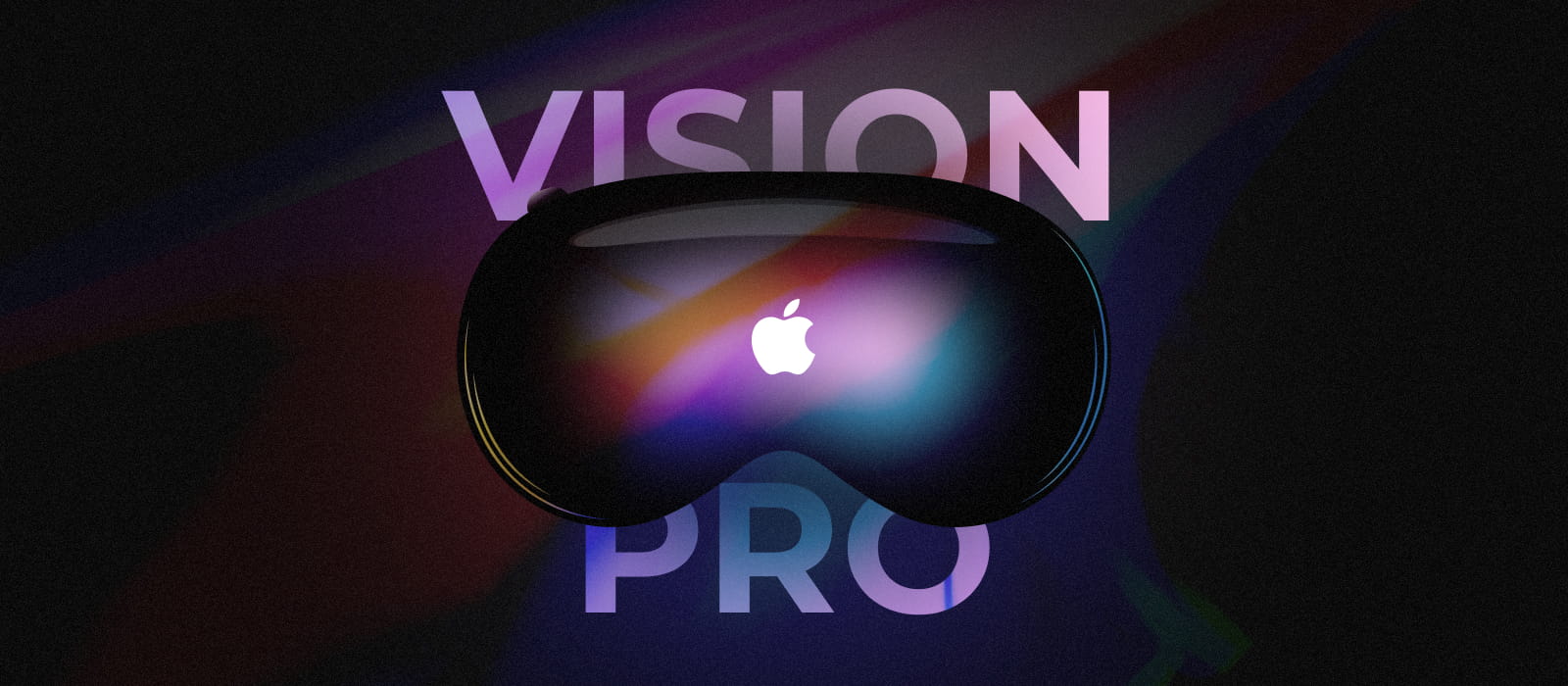
Apple Vision Pro: Key Features, Use Cases, and Future Prospects
3D mobile apps (no headset needed)
If you’re going mobile-first, the foundation is still classic mobile app development, just with a heavier 3D and real-time layer on top. This is the most accessible route. It feels like a high-end mobile game where the dating world lives inside your phone. Users control an avatar on their screen — similar to Roblox or Genshin Impact — to interact with others. It offers the interactivity of a metaverse without requiring expensive hardware.
Social spaces within existing platforms
Rather than sinking resources into a standalone app, you just set up branded dating hubs or host events inside places like VRChat, Decentraland, or Roblox. It’s a huge shortcut — you don’t have to build a whole engine from scratch, and you’re dropping your product right where an established audience is already hanging out.
The hybrid model (classic app and immersive mode)
This is arguably the smartest move from a business perspective. You keep the familiar “swipe” interface that everyone already knows, but once two people match, they can jump into a 3D hangout as a premium option. It’s a low-pressure way to bridge the gap — you give a massive, existing audience a taste of immersive dating without throwing them into the deep end of the metaverse all at once.
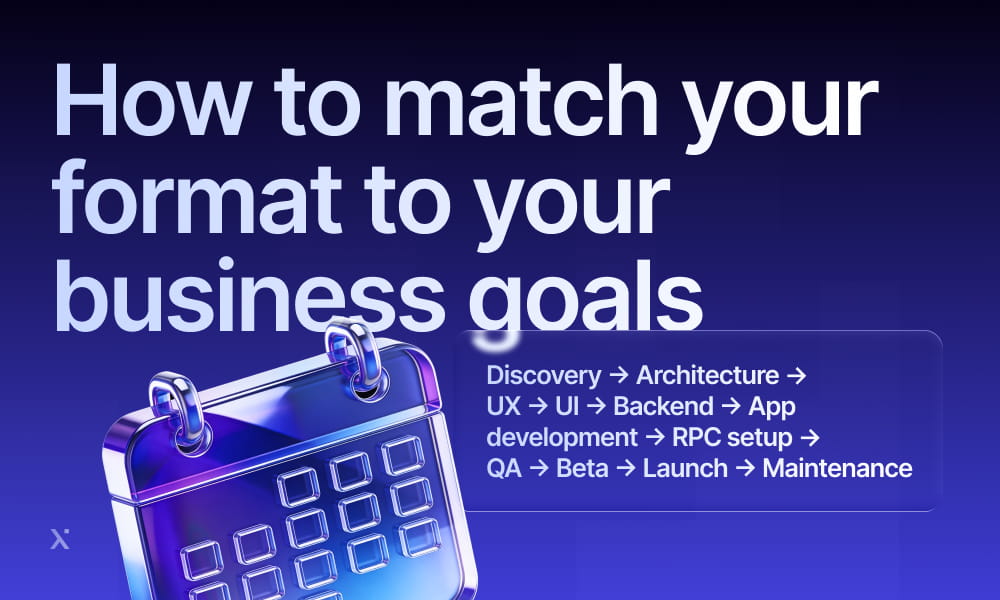
Format comparison: audience, complexity, and time-to-market
| Format | Target users | Platforms | Complexity | Best MVP scope |
| VR-first | Tech enthusiasts, gamers | Meta Quest, Apple VP | High | One polished environment + basic avatars |
| 3D mobile | Gen Z, mass market | iOS, Android | Medium | Avatar customization + 2 shared locations |
| Existing platforms | Built-in social communities | VRChat, Roblox | Low | One hosted event or a branded hangout spot |
| Hybrid model | Current dating app users | iOS, Android, Web | Medium | Standard swiping + one 3D date room |
Metaverse dating apps development process
Building a dating app in the metaverse immediately raises the bar. As soon as you add live rooms and voice control, people expect the experience to be smooth and intuitive. If the first session is confusing, or if someone encounters inappropriate behavior and the moderation is slow, they won’t try again. They’ll close the app and move on to another one. So the goal is quite simple: make the first interaction simple to begin with, understandable, and secure enough that users feel comfortable returning.
The most successful teams treat the product as a dual challenge: it’s part dating platform, part live digital hangout. The platform side handles the basics, such as profiles, matching, and IDs. But the real-time layer is where the magic happens — it handles the voice, movement, and shared vibes that actually kill off the need for endless, boring messaging. If you drop the ball on either side, the whole app just feels broken.
A practical development workflow typically goes through six stages — from interaction research and design to architecture, MVP creation, testing, and launch. Each stage directly impacts the timeline and budget, so planning the project as a sequence of key steps that must be completed, rather than simply as a list of features, is more efficient.
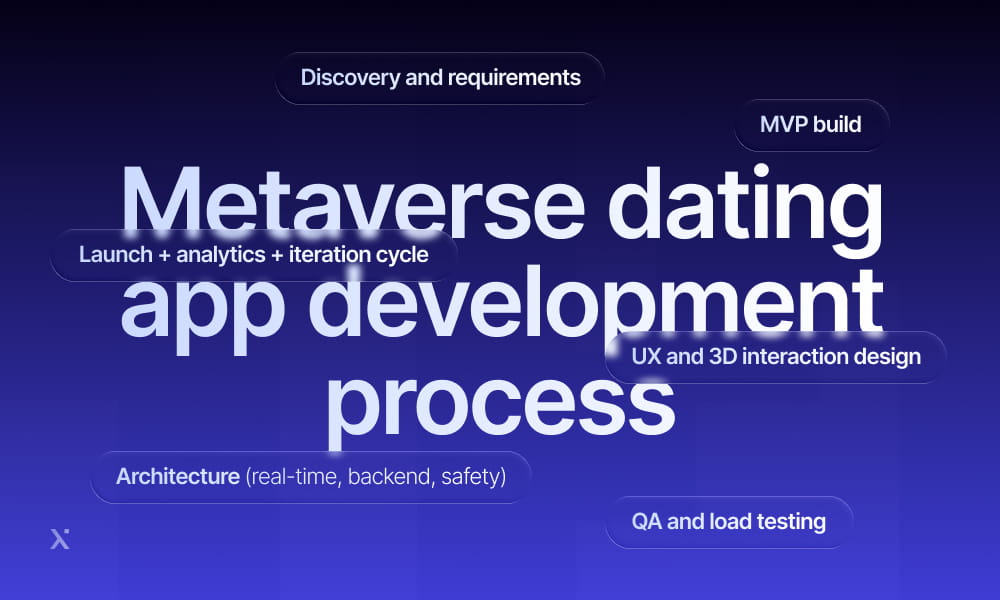
A realistic MVP should prove its key “spark” without getting bogged down by feature sprawl. Focus on basic matchmaking, simple avatar customization, and a single, high-quality virtual space with voice and security tools. Everything else — from advanced analytics to deep customization — should only emerge after you’ve ensured that users truly enjoy spending time in your virtual space in real time.

Inside Machine Learning Development: What Businesses Should Know

Web3 Development: What It Takes to Build the Future
How much will it cost (and where will the money go)
Virtual worlds don’t just run. This is the part of metaverse dating apps development where scope discipline matters most. They need servers, real-time sync, voice, moderation tools, and headroom for spikes when people show up at the same time. Regular dating apps are pretty easy to scope. Metaverse dating app development is harder to price cleanly, because one extra feature can drag a whole chain of infrastructure along.
Here are the main engines driving the price tag:
- 3D world building and asset pipeline: You’ll spend time on scene building and optimization: environments, materials, lighting, LODs, avatar rigs, animation, and runtime performance. Higher fidelity means more 3D production and more iterations inside Unity or Unreal.
- Real-time infrastructure and scaling: Teams often underestimate this aspect. A room in the metaverse might look great, but feel terrible if the voice and animation effects are lagging. Ensuring smooth real-time performance comes at a cost, and this cost increases with the number of parallel tasks, especially on platforms like Photon or AWS GameLift.
- Moderation and safety tooling: This is where AI development services become practical, not decorative: they help flag voice toxicity, spam behavior, and scam patterns fast enough to matter. You need moderation tools that work instantly, often using AI to flag toxic behavior in voice chats or in 3D proximity before it ruins the user experience.
- Content expansion strategy: Launching is just the start. You need a budget for ongoing “live ops”— new events, seasonal spaces, and lightweight activities to keep the community from getting bored.
- Ongoing support and maintenance: Metaverse application development requires more frequent updates than standard apps to remain compatible with new hardware (such as updated VR headsets) and to patch bugs in the 3D environment.
How Much Does AI Development Cost in 2026?

Blockchain Development Cost in 2026: What Goes Into the Price Tag
Budget ranges by scope (MVP to full product)
| Version | Timeline | Approx. cost (USD) | Cost drivers |
| Prototype | 4–6 weeks | $25k–$60k | Fast 3D setup, proof of real-time, UX basics |
| MVP | 10–14 weeks | $80k–$180k | Real-time infra, moderation tooling, optimization |
| V1 Launch | 4–6 months | $200k–$450k | Performance tuning, content pipeline, scaling costs |
| Full product | 6–12 months | $500k–$1.2M+ | Safety at scale, infrastructure, continuous content |
Budgets spiral out of control when the project’s scope becomes too ambitious. Too many platforms at too early a stage, user-generated content without automation, and the creation of a full-fledged “version 3” before the core cycle is proven viable. All three lead to the same result: expensive work that doesn’t improve customer retention.

What Is MVP in Software Development?

AI MVP Development: How to Validate Ideas Fast Without Breaking the Budget
What can go wrong?
Dating in the metaverse may feel more natural than endless messaging, but it also quickly reveals the worst aspects of dating. In a traditional app, the worst behavior usually manifests itself through messages. Here, it can happen in person, over the phone, in a shared space, or sometimes in the presence of other users. One bad session is often enough for a user to delete the app and never give it a chance again.
Voice interaction is often the first real test for a product. It’s deeply personal, which is why it works so well, but things can go wrong fast since everything happens in real time. If mute, block, or report buttons are slow to respond, users can feel helpless and abandoned.
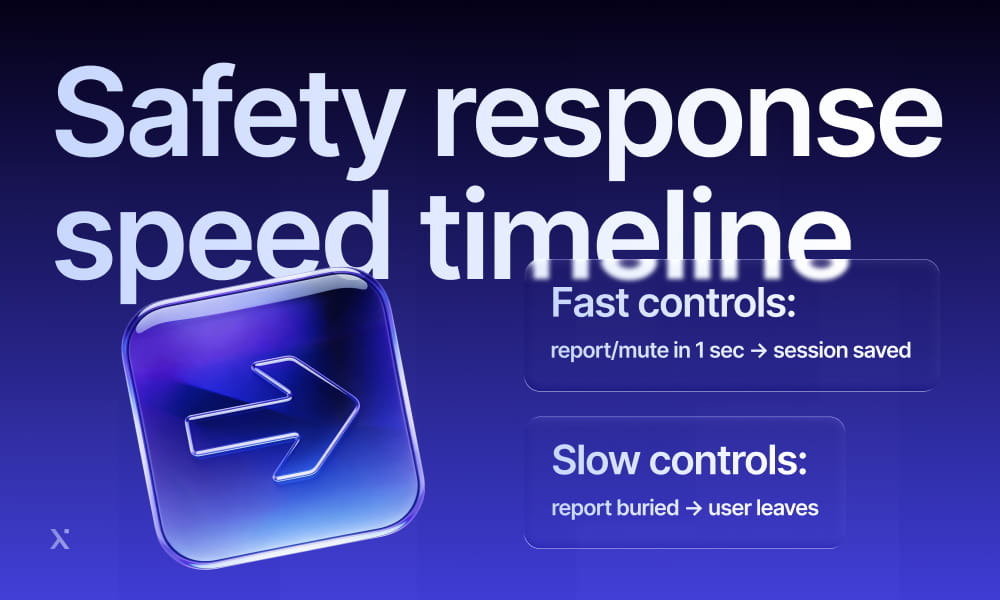
Identity fraud is another big risk. Fake accounts have always been around, but in immersive spaces, they are much more dangerous. If you wait too long to build a strong verification system, you may spend all your time fixing the problems that follow.
Privacy is key to making users feel comfortable. People can still feel watched or followed even if their location isn’t tracked. Make sure they have clear boundaries and an easy way to leave, or they might not return.
Compliance is something you can’t overlook. Age checks and content controls are basic requirements. If minors get in or explicit content spreads, platforms may shut you down.
This is why metaverse dating apps development has to treat safety as product infrastructure, not a feature you add at the end.

What Is the Industrial Metaverse and What Benefits and Opportunities Does It Hold?
What Is the Metaverse?
Success stories and proven models
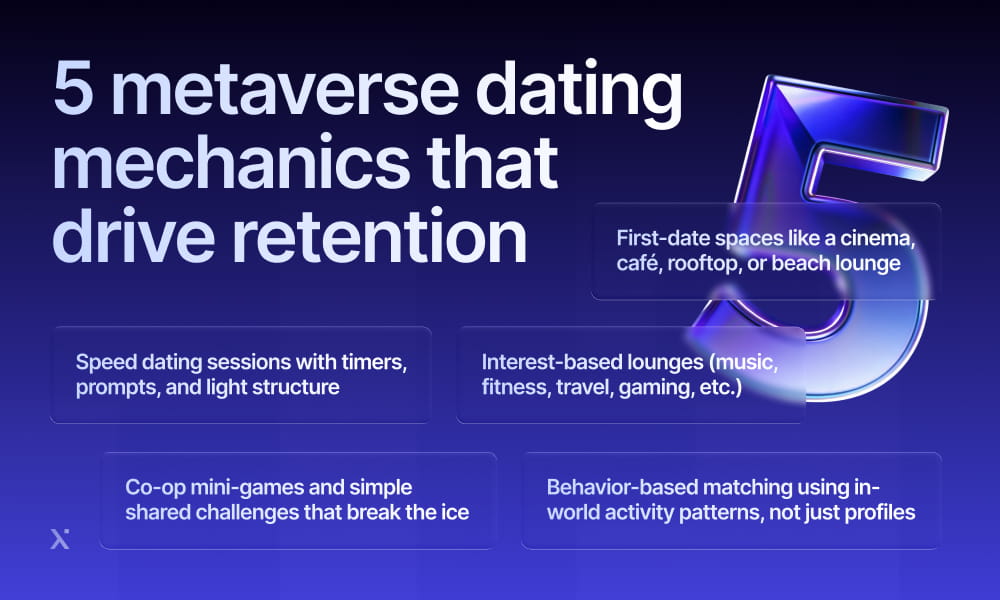
Many teams make this more complicated than it needs to be. You don’t need a massive world. What matters are simple, repeatable moments that feel natural and avoid awkwardness. Products that keep users usually follow a similar pattern.
- They start with an activity rather than simply opening a chat. Empty messages often stall conversation, while a shared activity provides a natural prompt for engagement.
- They organize events, not just open rooms. Even if a space is always available, it can still feel empty. Scheduled activities like speed dating, themed meetings, or organized sessions with a set start time draw people in.
- They simplify onboarding. Since VR onboarding can be challenging, a hybrid approach is more effective: allow users to set up on their phones first, then transition to the in-person experience when it is time to meet.
- They use lounges to encourage natural connections. Lounges provide context beyond what swiping offers, allowing users to observe how others communicate and interact. Often, the best match is not the first person you notice.

Digital Transformation Strategy: Best Practices

Future of AI: Unveiling Its Impact on Industries and Society
PixelPlex’s approach to metaverse dating apps development
You’re not hiring a team to “build a metaverse.” You’re hiring a team to ship a dating product that feels smooth, stays safe, and keeps people coming back. That’s what PixelPlex is set up to do.
What you get with PixelPlex
- A clear MVP that doesn’t sprawl. We help you pick the few features that matter at launch and cut everything that can wait.
- A product that feels smooth in real life. Fast loading, stable rooms, clean audio, and no stutters when people join at once.
- Safety people can actually use. One-tap block and report, real moderation flows, anti-scam basics, and guardrails for live spaces.
- One team for the whole build. Mobile, backend, real-time networking, 3D, and Web3 when it has a job to do.
- Numbers you can make decisions on. Analytics and event tracking are set up from the start, so you see what users do, not what they claim.
- A plan for what happens after launch. Events, new rooms, better matching, and scaling without rebuilding everything.
In other words, metaverse dating apps development with PixelPlex is less about a flashy demo and more about a product you can operate, improve, and grow.

Top 10 AI Development Companies in 2026

Top Full-Service Web3 Development Companies 2026
Conclusion
Dating in the metaverse is not just about building a huge virtual world. The real goal is to give people an easier way to start, making it feel more like meeting in person than just sending a text. When you focus on the basics, like a smooth real-time experience, strong security, and a social format people want to use again, the app becomes more than just another swiping tool. It turns into a place users want to come back to.
This is what separates a flashy idea from something that can really grow. With the right focus and solid basics, building a metaverse dating app becomes a real way to create better matches, keep users coming back, and build a business that does not depend on selling attention.
FAQ
Yes. Many of the most successful products are developed from the ground up with mobile devices in mind. VR is great when someone already likes the idea, but it’s asking too much at the outset. Most teams find it easier to launch a product with 3D on mobile devices or in a hybrid configuration, let people try it without any hardware issues, and then add VR later as an optional feature for users who want a fully immersive experience.
Swipes and matches look nice in a dashboard, but they don’t tell you whether the product is working. What matters is what people do once they’re inside. Watch the basics: how long users stay in rooms, how often they come back, and whether they show up for scheduled events. Pay close attention to the voice. Do people actually start voice sessions, and do they finish them? Do those sessions turn into a second meetup, or at least another interaction the next day?
This is a massive risk, and you can’t just hope for the best. The trick is to artificially create density: don’t open twenty rooms on day one. Start with two or three high-quality spaces and use scheduled “event windows” to funnel everyone into the same place at the same time. Guided speed-dating or small-group formats are great for making the world feel alive, even if your user base is still growing.
Classic dating apps have always dealt with this, but in the metaverse, it manifests itself even more quickly. If one side is overloaded and the other is inundated with messages, everything starts to feel unnatural. This can be remedied with basic controls. Restrict access to certain events. Use queues to prevent rooms from becoming crowded. Tighten verification to make it harder for throwaway accounts to be created. Small, interest-based communities usually work better because people come with a shared context and less incentive to spam.
Give people complete freedom, and they’ll easily hide behind fake identities. Limit options too much, and everyone will look like they’re cut from a mold. The optimal option is to allow users to customize their style, clothing, accessories, and, perhaps, even their playful avatars. But at the same time, it’s essential to maintain a real level of identification: verification levels, verified phone or ID verification, optional social media linking — something that proves there’s a real person on the other side.
People will open their wallets when they feel like they’re paying for something tangible. What they won’t tolerate is when the app starts acting like a bouncer, forcing you to pay to be seen. That’s when people get annoyed and leave, because it no longer feels like an improvement. If you monetize your app by focusing on “improving the user experience,” it will work. As soon as you impose a fee for entry, you’re asking for user churn.