Canton Network is the foundation for enterprise-grade dApps, and the ecosystem is actively developing tools to interact with it. PixelPlex's Console dApp SDK saves development time and simplifies these interactions.
A dApp SDK development solution allows for utilizing a ready-made “Pay with Wallet” button. It is a secure and easy-to-integrate component for developers building decentralized applications on the Canton network.
Together with our Canton experts, we have created this guide on how to develop a dApp SDK solution and what it may be useful for. Whether you are a dApp developer or just a Canton enthusiast, our solution will help you avoid starting from zero.
Why now? The Canton opportunity
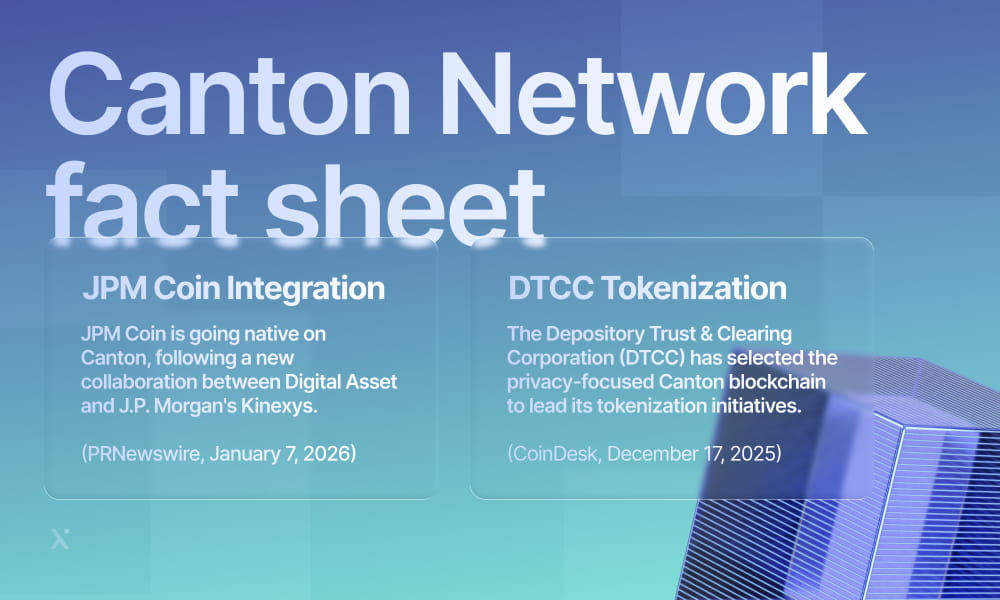
JPMorgan is enabling its institutional digital dollar (JPM Coin) to be interoperable with the Canton Network, bringing real digital cash directly into the ecosystem. The process will happen in phases throughout 2026.
The Depository Trust & Clearing Corporation (DTCC) selected Canton for tokenizing traditional finance instruments, signaling massive institutional trust in the network.
Both these news indicate that the Canton Network is gradually and steadily transforming from a promising technology into a functional financial market. Here is why it matters:
The fuel for dApps
Previously, a developer could build a complex smart contract to tokenize a Treasury bond or a stock on Canton, but settling that trade was time-consuming. Money transfer usually happens on slow, traditional rails (like wire transfers) that operate on a 9-to-5 schedule.
With JPM Coin live on Canton, developers can now build dApps where the asset (the bond) and the cash (JPM Coin) exist on the same ledger simultaneously. This allows for true atomic settlement. The exchange happens instantly and simultaneously, or it doesn’t happen at all.
24/7 markets become a reality
Canton’s atomic settlement allows for U.S. Treasury financing outside of traditional market hours. With JPM Coin, developers can create applications that operate without breaks or weekends. This opens massive potential for DeFi-style applications within a regulated, institutional framework.
Zero-Leakage Vaults: Building High-Stakes Canton Network Wallets

DAML Development for Business: A Practical Guide to Building Multi-Party Applications
Liquidity and institutional legitimacy
JPM Coin represents actual USD deposits at J.P. Morgan. Its presence in Canton brings massive liquidity to the ecosystem. For a developer, this means the applications you build are no longer experiments, but they are connected to the real balance sheets of the world’s largest bank. This makes it easier to pitch your solutions to enterprise clients who require regulated, compliant digital cash.
Enhanced interoperability
At PixelPlex, our experts have a deep expertise in Canton.Network development services. We have already created several tools for the Canton Network. Together with other developers, we are now building on the same infrastructure that the world’s largest bank is using to move real money. It validates the “Privacy-First Finance” thesis and provides the essential payment rail needed to make your dApps commercially viable.
Compare the functionality of traditional apps with that of Canton Network:
| Feature | Traditional finance apps | Canton Network dApps |
| Settlement | Slow, 9-to-5 wire transfers | Instant atomic settlement |
| Market hours | Weekdays only | 24/7 markets |
| Cash / Liquidity | Traditional digital cash | Real JPM Coin liquidity |
| Infrastructure | Siloed systems | Interoperable, DTCC-trusted |
| Asset foundation | Connected to traditional rails | Connected to real bank balance sheets |
Build in Canton if you want to play the long game in regulated finance. The network connects you directly to real money, real assets, and real settlement volume. That is a unique position that few blockchains can offer.
What is the dApp SDK solution?
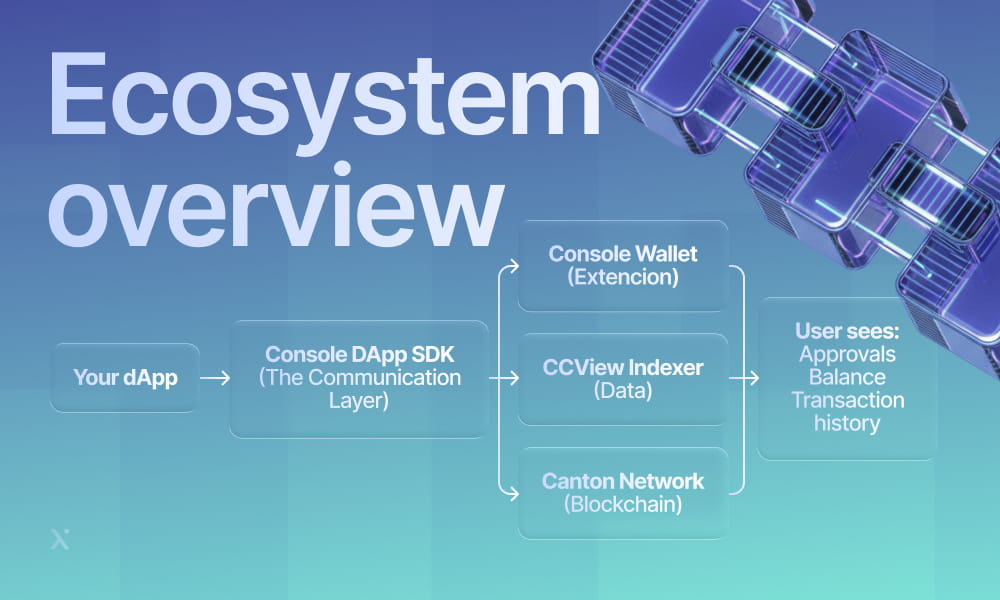
In short, it is a software development kit that provides a ready-made “Pay with Wallet” button. It is designed to be a secure and easy-to-integrate component for developers building dApps on the Canton network. DApp SDK development allows for the following:
- Instead of building the complex code required to connect their application to the Console Wallet from scratch, developers can use this SDK to easily add a familiar “Connect Wallet” or “Pay with Wallet” button to their interface. It handles all the technical communication in the background.
- The security model is handled by the underlying Console Wallet. The wallet is self-custodial, so private keys and passkeys stay on the device the whole time. The wallet also includes features like phishing warnings and clear fee previews before any transaction is signed. The process of SDK development ensures the dApp can request these secure transactions properly.
- This SDK is specifically designed for the Canton network. This blockchain network is focused on privacy and institutional finance. The Console Wallet acts as the primary financial gateway to this network, and this SDK is the tool that lets dApps within the Canton ecosystem easily integrate with that gateway.
In essence, the Console DApp SDK development results in eliminating the complex logic of wallet connection and transaction signing, as it provides a simple, secure, and ready-to-use payment button for any developer building a dApp on the Canton network.
DeFi Vaults Explained: How to Turn Lazy Crypto Into an Automated Yield Machine

Canton Network Reward System: How Canton Coin Pays Developers to Build Real Value
The Console DApp SDK development process

The challenge
Financial dApps need to interact with wallets securely. No ready-made SDK existed for Canton. Every dApp team had to build from scratch, which is always slow, expensive, and error-prone.
While the Canton ecosystem was moving toward standardization with CIP-103, our wallet development team recognized the need for an immediate, high-performance bridge between dApps and secure storage. We initiated development of our SDK in parallel with the official standard to accelerate our roadmap and eliminate third-party dependencies. Today, our solution is fully CIP-103 compliant, offering developers a unique advantage: our wallet maintains native compatibility with both our optimized SDK and the standard Digital Asset implementation. It ensures maximum flexibility for complex financial workflows.
The process
The development process included 6 phases. They are briefly described in the following table.
| Phase | What we did | Outcome |
| Discovery | Analyzed dApp developer pain points, mapped CIP-0103 protocol | Clear requirements for minimal friction integration |
| Architecture | Designed lightweight, promise-based SDK with TypeScript | Self-documenting code, easy onboarding |
| Development | Built core modules: connection, signing, balance queries, transaction history | Feature parity with mature Web3 ecosystems |
| Testing | Iterated with early-access dApp partners | Validated UX, fixed edge cases |
| Launch | Published to NPM, documented every method | Open-source, community-ready |

Building the Unbreakable Exchange: A Developer's Guide to Canton Network

A Network of Networks: How Canton Is Redesigning Financial Infrastructure
The technology stack
| Component | Technology |
| Language | TypeScript / JavaScript |
| Communication | Browser extension message passing |
| Protocol | CIP-103 |
| Distribution | NPM (Node Package Manager) and Unpkg |
How the SDK accesses data
To be useful and interactive, dApps need data. The Console DApp SDK development process provides methods that retrieve different types of data from the user’s wallet and the Canton network:
- Current state: Methods like getBalance() and getPrimaryAccount() fetch real-time holdings and account information, allowing dApps to display what the user owns right now.
- Transaction building: First, the SDK prepares the transaction data and triggers a user signature request via signMessage(). Once the wallet securely signs the command, the SDK uses submitCommands() to broadcast the authenticated transaction to the network for execution.
- Transaction history: Methods like getNodeTransfers() and getOffers() retrieve past transfers and pending offers so users can see their activity.
These methods request data directly from the user’s wallet or from the Canton network.
Users expect the “Connect Wallet” button to work. However, if your dApp takes a few seconds to load data after connection or it shows a blank screen, they will blame the wallet.
To avoid a negative experience, pay attention to these moments:
- Show the user what is happening. “Checking wallet…” → “Fetching your balance…” → “Ready.” This turns waiting into anticipation.
- Before asking the user to sign, show them exactly what they are signing. A user who understands the transaction is a user who approves it.
- Implement user-friendly error messages. If signing fails, tell the user why it’s happened in plain language, not just a dry error code notification.
Supporting tool: CCView Indexer
Requesting historical data takes time. To make those queries fast and efficient, PixelPlex has developed the CCView Indexer as a separate tool. The CCView Indexer:
- Processes Canton blockchain data in real time and organizes it into a queryable database.
- Exposes a REST API for balances, transfers, and offers.
- Provides the data that powers the SDK’s history methods like getNodeTransfers() and getOffers().
When a dApp using the SDK calls a history method, the SDK retrieves the data from the CCView Indexer’s API rather than scanning the blockchain directly. This gives dApp users instant access to their transaction history while saving developers months of work building their own indexing infrastructure. The Indexer is optional, as dApps can still use the SDK for connection and signing without it, but it significantly improves performance for data-heavy features.
Team & timeline
Here’s the team composition that is crucial for the Console dApp SDK development.
| Role | Why it matters |
| Solution Architect | Translates business needs into Canton-compatible design |
| Smart Contract Engineers | Deep Daml expertise, template design |
| Frontend/Integration Engineers | Builds the dApp layer, SDKs, wallet connections |
| QA Engineers | Canton-specific testing, edge cases |
| Project Manager | Keeps timelines predictable, communication clear |
At PixelPlex, our team completed the discovery, development, testing, and release of the Console DApp SDK in approximately 6 weeks. This timeline included internal development and validation with early-access partners prior to the public NPM launch.
Crypto Wallets Get Brain: How AI Crypto Wallet Development is Creating a Smarter and Safer Financial Future
Canton Network Wallet Development: A Guide on How to Do It Right (and What It'll Cost You)
PixelPlex’s Canton expertise
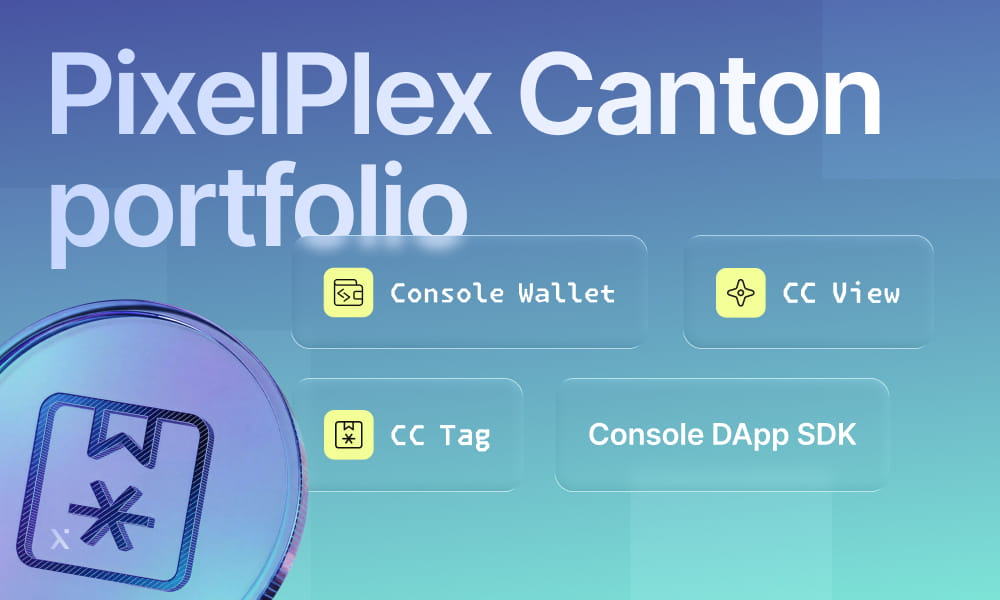
At PixelPlex, we prefer to dive deep into technologies that have great potential to impact the world, and particularly such domains as finance. Canton Network attracts the attention of the world’s big players. Therefore, our experts are interested in its opportunities and prefer to actively participate in its development. We have already described the Console dApp SDK development process and CCView Indexer above. Here are some other successful projects.
Console Wallet
PixelPlex has a wide portfolio of projects in the crypto wallet development services. Our Console wallet is the first browser extension wallet built for the Canton Network. We decided to bring the familiar Web3 experience to institutional finance. The solution bridges the gap between enterprise-grade security and retail-friendly usability.
The wallet integrates natively with the CCView data indexer, so users get access to balances, transfers, and transaction history. The wallet allows for signing messages, sending transactions, and managing assets seamlessly within a clean and intuitive interface.
Console Wallet is available as a Chrome/Firefox extension, and it has Android and iOS apps (and soon Telegram Mini Apps). Console Wallet proves that Canton’s powerful “network of networks” can have a user-friendly face without compromising on security.
Here are some significant metrics indicating Console Wallet’s success:
| New users | Extension installs | Network activity |
| 2,350+ in first month | 8,000+ on Chrome | 1.7M+ public transactions |
CC Tag
CC Tag is a human-readable naming system for the Canton Network that replaces long, error-prone party IDs with simple and memorable names.
Instead of copying and pasting complex addresses, users can send and receive assets using a consistent name that works across wallets, explorers, invoices, and dApps. This reduces mistakes and creates a smoother payment experience. After a simple registration and signing in with your Canton wallet, CC Tag automatically links the name to your party, and it appears across the ecosystem (Console Wallet, CC View) within minutes.
CC Tag is built on ANS and is private by design. Only the name and a URL are published. Keys and funds never leave the user’s wallet. It is available to individuals, teams, and institutions with a Canton-compatible wallet.
Canton Loop
Canton Loop is the first non-custodial wallet built for the Canton Network. Our team created the wallet in just 2.5 months.
Unlike traditional wallets, Canton Loop is designed as a self-monetizing asset. By integrating directly with the Canton protocol’s native incentive layer, it generates revenue for its owners by capturing a percentage of network activity. This design has already produced over 31.29 million Canton Coins in revenue and secured a Top 10 position on the Canton Coin Validator Leaderboard.
Beyond being a wallet, Canton Loop serves as foundational infrastructure for the ecosystem. Other applications like DEXes and swapping services can integrate with it to seamlessly onboard users and manage secure transaction signing. It is also a customizable platform that financial institutions can deploy as their own branded wallet.
Here is a summarizing table of Canton solutions developed by PixelPlex:
| Solution | What it does | Business value |
| Console Wallet | Browser extension wallet for Canton Network | First-mover infrastructure, growing user base |
| Console DApp SDK | Plug-and-play dApp-to-wallet connection toolkit | Cuts dApp development time by 40–60% |
| CCView Indexer | Real-time on-chain data querying & API | No need to build your own indexing layer |
| CCTag | Identity and metadata tagging for Canton assets | Enhances compliance and auditability |
| Canton Loop | Testing and simulation environment | Risk-free prototyping before mainnet |

DAML Development Services: Everything You Need to Know

Canton.Network Explained: How It Solves DeFi's Biggest Risks
Why PixelPlex for Canton development
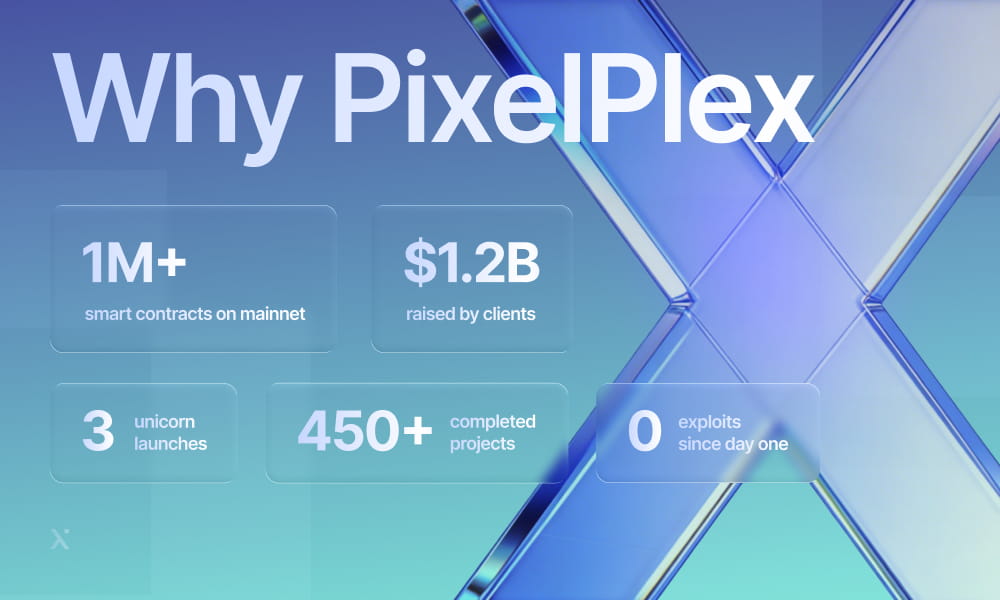
- Deep Canton expertise: We have been building on Canton since its early stages and understand the protocol, its tools, and its quirks. This means fewer surprises and faster development cycles.
- Production-proven components: Our work is not theoretical. Console Wallet has real users, the dApp SDK is live on NPM, and CCView indexes live network data. These are shipping products, not prototypes.
- Business-driven development: We focus on what our clients actually need. It might be compliance, transaction speed, auditability, or usability. The architecture follows the business requirement.
- Full-stack capability: Our team includes all necessary specialists, such as smart contract engineers, frontend developers, indexing experts, and DevOps. We handle the entire spectrum of the development process.
Compare the opportunities of partnering with PixelPlex:
| Criteria | Building in-house | Generic blockchain dev shop | PixelPlex |
| Canton-specific experience | Must learn from scratch | Usually limited | Deep, proven |
| Ready-made components | None | None | SDK, indexer, wallet, tools |
| Time to MVP | 6–9 months | 4–7 months | 2–4 months |
| Risk | High (unknown unknowns) | Medium | Low (we’ve done it) |
| Cost efficiency | Low | Medium | High (reusable assets) |
Conclusion
The Canton Network has already become the infrastructure where real money moves. It has created the foundation for institutional dApps. With a foundation in place, developers now need tools to build working applications. Here is where PixelPlex’s team steps in. We have built the Console DApp SDK to provide every Canton developer with a secure and ready-to-use bridge between their dApp and their users’ wallets. The CCView Indexer data allows for making well-informed and grounded transaction decisions. A whole family of production-proven components (Console Wallet, CC Tag) saves hours of the development process.
If you are building in Canton, we will be happy to assist. Contact us if you need a consultation.
FAQ
Building manually implies a lot of complicated activities, such as handling connection detection, request formatting, error recovery, and transaction signing. All across multiple dApps. Our SDK abstracts all of that into simple methods like `connect()`, `signMessage()`, and `submitCommands()`. What would take months of trial and error becomes a few lines of code.
The SDK is designed to be compatible with any wallet that follows the CIP-0103 communication protocol. While it was built alongside Console Wallet, any compliant wallet on Canton can implement the same message-passing standards and work seamlessly with dApps using our SDK.
The SDK includes a `checkExtensionAvailability()` method that detects whether a compatible wallet is present. You can then prompt the user with installation instructions or gracefully degrade the experience until a wallet is detected.
Yes, the SDK is built for the full Daml development lifecycle. Beyond basic transfers, the SDK supports signing contract choices, batching multiple transactions (`signBatch()`), and interacting with pending instructions. This means dApps can support advanced DeFi and RWA workflows without custom low-level plumbing.
The SDK never touches private keys. All signing happens inside the user’s wallet extension, with the user explicitly approving each transaction. The SDK simply formats the request and passes it to the wallet. Keys stay on the user’s device at all times.
For a basic integration (connect wallet, fetch balance, send transaction), most developers complete the work in 1 or 2 days. Full integration with transaction history, batch operations, and custom error handling may take up to 2 weeks, depending on dApp complexity.
Yes, the SDK is published to NPM as an open-source package. You can use it as-is, fork it, or contribute improvements. Many teams use it as a reference implementation even if they ultimately build their own integration layer.
Absolutely. We provide technical support for teams integrating our SDK, including documentation reviews, debugging assistance, and best-practice guidance. For larger partnerships, we offer dedicated engineering hours to ensure smooth adoption.