
Your medical records are currently worth more to a hacker than your credit card. While a stolen Visa might fetch a few bucks on the dark web, a single electronic health record now goes for about $60. Why? Because you can cancel a card, but you can’t exactly change your blood type or your genetic history.
In 2024 and 2025, the industry hit a breaking point, with the Change Healthcare attack alone affecting nearly 193 million people. That is more than half the population of the United States. By the beginning of 2026, the average cost of a single healthcare breach in the U.S. reached a record-breaking $10.22 million.
Health data is a total mess right now, and the old ways of “locking the door” with a simple password just aren’t cutting it anymore. This is why our team here at PixelPlex is focusing on blockchain healthcare app development. We wrote this guide because we want to stop the digital bleeding and give patients their privacy back.
We see clinics struggling with clunky, 20-year-old systems every day, and we believe it is time for a change. You can explore our healthcare software development services to see how we tackle these massive industry headaches with logic instead of just more firewalls.
High-impact use cases for health-tech
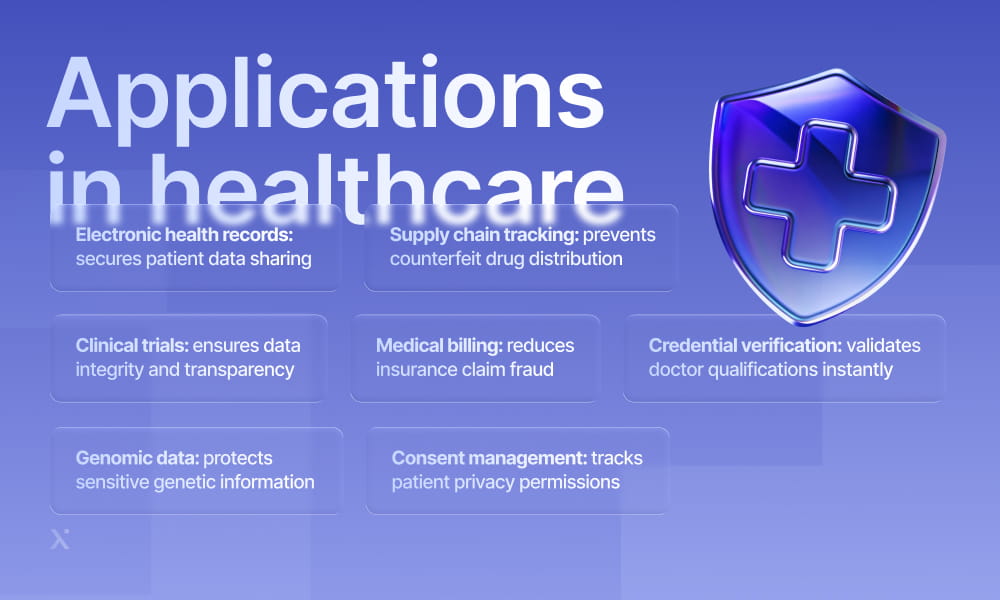
Blockchain healthcare app development is letting patients own their own data. Instead of your medical history living in a dusty file cabinet or a locked server at one specific hospital, it lives on a ledger that you control. This means if you go to a new doctor, you can give them access instantly without waiting for a fax from 1995. If you are trying to figure out how to handle this kind of data, our blockchain consulting can help you map out the journey.
Electronic health records and patient portals
Records are often scattered across five different clinics. A decentralized app brings them all together in one place that no single company owns. This is a huge part of blockchain healthcare application development because it fixes the problem of “lost” records. Every time a doctor adds a note, it gets stamped onto the chain. It is permanent and clear. To make sure these records are useful for the hospital as well, we often recommend looking into business intelligence solutions to help sort through the trends.
Supply chain integrity and counterfeit drug prevention
Fake pills are a billion dollar problem that actually hurts people. By putting medicine on a blockchain, we can track a bottle from the factory to the pharmacy shelf. Each stop is recorded, so you know the medicine is real. This is why blockchain healthcare app development is so vital for pharmacies.
Transforming clinical trials with verifiable data
Clinical trials are often messy and sometimes even dishonest. Researchers might hide bad results to make a drug look better. Blockchain stops this because you cannot delete or change data once it is on the ledger. This builds huge trust with the public and the regulators. Using smart contract development can automate the reporting process so that no human can mess with the numbers.
Exploring 6 Blockchain Use Cases in Healthcare: A Detailed Overview with Examples

Planning Web3 App Development Cost: Team, Timeline, And Hidden Expenses

Pack Your Digital Bags: Why Your Travel Business Needs Blockchain
Faster insurance claims and billing
Insurance is usually a game of “wait and see.” You wait for the doctor to bill the company, then the company takes weeks to pay. With a blockchain app, the payment can happen the moment the doctor clicks “finished.” This is the peak of blockchain healthcare application development. To keep these money moves safe and legal, transaction monitoring software helps watch out for any fishy schemes.
Remote patient monitoring and IoT security
If you wear a smart watch that tracks your heart, that data is sensitive. Most apps send that info to a big cloud server that can be hacked. A decentralized setup keeps that data between you and your doctor. This is a big focus for our blockchain app development services lately. We want to make sure your heart rate isn’t being sold to some random advertiser.
| Use case | Who it helps | Main problem solved |
| Patient records | Patients & doctors | Data silos and lost files |
| Drug tracking | Pharmacies | Counterfeit and fake meds |
| Trials | Researchers | Data fraud and manipulation |
| Billing | Hospital finance | Slow payments and paperwork |
| IoT / wearables | Chronic patients | Security of personal data |
Don’t try to store high-resolution MRI images directly on the blockchain. It is too slow and will cost you a fortune. Instead, store the image on a secure off-chain server and only put the “digital fingerprint” or hash on the blockchain to prove it hasn’t been changed. This approach is especially important for platforms that also rely on computer vision software development to analyze MRI scans and other diagnostic images.
Blockchain vs. traditional medical software
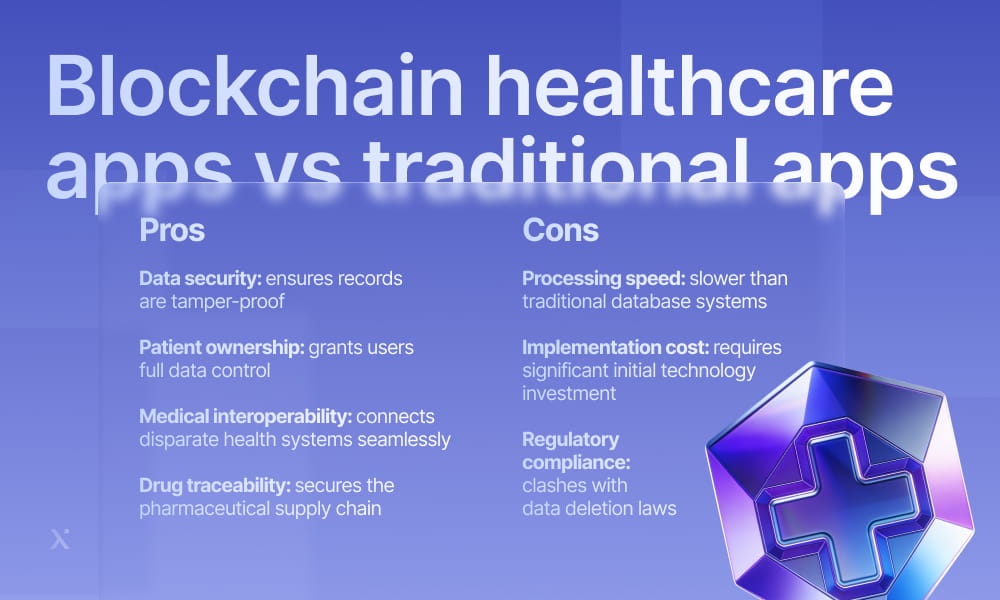
Traditional healthcare software usually relies on a central hub where all data is stored, which is basically a giant target for hackers. In contrast, blockchain healthcare app development creates a system where data is distributed across a massive network, making it virtually impossible to shut down or corrupt. If you are ready to ditch the old-school server model for something more resilient, exploring web3 development is the smartest way to future-proof your infrastructure.
Centralized vulnerability vs. decentralized resilience
Traditional apps live on a single server, which means if that one machine goes down or gets breached, the whole hospital stops working. With Web3 app development, the data exists in multiple places at once, so there is no single point of failure that a hacker can exploit. This decentralized nature ensures that critical patient info is always available, even if parts of the network are under attack. It is a fundamental shift that is driving the demand for blockchain healthcare application development across the globe.
Administrative gatekeeping vs. patient data ownership
In a standard medical app, the clinic or the software provider is the “owner” of the data, and you just have permission to see it. Blockchain flips this script by giving the “keys” to the patient, meaning you decide exactly who gets to see your heart rate or blood tests. This removes the middleman and speeds up the process of sharing records between different specialists. By focusing on security audit and risk management, we ensure that these digital keys stay only in the right hands.

Blockchain Development Cost in 2026: What Goes Into the Price Tag

Top Full-Service Web3 Development Companies 2026
Data silos vs. seamless interoperability
Usually, hospital systems are like islands that don’t speak the same language, making it a nightmare to transfer your files from one city to another. Blockchain acts as a universal bridge, allowing different apps to share data securely and instantly without needing a manual “export” process.
Vulnerability to tampering vs. immutable records
In a traditional database, an admin or a clever hacker could technically go in and change a record, and nobody would ever know. On a blockchain, every single entry is time-stamped and “sealed” so that it can never be deleted or altered without leaving a clear trail. This immutability is vital for things like clinical trials or insurance claims where the truth must be set in stone.
Opaque processes vs. transparency
A decentralized app provides a clear audit trail that shows every single interaction with your file in real-time. This level of transparency builds massive trust between patients and providers, which is why blockchain healthcare application development is becoming the new gold standard.
| Feature | Traditional medical apps | Blockchain healthcare apps |
| Data control | Centralized in one database | Distributed across a network |
| Security | Firewall-based (Single point) | Cryptography-based (No single point) |
| Transparency | Low (Internal logs only) | High (Immutable audit trail) |
| Uptime | High risk of downtime | Extremely high availability |
| Cost to scale | Gets more expensive | Becomes more efficient |
Real-world success stories
Seeing is believing. While many talk about the potential of decentralized tech, a few trailblazers have already paved the way, proving that blockchain healthcare application development is far from a laboratory experiment. These companies have tackled the messiest parts of medicine – privacy, data silos, and trust.
Akiri: the ultra-secure data highway
Akiri doesn’t bother with storing data. Instead, they focused on the “plumbing.” They built a network that functions like a private, encrypted internet specifically for healthcare providers. It’s a liquid system where data moves instantly but securely between authorized parties.
- The problem: Normally, when a hospital sends data to an insurance company, it’s vulnerable to interception or ends up sitting in a “data lake” that someone might eventually hack.
- The fix: Akiri uses blockchain to verify the identity of the sender and receiver every single time a byte of data moves. It creates a “trust layer” that sits on top of existing systems.
- Why it’s cool: It doesn’t force hospitals to throw away their old software. Instead, it uses blockchain integration services to connect disparate legacy systems into one cohesive, safe network.
When looking at these giants, don’t feel like you have to build a “national” system on day one. Most of these started by solving one specific, annoying problem – like “how do we stop unauthorized file views?” – and scaled from there.

Top 10 Blockchain Use Cases In 2026: How Your Business Can Ride the Wave
Protecting Ideas: How Blockchain Is Becoming the Guardian for Your Creations
BurstIQ: the Big Data hub for research
BurstIQ is making sense of data without compromising the person behind the numbers. They’ve built a platform where massive datasets (genomic info, fitness tracker logs, and clinical records) can be analyzed by researchers.
- Granular consent: Patients can choose to share their heart rate data with a research study but keep their mental health records private. The blockchain handles these complex permission sets automatically.
- Data marketplaces: They allow for the ethical “selling” of anonymized data, where patients can actually be rewarded for contributing to science.
- Intelligence at scale: To get the most out of this mountain of info, we often suggest pairing such platforms with machine learning development. This helps identify disease patterns or drug side effects that a human eye would simply miss.
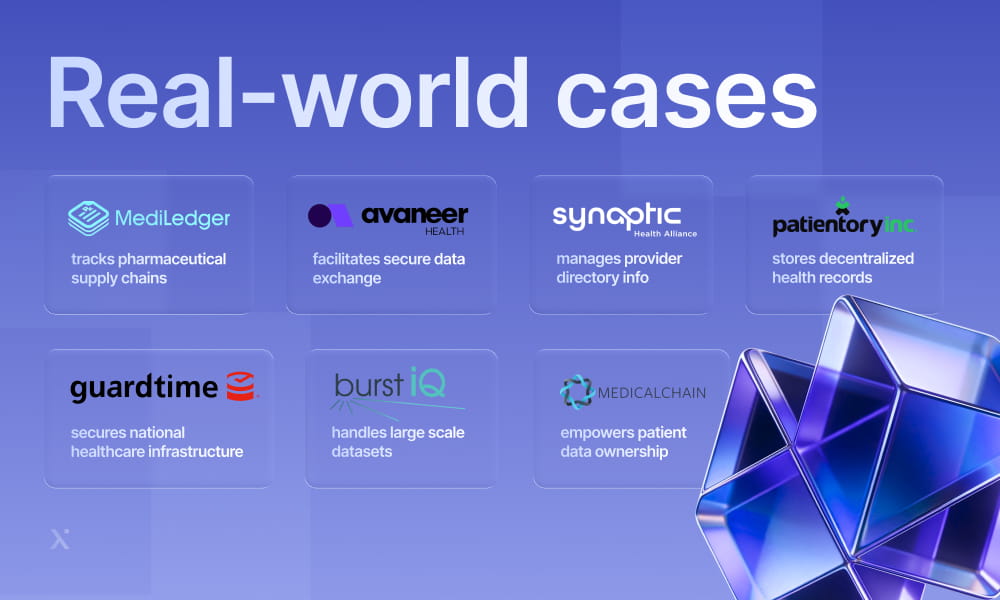
Guardtime: setting the national standard in Estonia
If you want to see blockchain healthcare app development at a “boss level,” look at Estonia. They didn’t just build an app, they built a digital society. Guardtime’s Keyless Signature Infrastructure (KSI) ensures that every medical record in the country is tamper-proof.
- Total transparency: In Estonia, if a doctor looks at your file, you get a notification. If a government official tries to peek without a reason, there is an unchangeable record of it, and they can be prosecuted.
- Zero-downtime architecture: Because the system is decentralized, it’s practically impossible for a cyberattack to take down the nation’s health service.
- Controlled access: For a project of this scale, using private blockchain development is the smart move. It allows the government to maintain strict control over who can run a “node” while still giving citizens the transparency of a public ledger.
| Feature | Akiri | BurstIQ | Guardtime |
| Primary goal | Secure data transit | Big Data insights | National security/ transparency |
| Key users | Insurers & hospitals | Researchers & patients | Entire citizen populations |
| Main “Win” | No more data leaks in transit | Ethical data monetization | 100% auditability of records |
When looking at these giants, don’t feel like you have to build a “national” system on day one. Most of these started by solving one specific, annoying problem – like “how do we stop unauthorized file views?” – and scaled from there.

Smart Contract Development Cost Demystified: What Every Business Should Know

Fitness App Development Trends and Tips: A Complete Guide for Business Leaders
How to start your project without losing your mind
Identifying the core problem
Don’t build a blockchain app just because it sounds cool. Figure out what is actually broken in your current process. Is it the billing? Is it record sharing? Once you know the problem, blockchain healthcare app development becomes much easier. We often suggest using AI development during this phase to help analyze where the biggest bottlenecks are in your business.
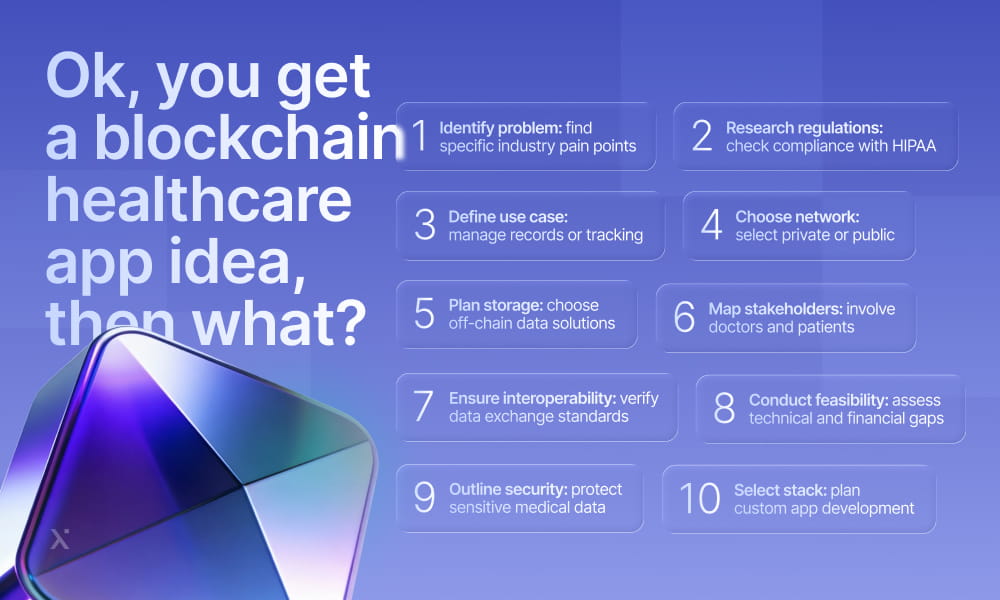
Navigating the compliance
You have to talk to lawyers early. Healthcare is the most regulated industry on the planet. You need to make sure your smart contracts follow all the rules of the land. To help users understand these complex rules, many apps now use chatbot development to explain the terms and conditions in simple language.
Picking your network
Do you want a public network where everyone can see the transactions, or a private one just for your partners? Most medical projects choose a private or hybrid setup. This is a critical step in blockchain healthcare application development.
| Stage | What to focus on | Potential trap |
| Research | User pain points | Building for the sake of tech |
| Legal | Privacy compliance | Ignoring local laws |
| Selection | Network type | Choosing a slow/expensive chain |
A step-by-step look at the development process
Creating a high-performing medical tool is about building a digital ecosystem that people actually trust with their lives. We follow a strict, phased approach to ensure that nothing is left to chance. Whether we are automating insurance payouts or securing sensitive MRI data, each step in our blockchain healthcare app development cycle is designed to minimize risk while maximizing the “wow” factor for the user.
Discovery and strategic architecture
The biggest mistake people make is rushing to code without a map. This phase is where we sit down and define the “why” before the “how.” We decide which data lives on the blockchain and which stays on a traditional, high-speed server. It is the most important part of the entire journey.
- Logic mapping: We define how data moves between doctors, patients, and insurers.
- Infrastructure selection: Choosing between public, private, or hybrid networks (like Hyperledger or Polygon).
- Compliance strategy: Mapping out how the architecture will meet HIPAA, GDPR, or other local medical regulations.
- AI integration planning: We might suggest utilizing generative AI development to quickly create different UI design ideas or to help write initial pieces of technical documentation and user guides.
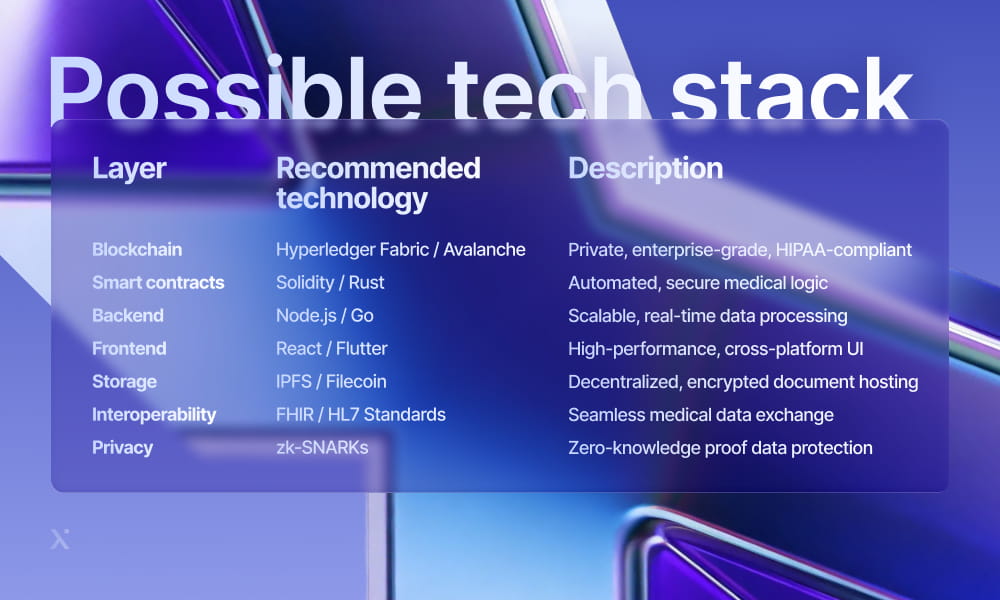
Smart contract logic and backend dev
Our coders write the “if-then” rules that run the app automatically. In the medical world, this might mean a patient only gets charged once the surgery is officially logged by the hospital. Since these contracts are permanent once deployed, we treat every line of code like it’s a legal document.
- Automated triggers: Setting up rules like “if the lab results are uploaded, notify the patient instantly.”
- Encryption protocols: Building the layers that keep patient IDs hidden from anyone without a private key.
- Advanced diagnostics: We use deep learning development in the backend sometimes to help the app recognize things like X-ray patterns or skin anomalies automatically, providing doctors with a “second pair of eyes.”
- API management: Ensuring the blockchain can “talk” to existing hospital software systems (like Epic or Cerner).

ChatGPT Integration: How Companies Turn AI Into Real Operational Advantage

Agentic AI in Healthcare: EVERYTHING You Need to Know
User-centric interface design
If a doctor has to spend ten minutes figuring out how to login, they won’t use the app. Period. We make it look and feel like a normal, high-end app, even though it has a super-powered blockchain engine under the hood. This is a key part of blockchain healthcare application development. We focus on making the complex tech invisible so the focus stays on the patient’s health.
- One-click access: Implementing biometric logins (fingerprint/face) so doctors don’t have to remember 20-digit blockchain keys.
- Clear dashboards: Designing simple views for blood pressure stats, pill schedules, and appointment reminders.
- Financial integration: We also make sure that people can pay for their services easily by adding crypto payment solutions right into the dashboard, allowing for instant insurance settlements and lower transaction fees.
- Real-time alerts: Setting up push notifications that are actually useful and not just “noise.”
| Build step | Focus area | Essential tools |
| Strategy | Business alignment | Logic maps, legal checklists |
| Logic | Security & rules | Solidity, Rust, ZK-Snarks |
| Design | User happiness | Figma, cross-platform frameworks |
| Testing | Integrity | Load tests, smart contract audits |
Don’t let your “feature list” get too bloated. It is far better to have an app that does two things perfectly – like secure records and fast billing – than an app that does ten things poorly. In healthcare, reliability is the only feature that truly matters.
What to budget for your project
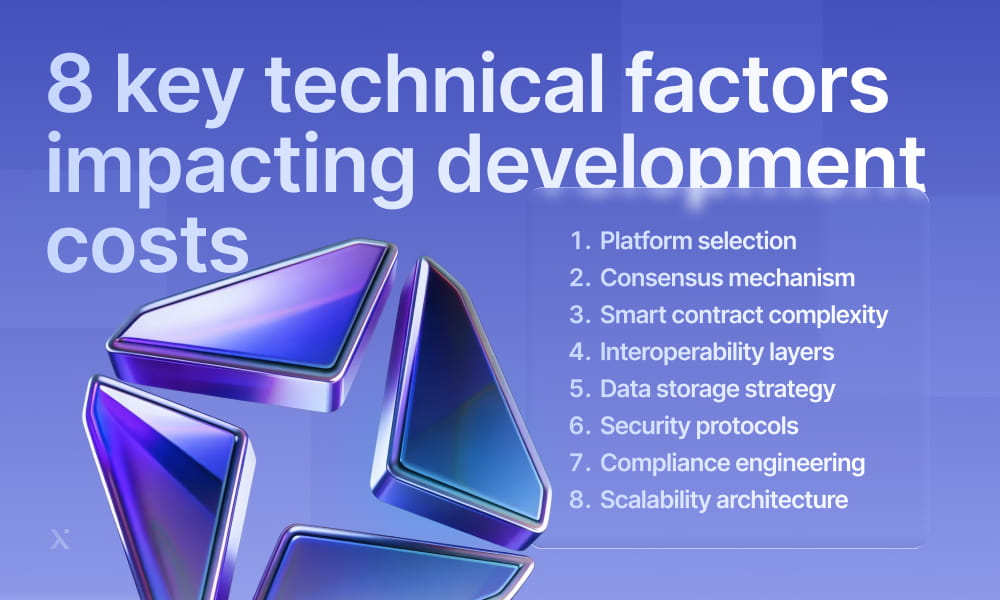
Building a high-quality app isn’t cheap, but it shouldn’t be a mystery either. A basic MVP for blockchain healthcare app development usually costs between $50,000 and $90,000. This is enough to build a secure record-sharing tool or a drug tracker. It is a great way to show your bosses that the tech works before you ask for more money.
A mid-tier app with more features will land somewhere between $120,000 and $280,000. This usually includes better AI features and more integrations.
For the big players, like a whole hospital network, the price can go above $500,000. This covers the most intense security and the ability to handle millions of users at once.
| Project type | Average cost | Main features |
| Simple MVP | $50k – $90k | 1 core feature, basic security |
| Full clinic app | $120k – $280k | AI alerts, multiple user roles |
| Enterprise system | $500k+ | National scale, high speed |
Always set aside about 20% of your budget for maintenance. Blockchains get updated, and security rules change. You don’t want your app to break six months after launch because you forgot to update the smart contracts.

Chatbots in Healthcare: New Wave of AI

8 Cutting-Edge Applications of Computer Vision in Healthcare: Bridging Tech and Health
Trends for 2026-2030 in blockchain healthcare
The next few years are going to be a wild ride for anyone in the medical tech space. We are looking at a total rethink of how hospitals and patients talk to each other. By 2030, the “digital-first” approach will be the baseline. Because of this, staying ahead of the curve is the only way to keep your app from becoming a digital fossil. Our team is already looking at how enterprise blockchain development can anchor these massive changes while keeping things simple for the end user.
Verifiable AI and “Proof of health”
AI is already everywhere, but in the next few years, we will start caring a lot more about where that AI gets its “brain” from. Blockchain will be used to prove that a medical AI was trained on real, unbiased data. This is what we call “Verifiable AI.” Instead of just trusting a black box to diagnose a cough, the ledger will show a tamper-proof audit trail of the model’s history.
Medical metaverse
We are moving beyond simple video calls. Between 2026 and 2030, expect to see more surgeons using digital overlays during operations and patients using virtual environments for physical therapy with AR & VR development. Imagine a world where a specialist in New York can “walk” through a 3D scan of a patient’s heart in London, with every interaction logged on a secure blockchain for legal and medical clarity.
One codebase for health apps
As the market gets more crowded, speed to market is becoming everything. Companies don’t have the time or the budget to build three different versions of the same app for different devices. That is why cross-platform app development is becoming the standard. Using a single codebase to reach everyone – whether they are on a phone, a tablet, or a wearable – makes it much easier to keep the security features consistent and the updates fast.

No More Gimmicks: A Deep Dive into AR Glass Software Development (That Actually Works)

Top 10 Blockchain Development Companies in 2026
Zero-knowledge proofs
By 2028, showing your whole medical record will feel as old-fashioned as using a floppy disk. Zero-Knowledge Proofs (ZKP) will let you prove you’re healthy enough for a job or a flight without actually revealing your specific medical conditions. It’s like a digital “thumbs up” that is mathematically guaranteed to be true, but reveals nothing else. This will be the base of every successful blockchain healthcare app development project in the late 2020s.
| Trend | Expected impact | Key technology |
| Verifiable AI | High | Blockchain + ML |
| Medical metaverse | Medium | AR/VR + decentralized ID |
| Rapid deployment | High | Cross-platform frameworks |
| ZK-privacy | Critical | Zero-knowledge proofs |
Don’t wait until 2029 to think about interoperability. If your app doesn’t play well with others today, it will be completely isolated by the end of the decade. Build with open standards from the very first day.
Why you should team up with PixelPlex
Our team has handled over 600 projects, and many of them were in the medical field. We don’t guess but use the data to build things that last. When you start your blockchain healthcare app development with us, you are getting partners who want to see the healthcare world get better.
We are fast, we are honest, and we aren’t afraid of complex problems. If you have an idea that seems impossible, that is exactly what we like to work on. We stay on top of the 2026 trends so your project is always ahead of the curve. Our goal is to make the tech invisible so the doctors can focus on the patients.
Patientory
We helped Patientory build a mobile app that acts like a secure vault for health data. It was one of our favorite blockchain healthcare app development projects because it actually changed how people interact with their doctors. It uses decentralized tech to make sure the patient is always the one who says “yes” or “no” to data sharing.
Patientory
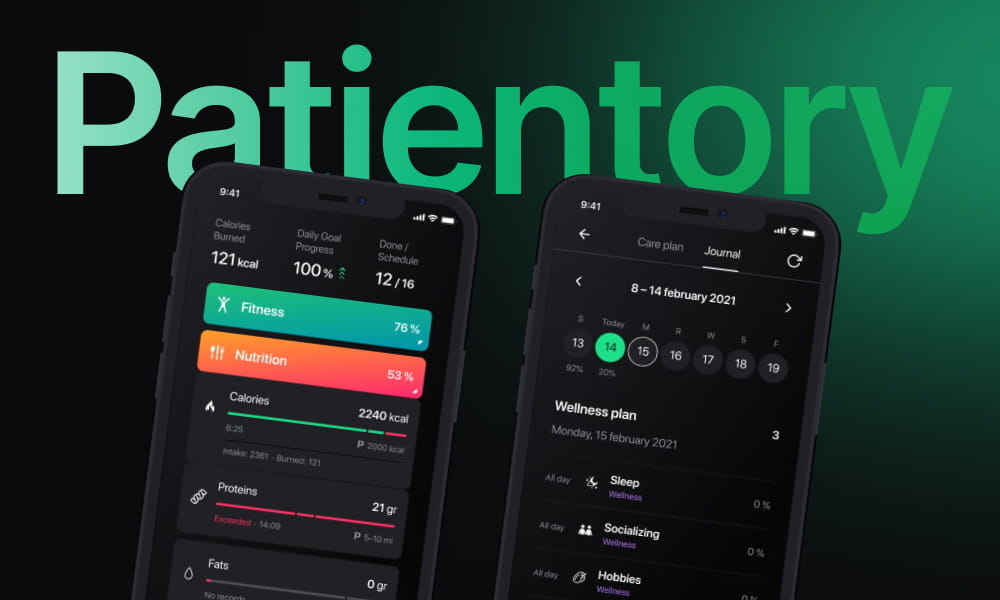
Blockchain app for managing health data
Personalized care plan
Secure medical records storage
Engaging activities and constant motivation
Explore case studyFitnessChain
FitnessChain was a different beast. It uses blockchain to reward people for staying healthy. You go for a run, you get tokens. It is a great example of blockchain healthcare application development used for preventative health. It keeps people motivated and keeps their data secure at the same time.
To wrap it up
The future of health is bright, but only if we fix the digital foundation. We at PixelPlex are ready to help you lay the first brick. Whether you need a simple app or a massive national system, we have the tools and the people to make it happen. Let’s build something that actually helps people heal. Reach out to us, and let’s get your project moving today.
FAQ
Unlike traditional servers that have a single point of failure, blockchain distributes data across a network, making it virtually impossible for hackers to shut down or corrupt.
We recommend storing the actual high-resolution images on a secure off-chain server and only placing a “digital fingerprint” or hash on the blockchain to verify its integrity.
Yes, our strategic architecture specifically maps out data movement and encryption to ensure your platform meets all local and international medical regulations.
Absolutely, as smart contracts can automate billing and trigger instant payments the moment a doctor logs a completed service, eliminating weeks of paperwork.
We focus on user-centric design, using biometric logins and clear dashboards to make the complex blockchain engine “invisible” to the end-user.
Yes, blockchain allows every stop from the factory to the pharmacy to be recorded on an immutable ledger, ensuring the medicine is authentic and safe.
It is a technology that allows a patient to prove a medical fact – like being cleared for a flight – without actually revealing their specific sensitive health data.
A foundational Proof-of-Concept or MVP typically ranges from $50,000 to $90,000, depending on the core features and security requirements.