
For a long time, blockchain was associated with digital coins and "get rich quick" stories. But fast forward to 2026, and the vibe has shifted completely. We’re talking about the actual plumbing of the modern world.
Here we are in 2026. If you look back just a few years, people were still arguing about whether a digital ledger was actually useful or if it was all just a bunch of expensive pixelated monkeys. Fast forward to today, and the conversation has moved from “Is it real?” to “How fast can we plug it in?”
Before, if you wanted to send money to another country, you had to wait for three different banks to talk to each other. If you bought a “luxury” bag, you just had to hope it wasn’t a high-quality fake from a basement factory. We spent billions of dollars every year just trying to prove that things were what we said they were.
At PixelPlex, our blockchain development team has spent years watching this transition to blockchain’s wide adoption happen in real-time. We’ve seen the mistakes, the breakthroughs, and the moments when a CEO finally realizes that this is the ultimate tool for efficiency. We put this guide together to show you exactly how blockchain in different industries is working right now and where it’s headed.
Why is everyone suddenly obsessed with blockchain?
The short answer? – trust is expensive. Five years ago, if you wanted to prove you owned something or that a transaction happened, you needed a “middleman.” A bank, a lawyer, a government agency, or a massive platform. These middlemen take a cut, they take time, and sometimes, they make mistakes.
Blockchain is essentially a way to have the “proof” without the “person.” It’s a shared digital ledger that everyone involved can see but no one person can secretly change. It’s like a giant group chat where everyone sees the messages, and if someone tries to delete a message or lie about what was said, the whole group can instantly see that it doesn’t match their copy.
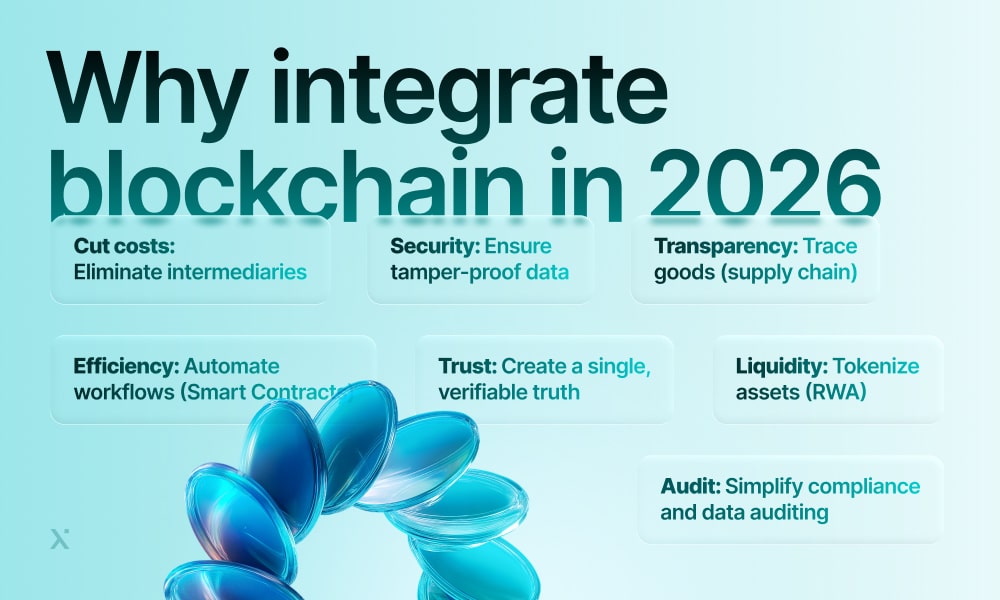
As we move through 2026, we’re seeing that this simple idea of a “shared truth” is fixing problems we didn’t even know we had. Whether it’s making sure your medicine isn’t a fake or helping you buy a tiny piece of a skyscraper, the tech is finally catching up to the hype.
When people talk about “nodes” and “consensus mechanisms,” they just mean “computers that agree on a list.” If you focus on the business result (like “no one can lie about where this steak came from”), the tech becomes much easier to handle.
The financial frontier: more than just internet money
When people think about blockchain in finance, they usually think of Bitcoin. But in 2026, the real story is about how traditional banks are using the tech to move trillions of dollars. The old system of “clearing” a transaction often takes days but with blockchain, it takes seconds.
We’re seeing a massive rise in decentralized finance with skyrocketed crypto exchange white label software development. This is essentially a way to do things like lending, borrowing, and trading without a central bank sitting in the middle. It’s faster, it’s open 24/7, and it’s surprisingly transparent.
If you’re looking to get into this space, you might start by figuring out how to build a crypto wallet that actually feels safe for regular people to use. That’s usually the first step for any business wanting to touch digital assets.
Success story 1: J.P. Morgan’s JPM Coin
Believe it or not, one of the biggest banks in the world is one of the biggest fans of blockchain. They created JPM Coin to let their massive corporate clients move money between accounts instantly, even on weekends. They’re moving billions of dollars a day using this private ledger. It’s a great example of how a “traditional” giant can use new tech to beat its own old, slow processes.
Success story 2: HSBC and the Orion platform
HSBC launched a platform called Orion to help people issue digital bonds. Usually, issuing a bond involves a mountain of paperwork and weeks of back-and-forth. By putting the bond on a blockchain, they made the whole process digital and much faster.
If your company is ready to jump into the deep end of the financial pool, our financial software development experts can help you build these kinds of systems from the ground up.
TradFi vs. blockchain finance
| Feature | Traditional finance (TradFi) | Blockchain-based finance |
| Settlement time | 2-3 business days (T+2/T+3) | Near-instant (Seconds to minutes) |
| Availability | Banking hours (Monday-Friday) | 24/7/365 |
| Transparency | Closed ledgers (need an audit) | Publicly verifiable ledgers |
| Cost | High (middleman fees) | Low (automated smart contracts) |

Inside Cocoon: How Durov is Rebuilding the AI Internet on the TON Blockchain

DeFi Vaults Explained: How to Turn Lazy Crypto Into an Automated Yield Machine
Moving parts: blockchain in the supply chain
You’re buying an “organic” apple, how do you actually know it’s organic? Right now, you just trust the sticker. But blockchain in supply chain operations changes that.
Every time that apple moves (from the farm to the truck, to the warehouse, to the store) a digital “stamp” is created. Because you can’t change the history of a blockchain, you can trace that apple all the way back to the exact tree it came from. This is what we call “provenance,” and it’s a game-changer for safety and trust.
Using supply chain software development allows companies to create a “digital twin” of their physical products. It helps them spot where things are getting stuck or where things might be getting lost.
Success story 1: Walmart and food safety
Walmart used to take nearly a week to trace where a batch of sliced mangoes came from. That’s a long time if there’s a risk of food poisoning. After implementing blockchain technology in supply chain management, they got that time down to 2.2 seconds. Now, if there’s a problem, they can pull the exact right products off the shelves without wasting thousands of tons of good food.
Success story 2: De Beers and the diamond trail
De Beers uses a blockchain platform called Tracr to follow diamonds from the mine to the retail store. This ensures that the diamonds are “conflict-free” and authentic. For a high-value item like a diamond, having a digital “passport” that can’t be forged is worth its weight in… well, diamonds.
The global market for blockchain in the supply chain is expected to grow by over 50% every year through 2030. As we see, blockchain becomes the new standard for global trade.
Healing with data: blockchain in healthcare
Healthcare is a mess of paperwork. Your data is stuck in one doctor’s computer, your prescriptions are in another, and your insurance company has a third version. It’s frustrating for patients and dangerous for doctors.
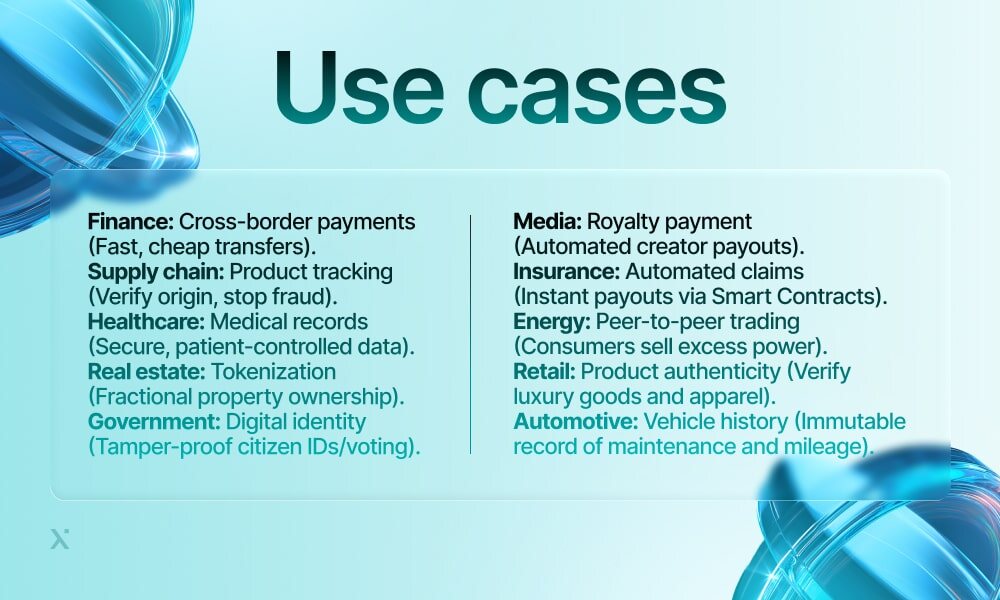
When we talk about blockchain in healthcare, we’re talking about putting the patient back in charge. Imagine a world where you own your medical records. You have a private digital key, and you decide who gets to see your X-rays or your blood test results. It’s secure, it’s private, and it prevents those annoying “we can’t find your file” moments.
For those building these tools, healthcare software development focuses on making sure the data is both accessible and incredibly hard to hack.
Success story 1: Akiri
Akiri built a network specifically for the healthcare industry. It’s a giant public database – a secure way for hospitals and labs to share data without it ever being stored in one central place that hackers could target. It keeps the data moving but keeps it safe.
Success story 2: Medicalchain
This company uses blockchain to give patients a “single version of the truth” for their medical records. Doctors can record things directly onto the blockchain, and patients can give different healthcare providers access as they see fit. It’s a big step toward truly personalized medicine.

Social Media on Blockchain: Why It’s the Next Big Digital Revolution

DAML Development for Business: A Practical Guide to Building Multi-Party Applications

AR in eCommerce: Application, Benefits, Challenges, and Best Practices
The new way to own the block: real estate
Real estate is probably the most “old school” industry out there. It involves title deeds, lawyers, escrow, and a whole lot of waiting around. Blockchain in real estate is basically trying to turn a house into a digital asset that you can trade as easily as a stock.
This is often done through “tokenization.” Instead of one person owning a $10 million building, the building is split into 10,000 digital “tokens.” Now, someone can invest $1,000 and own a tiny piece of that building to get a tiny piece of the rent, too.
To make this happen, you need a solid tokenization platform development strategy. It’s a complex process that combines law and code, but it’s opening up the property market to everyone, not just the super-rich.
Success story 1: Propy
Propy is a platform that lets people buy and sell homes entirely online using blockchain. They’ve even sold properties as NFTs. It automates the “closing” process, which usually takes weeks, and shrinks it down to a few clicks.
Success story 2: RealT
RealT is a leader in fractional real estate. They take properties in the US, tokenize them on the Ethereum blockchain, and let investors from all over the world buy into them. It’s a great example of how real estate software development is making global investment possible for regular people.
Technology is usually faster than the law. If you’re tokenizing real estate, make sure you have a legal team that understands both the blockchain code and the local property laws. They have to work in perfect harmony.
Protecting the “big idea”: intellectual property
If you’re a creator (a musician, a writer, an artist), promoting your product on the internet has been a struggle. It’s easy to share your work, but it’s also easy for people to steal it. Blockchain in intellectual property acts like a digital notary here.
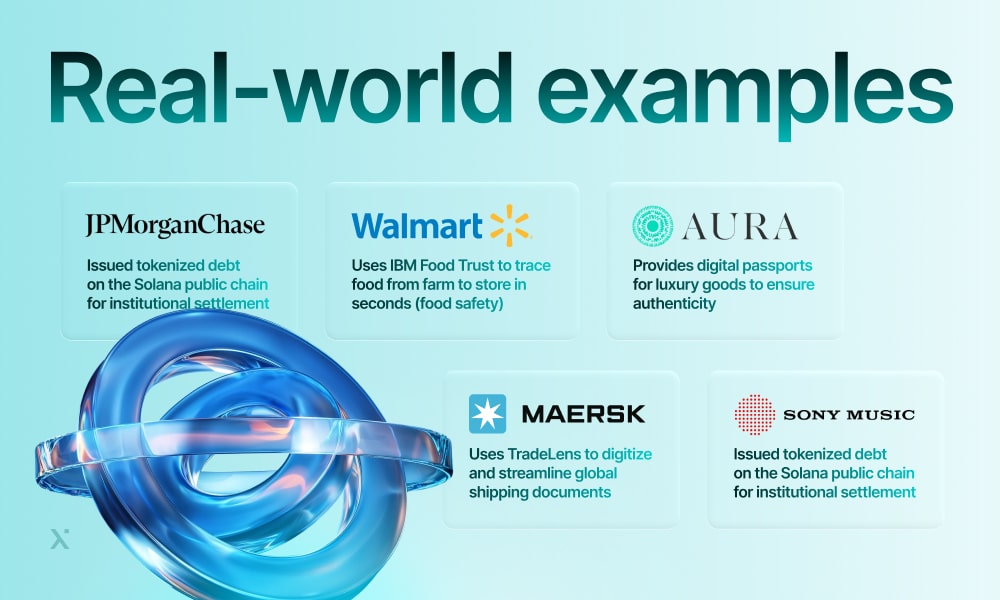
When you create something, you can “timestamp” it on the blockchain. This proves that you had the idea first, and it can also automate payments. Every time your song is played, a “smart contract” can automatically send a fraction of a cent to your wallet, so no middleman is needed.
If your project is more about keeping things “in-house,” you might look into private blockchain development to keep your company’s secrets safe while still getting the benefits of the technology.
Success story 1: Siemens
Siemens uses blockchain to manage their massive portfolio of patents and technical documents. It ensures that everyone in their global offices is looking at the most recent, “true” version of a document, which prevents expensive mistakes in manufacturing.
Success story 2: Mediachain (acquired by Spotify)
Before they were part of Spotify, Mediachain was building a decentralized database for creators to register their work. It helped bridge the gap between “who made this?” and “who should get paid?”, a problem the music industry has struggled with for decades.

Canton Network Reward System: How Canton Coin Pays Developers to Build Real Value

The Agent Payments Protocol (AP2): A New Standard for Autonomous Commerce
The factory floor: blockchain in manufacturing
Manufacturing is all about efficiency: any delay in the supply chain or any faulty part can cost millions. Blockchain in manufacturing helps by creating a perfect record of every part and every process.
If a car part fails, the manufacturer can look at the blockchain and see exactly which factory it came from, who inspected it, and what materials were used. This makes “recalls” much smaller and much cheaper. Instead of recalling 100,000 cars, you might only need to recall the 500 that used a specific batch of steel.
Our smart contract development team often works with manufacturers to automate these “if/then” scenarios. If a part passes inspection, the payment is released automatically, simple and effective.
Success story 1: BMW
BMW has been experimenting with blockchain to track the mileage and maintenance of their vehicles. This helps prevent “odometer fraud” when cars are sold as used. Buyers can see a verified, unchangeable history of the car’s life.
We’ve worked with BMW and created iBeacon-enabled web and mobile IoT apps for data-intensive workflows management and convenient communication between dealers, car owners, showroom visitors, and employees – check out the case study here.
Success story 2: Renault
Renault uses a blockchain project called XCEED to share compliance data with their partners. Since cars have to meet thousands of regulations, having a shared ledger where everyone can verify that a part meets the rules saves a massive amount of time.
The new shop floor: retail and loyalty
Retailers are always looking for a way to keep customers coming back. But let’s be honest, most loyalty programs are annoying: you have a different app for every store, and your points usually expire before you can use them.
Blockchain in retail changes the game by making loyalty points “liquid.” Imagine if your coffee shop points could be traded for airline miles or used to buy a sandwich next door. Because the points are on a blockchain, they have real value and can be moved around easily.
If you’re building a store today, you really should consider retail software development that integrates these Web3 features. It makes the shopping experience feel much more modern and rewarding.
Success story 1: Starbucks Odyssey
Starbucks launched an extension of their loyalty program where customers could earn digital stamps (NFTs) that unlocked “journeys” and real-world rewards. It was about being part of a community.
Success story 2: Rakuten
The Japanese retail giant has been a pioneer in using blockchain for their massive “Super Points” ecosystem. They even allow users to convert their points into cryptocurrency, making their loyalty program feel more like a bank account than a stamp card.
Industry impact comparison
| Industry | Main benefit | Implementation difficulty | Primary tech tool |
| Manufacturing | Quality control | Medium | IoT + smart contracts |
| Retail | Customer loyalty | Low | Digital tokens / wallets |
| Healthcare | Data security | High | Private blockchains |
| Finance | Speed / cost | High | DeFi protocols |

Exploring 6 Blockchain Use Cases in Healthcare: A Detailed Overview with Examples

Web3 Development Cost: Breaking Down What Really Drives the Price
Code, Capital, and Compliance: A Deep Dive into Canton Network Smart Contract Development
Cleaning up the noise: blockchain in advertising
The digital advertising world is, unfortunately, full of “bots” and “ghost traffic.” Advertisers pay for millions of views, but often, those views aren’t from real humans. Blockchain in advertising brings some much-needed transparency to the table.
With a blockchain, an advertiser can see exactly where their ad was shown and whether a real user actually interacted with it. It cuts out the middlemen who often take a huge “tax” on ad spend without adding much value.
For those looking to build the next generation of these tools, web3 website development is the way to go. It allows you to create sites that interact directly with user wallets and decentralized ad networks.
Success story 1: Lucidity
Lucidity created a blockchain-based protocol that verified ad data in real-time. It helped big brands like Toyota spot where they were being charged for “fake” views, saving them millions in their marketing budget.
Success story 2: Brave browser
The Brave browser uses a “Basic Attention Token” (BAT). Users get paid in tokens for watching privacy-respecting ads, and advertisers get better data on who is actually paying attention. It’s a win-win that skips the usual “creepy tracking” of the traditional internet.
Ad fraud reduction via blockchain
| Metric | Without blockchain | With blockchain |
| Bot traffic | ~25-30% | < 2% |
| Payment delays | 60–90 days | Real-time / instant |
| Middleman cut | 40–60% | 5–10% |
The shield: cyber security and data centers
We live in an age of constant data breaches. The problem is that we store all our data in “giant honey pots” – centralized servers that are very attractive to hackers. If you get into the main server, you get everything.
Blockchain in cyber security flips this: instead of one big vault, the data (or the “keys” to the data) is spread across thousands of computers. There is no “master switch” for a hacker to flip. It makes things like identity theft much, much harder.
At the same time, blockchain in data centers is helping manage the massive amount of energy and storage these places need. By decentralizing storage, we can use the “extra” space on people’s computers all over the world instead of building giant, power-hungry buildings.
To keep these systems safe, you need a heavy-duty security audit and risk management plan. You can’t just “set it and forget it” when it comes to security.
Success story 1: Guardtime
Guardtime uses blockchain to protect the data of the entire country of Estonia. Their “Keyless Signature Infrastructure” ensures that government records, health data, and even voting records haven’t been tampered with. It’s the gold standard for national cyber security.
Success story 2: Filecoin
Filecoin is a decentralized storage network. Instead of trusting Amazon or Google with all your files, you can store them across a global network of providers. It’s often cheaper and much harder for a single entity to “shut down” or “censor” your data.
Blockchain is “immutable,” which means you can’t delete things. This can be tricky with things like the “Right to be Forgotten” in Europe. When building these systems, we usually store the proof of the data on the blockchain, but the actual sensitive info is stored elsewhere. This gives you security without breaking the law.

Are Corporate Crypto Stashes The Future? A No-Nonsense Guide to DATs
Protecting Ideas: How Blockchain Is Becoming the Guardian for Your Creations
The safety net: blockchain in insurance
Insurance is another industry that loves paperwork and “waiting for the adjuster.” Blockchain in insurance is making things much faster through “parametric insurance.”
Basically, you write a smart contract that says: “If the flight is delayed by more than two hours, pay the customer $100 automatically.” The contract is connected to the airport’s data. As soon as the delay happens, the money is sent.
Developing these kinds of tools requires specialized insurance software development that can handle high volumes of data and instant payouts.
Success story 1: Etherisc
Etherisc has built decentralized insurance products for everything from flight delays to crop insurance for farmers. By automating the claims, they can provide insurance to people who were previously “too expensive” to cover under the old model.
Success story 2: B3i
B3i is a group formed by several of the world’s largest insurers (like Swiss Re and Allianz). They use blockchain to manage “reinsurance” – which is basically insurance for insurance companies. It’s a complex back-end process that blockchain makes significantly smoother.
The cost of building
One question we get asked every single day at PixelPlex is: “This sounds great, but what’s the bill going to look like?”
It’s a fair question. You can’t build the future with just “good vibes.” Here is a rough breakdown of what it costs to actually get a blockchain project off the ground in 2026.
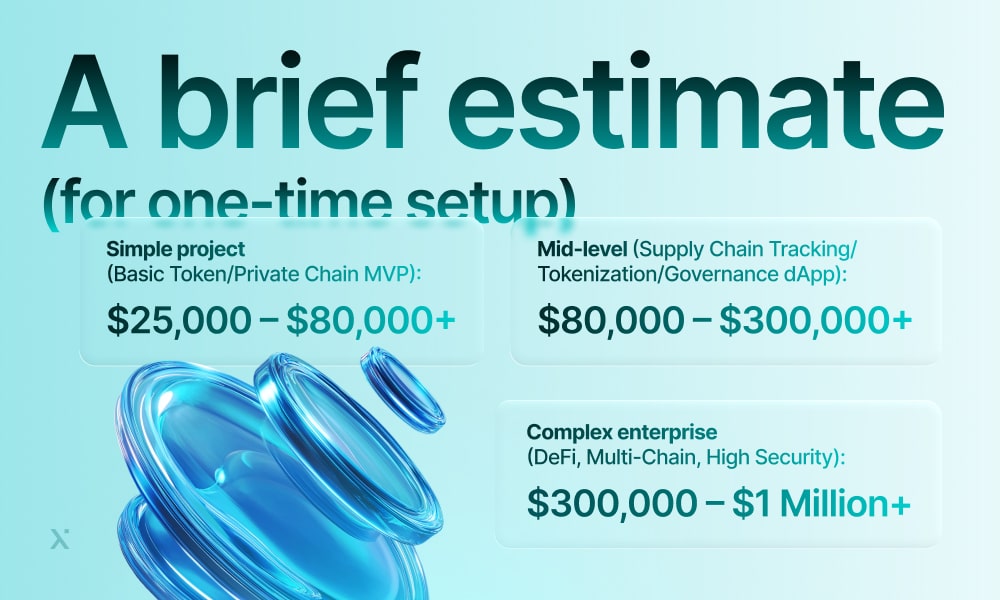
If you’re just starting out, we often recommend our MVP development services to test your idea before you spend the big bucks. It’s better to fail fast and cheap than to spend a year building something no one wants.
As your project grows, you might need more specific dApp development services to handle the user-facing side of things.
How to get started: the PixelPlex way
If you’re feeling overwhelmed, that’s normal. You just need to know what problem you’re trying to solve.
Most successful projects follow a simple path:
- Consulting: Talk to someone who has done this before. Our blockchain consulting team can help you figure out if you actually need a blockchain (sometimes, a regular database is just fine!).
- Integration: You probably already have software you love. Our blockchain integration services help the new tech “talk” to your old systems so you don’t have to start from scratch.
- Modernizing: If you’re looking at specific new tech, like the Canton.Network development, you’ll need experts who understand how to connect different institutional blockchains together.
- Scaling: As you grow, you might want to look into web3 app development to bring your vision to mobile users.
For those focusing on the most popular platform, Ethereum smart contract development remains the industry standard for most consumer-facing projects.
Blockchain is great at recording data, but it’s not great at “thinking” about it. That’s why we often combine our blockchain work with business intelligence solutions. This helps you take all that “trustable data” and turn it into actual insights that can grow your business.

Inside Crypto Wallet MVP Development: Process, Costs, and Real-World Lessons

From Catwalk to Crypto: Why Fashion Is Being Woven with Blockchain
The forecast for 2026-2030
So, where are we going?
First, we’re going to see a massive marriage between AI and blockchain. AI is great at making decisions, but it can be tough – no one knows how it made the decision. Blockchain can record every step the AI took, making it transparent and auditable. If you’re looking into this, our AI app development team is already building these hybrid systems.
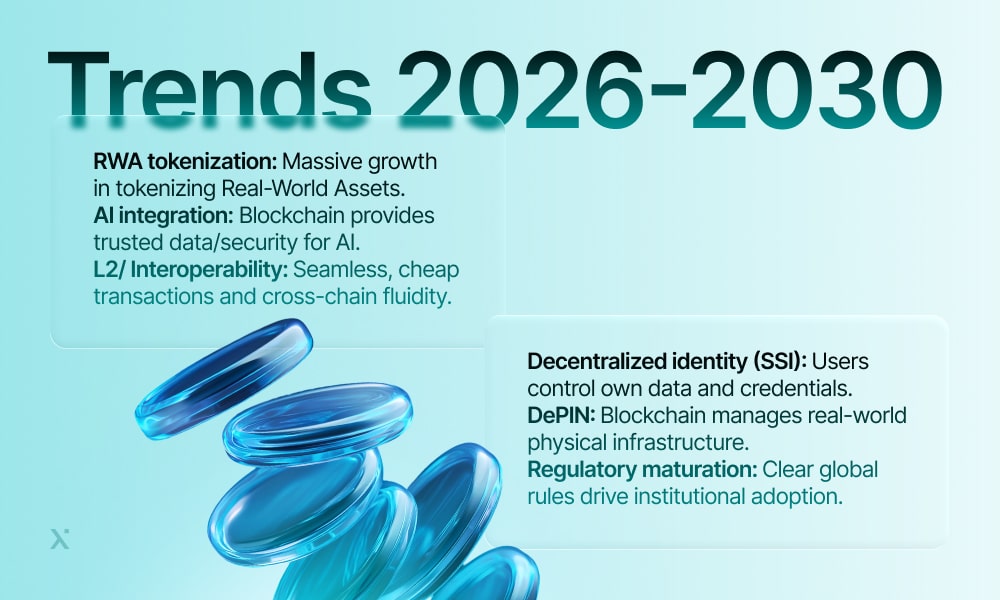
Second, the “User Experience” is finally going to get better. For years, blockchain was hard to use. You had to remember 24-word passwords and deal with weird “gas fees.” In 2026, the tech is becoming “invisible.” You’ll be using a blockchain-powered app without even knowing it, just like you use the internet without knowing how TCP/IP works.
Lastly, blockchain in different industries will move from “experiment” to “requirement.” Just like having a website went from “cool” to “mandatory” in the 90s, having a transparent, verifiable digital record will be the standard for any business that wants to be taken seriously.
Final thoughts
The world is changing fast, and the “Trust Economy” is here to stay. Whether you’re in finance, shipping, or selling sneakers, blockchain offers a way to move faster, stay safer, and build a better relationship with your customers.
If you’ve got an idea or even just a “what if?” question, PixelPlex team would be more than happy to sit down and chat. We composed this comprehensive article because we believe that the more people understand this stuff, the better the digital world will be for all of us.
Ready to build something that lasts? Let’s talk.
FAQ
It basically turns bank transfers into instant “text messages” for value, cutting out the long waits and high fees of traditional banks.
The idea is to create a perfect record of every stop a product makes so you always know exactly what you are buying.
Absolutely, because the tech puts the key to your medical data in your hands and lets you choose exactly which doctors can see your history.
It acts like a digital notary that gives your work a permanent timestamp, which proves you were the original creator if anyone tries to claim it is theirs.
It allows stores to trace a bad batch of produce back to the specific farm in seconds rather than weeks, which can literally save lives.
While complex systems can cost more, a focused mid-level project usually falls between 80,000 and 300,000 dollars depending on the specific features you need.
Not at all, as we are seeing a shift toward “invisible” tech where the complicated stuff happens in the background while you enjoy a simple interface.
Since it uses advanced math and decentralized servers to protect records, it is actually one of the hardest systems in the world for a hacker to break.
Yes, our team provides high-performance custom software development for travel, delivering scalable booking engines and management platforms designed to maximize ROI and user engagement within 4–6 weeks.
Yes, PixelPlex provides comprehensive blockchain game development services, leveraging over a decade of expertise to build secure, scalable, and high-ROI gaming ecosystems across diverse sectors.