
Travelers today are tired. They are tired of hidden fees, tired of losing their suitcases in a random airport in the middle of nowhere, and definitely tired of loyalty points that expire before they can even say "upgrade." Blockchain is the fix of it.
The industry itself is a bit of a mess behind the scenes too. Data is scattered across thousands of disconnected servers. Middlemen take a massive cut of every single transaction. It is almost a miracle that we manage to get from point A to point B at all.
Current data shows that the global travel and tourism market is bouncing back, reaching a staggering $11 trillion contribution to the global economy. However, inefficiency still costs the sector billions. For instance, roughly 1% of all checked bags are mishandled. That sounds small until you realize it means millions of bags are floating in limbo every year. Also, fraud in the airline industry alone accounts for over $1 billion in losses annually.
This is exactly why we at PixelPlex decided to put together this deep dive. Our blockchain development team sees these gaps every day and we want to show you how decentralized tech actually fills them. Whether you are a hotelier or an airline executive, understanding blockchain in travel is no longer optional. It is about survival.
How blockchain is used in travel
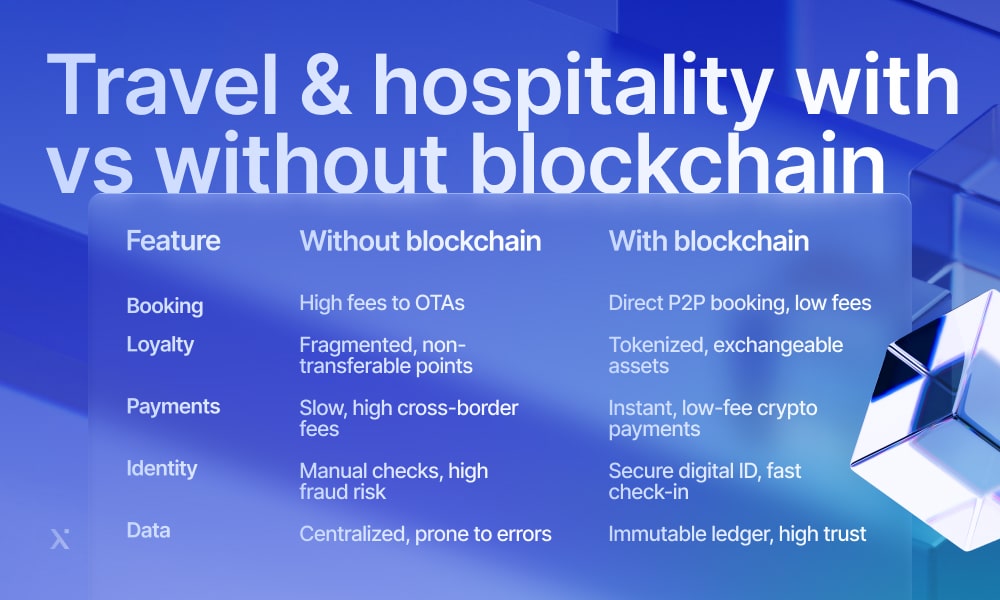
Imagine you book a flight. Between you clicking “pay” and you sitting in that cramped middle seat, your data passes through travel agents, global distribution systems, airlines, and payment processors. Every hand that touches your data wants a fee. Every transfer is a chance for a mistake.
Using blockchain in travel and tourism changes the game because it creates a single, unchangeable record. No one has to “trust” that the other party is telling the truth. The data is just there. It is transparent and it is secure.
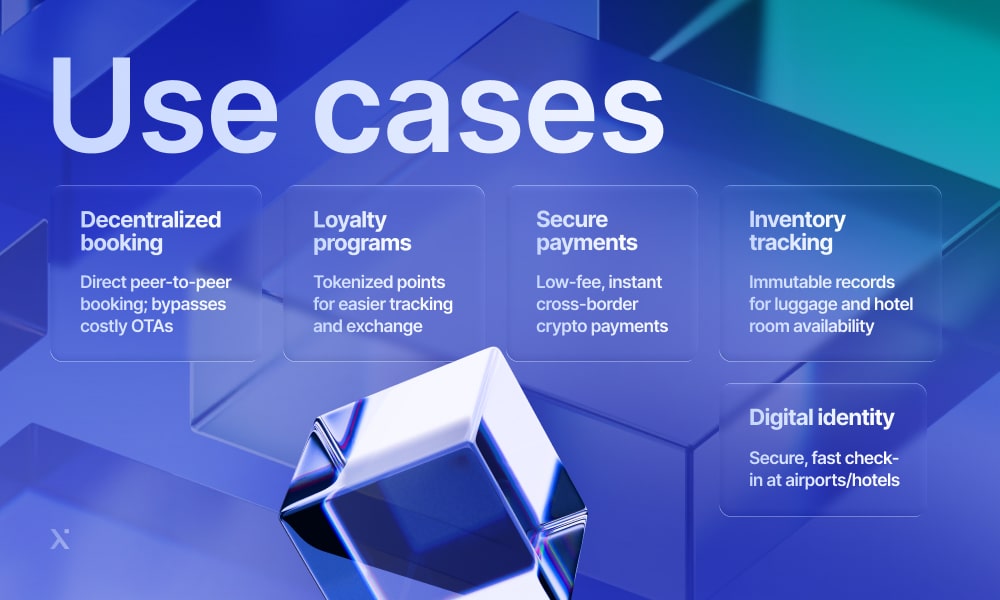
Payments and settlements
Sending money across borders is still surprisingly slow and expensive. If a travel agency in London needs to pay a boutique hotel in Tokyo, they usually have to wait days. Banks take their sweet time and their big percentage.
When we talk about blockchain in travel, payments are usually the first thing people think of. By using crypto payment solutions, settlements happen almost instantly. There is no waiting for a clearinghouse. The transaction is verified by the network and the funds move. This is especially huge for smaller vendors who cannot afford to wait 30 days for a payout.

Top Full-Service Web3 Development Companies 2026

Top 10 Blockchain Use Cases In 2026: How Your Business Can Ride the Wave

What Is a Concierge App and How to Develop One?
Luggage and baggage logistics
We have all been there. You stand at the carousel, watching every bag come out except yours. The current system for tracking bags is fragmented. Different airlines and airports use different systems.
If we put baggage data on a decentralized ledger, everyone sees the same thing. The airport in New York, the airline, and the airport in London all look at the same record. If you integrate logistics software development with a blockchain, the “handoff” of a bag becomes a permanent entry. You can see exactly which employee or machine last handled your suitcase. No more pointing fingers.
| Feature | Traditional tracking | Blockchain tracking |
| Data access | Siloed in company databases | Shared across all stakeholders |
| Transparency | Low (hidden from customer) | High (real-time updates) |
| Speed of location | Slow, requires manual checks | Instant through the ledger |
| Risk of error | High (manual entry) | Low (automated smart contracts) |
Automated travel insurance
Insurance is usually a headache. You wait for a flight delay, then you have to fill out fifty forms to get your $50 back. It feels like the insurance company is hoping you just give up.
Through smart contract development, this whole process becomes automatic. A smart contract is just a piece of code that says “if flight X is delayed more than 2 hours, pay the traveler Y amount.” The contract monitors flight data. As soon as the delay happens, the money is sent to your wallet. You don’t even have to call anyone. It is fair, it is fast, and it builds immense trust with the customer.
When building automated insurance tools, always ensure your data source (oracle) is reliable. If your smart contract gets wrong info about flight times, the whole system breaks. We recommend using decentralized oracles to keep things honest.
Loyalty programs that actually work
Most people have points scattered across five different airlines and ten hotel chains. Most of those points go to waste. For companies, these loyalty points are a liability on the balance sheet.
By using tokenization services, companies can turn loyalty points into digital tokens. These tokens can be traded, spent at partner stores, or even converted into other currencies. This makes the points “real” to the customer. When a traveler knows their points are actually valuable, they are more likely to stay loyal. Blockchain in travel and tourism makes these programs much more interactive and less like a chore.

Inside Cocoon: How Durov is Rebuilding the AI Internet on the TON Blockchain

Social Media on Blockchain: Why It’s the Next Big Digital Revolution

Crypto Payment Gateway: Costs, Benefits, Implementation
The real benefits: what is the catch?
You might be wondering why everyone hasn’t switched yet. The truth is, the benefits are massive, but the shift requires a change in mindset.
First, the security is unmatched. When you handle thousands of passports and credit card numbers, you are a prime target for hackers. A decentralized system means there is no central honey pot for a hacker to hit. If you invest in security audit and risk management, your blockchain solution becomes a digital fortress.
Second, the cost savings are real. By removing the “middleman” agencies that take 15% to 25% commissions, hotels and airlines can either lower their prices or increase their margins.
Blockchain in travel also improves the “Identity” problem. Think about how many times you show your passport at an airport. Check-in, security, border control, boarding, duty-free. With a digital ID on the blockchain, you could verify your identity once and just use a biometric scan or a QR code for the rest of the journey. It is faster and much more private.
| Benefit | Impact on business | Impact on traveler |
| Decentralization | Lower infrastructure costs | Lower ticket prices |
| Smart contracts | Automated operations | Faster refunds and service |
| Tokenization | New revenue streams | More flexible rewards |
| Immutability | Better record keeping | Increased trust in the brand |
Real-world projects: who is already doing this?
It is one thing to talk about theory, but seeing the tech in action is much more helpful. Several pioneers have already started using blockchain in travel and tourism to solve real problems.
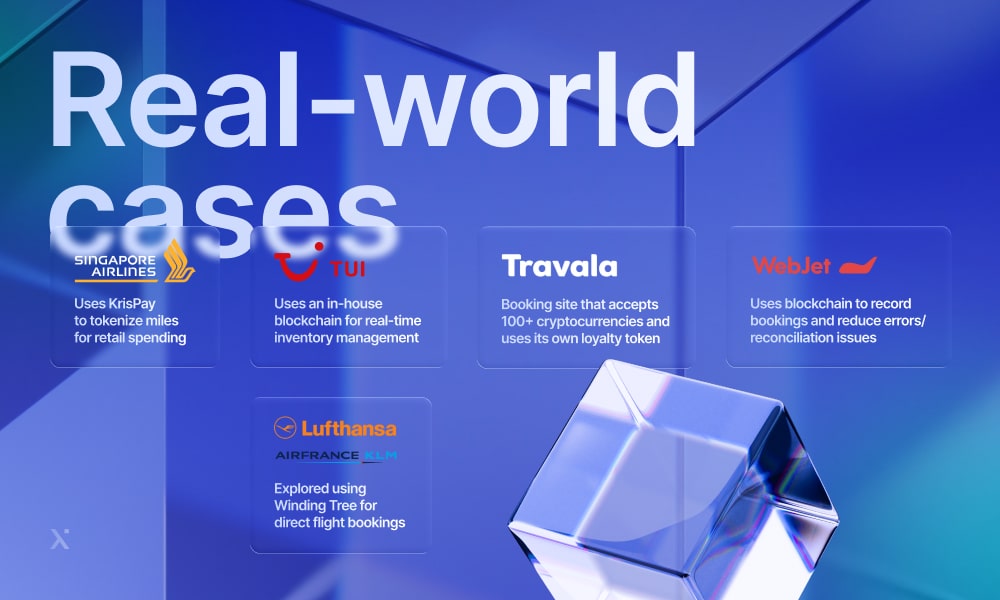
Travala.com
This is probably the most famous example. It is a booking platform where you can pay with dozens of different cryptocurrencies. They have their own token, AVA, which gives users discounts and rewards. By using web3 app development, they created a system where the traveler and the provider connect more directly. It proves that people are ready to ditch traditional credit cards for something faster.
Winding Tree
This project is a non-profit aimed at removing the middlemen from travel distribution. Instead of a massive corporation owning the data of every hotel room in the world, Winding Tree uses a decentralized ledger. This allows airlines like Lufthansa and hotel chains to list their inventory directly. There is no central authority taking a massive cut.
SITA and British Airways
They experimented with a project called “VChain.” The goal was to manage traveler identity. Instead of checking your passport five times, the blockchain stores a verified “handshake.” Once one airport or airline verifies you, the rest of the network can trust that verification without seeing your private documents again.
TUI Group
One of the largest travel companies in the world moved its entire internal inventory onto a private blockchain. They call it “BedSwap.” It allows their different branches across the globe to trade hotel room capacity in real-time. This helps them fill rooms that would otherwise go empty, and it happens instantly without any messy internal accounting.
PhysicAI for baggage tracking
Some companies are now using IoT sensors and blockchain to track cargo and luggage. When a bag is scanned at a checkpoint, the entry is permanent. There is no way for a handler to “delete” a mistake. This level of blockchain integration services ensures that everyone in the chain is held accountable.

From Code to Confidence: Inside Smart Contract Audit Pricing

Blockchain in Procurement: A Guide to Transparency, Efficiency, and Trust
How to develop a travel blockchain solution
Building a travel software development solution is not like building a basic app. You are dealing with complex logic and high stakes.
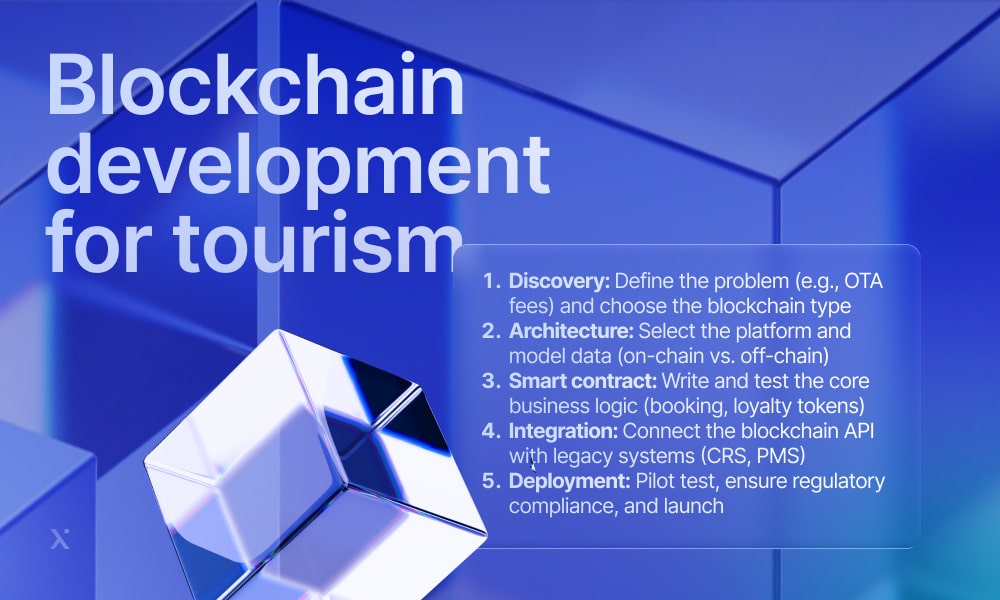
Idea
The process usually starts with blockchain consulting to figure out if you actually need a blockchain. Sometimes, a regular database is fine. But if you need transparency and multi-party trust, then you move to the design phase.
Look at your business and find the part that hurts the most. Is it the 3% credit card fees? Is it the fact that your booking data gets lost? Don’t try to fix everything at once. Pick one specific problem, like a loyalty program or payment settlement, and start there.
Platform base and architecture
Next comes the choice of the platform. For many travel companies, privacy is key. You don’t want your competitors seeing your internal luggage volumes or pricing strategies. This is where private blockchain development comes in. It gives you the security of a blockchain but with controlled access.
You have to decide if you want to be on a public network like Ethereum or a private one. Most travel companies prefer private or consortium networks because they need to keep passenger data private and they want to control who can join the network.
Smart contracts and integrations
After the architecture is set, you develop the smart contracts. These are the engines of your application. Because these contracts often handle money, you cannot afford bugs. We always insist on smart contract audit services before any launch. One tiny error in code could lead to a massive loss of funds.
Front end, QA and launch
Finally, you integrate the front end. The traveler shouldn’t even know they are using a blockchain. It should just feel like a very fast, very smooth app. If they are interacting with digital assets, you might even look into real world asset tokenization platform development to link physical resources to digital tokens.
Start with a small group of users. Maybe launch a “tokenized” weekend stay for your top 100 guests. See how they use the tokens. Listen to the feedback. Once you know it works, you can scale it up to your entire customer base.
Most of the “slowness” in travel apps isn’t the internet speed. It is the time it takes for different company databases to talk to each other and agree on a price or availability.
How much will this cost?
Let’s talk about money. Everyone wants to know the price tag. The cost of implementing blockchain technology in travel industry depends heavily on the complexity.
If you are just looking to create a basic token for loyalty, it is relatively affordable. But if you are building a full-scale ecosystem that manages thousands of transactions a second and integrates with airport IoT sensors, the price goes up.
Typically, a pilot project (MVP) can range from $30,000 to $80,000. A full-scale enterprise solution can easily cross the $200,000 mark. You have to factor in the cost of transaction monitoring software to ensure you are compliant with local laws, especially regarding Anti-Money Laundering (AML).
| Project scale | Estimated time | Estimated cost range |
| Small (Loyalty Token) | 2-3 Months | $25k – $50k |
| Medium (Baggage/logistics) | 4-6 Months | $60k – $120k |
| Large (Full ecosystem/DeFi) | 9+ Months | $200k+ |
Don’t forget the maintenance. Blockchains need updates, and smart contracts might need to be migrated as the underlying network evolves. If you are diving into the world of decentralized finance for your travel payments, DeFi development requires ongoing security oversight.

Protecting Ideas: How Blockchain Is Becoming the Guardian for Your Creations

Blockchain for Business: Beyond Cryptocurrency to Real-World Value

AR in eCommerce: Application, Benefits, Challenges, and Best Practices
The “Pro” list: advanced add-ons for your platform
Once you have the basics down, you can start adding the “wow” factors that really set a travel brand apart.
NFT room keys and tickets
Instead of a plastic card or a PDF, give your guests an NFT. This digital key can live in their phone wallet. They can use it to open their room, get into the gym, or even trade it with a friend if they can’t make the trip. It makes the booking a real asset that the customer actually owns.
Metaverse concierge services
Before a guest even leaves their house, they could meet your concierge in a virtual world. Using metaverse development, you can create a 3D preview of the resort where guests can book excursions or choose their exact room layout. It turns “planning” into “playing.”
Self-Sovereign Identity (SSI)
This is the holy grail of travel. Imagine a world where a traveler has a secure digital “passport” on their phone. When they check in, they don’t hand over a physical document. They just scan the code. The blockchain verifies they are who they say they are without the hotel ever having to store a copy of the passport on their own (vulnerable) servers.
Automated Carbon Offsetting
Modern travelers care about the planet. You can build a feature into your web3 marketplace development project that automatically calculates the carbon footprint of a trip. The system can then buy verified carbon credit tokens the moment the flight is booked. It is transparent, honest, and requires zero extra effort from the customer.

Enterprise Blockchain: Prom Promise to Profit
Blockchain Database vs Traditional Database: Choosing the Best For Your Project
The future
What does blockchain in travel look like in ten years? It is going to be invisible. You won’t hear people talking about “the blockchain” any more than they talk about “the TCP/IP protocol” today. It will just be the plumbing that makes travel work.
We are seeing a massive trend toward the Metaverse. Imagine walking through a digital version of your hotel room before you book it. By combining blockchain with AR & VR development, hotels can offer “try before you buy” experiences where your booking is secured as an NFT.
We also expect to see more “Business Intelligence” being pulled from decentralized data. When data is clean and unchangeable, your analytics become much more accurate. Using business intelligence solutions on top of a blockchain allows you to spot travel trends months before they happen.
The blockchain in travel industry will eventually lead to a “seamless travel” reality. Your face becomes your ticket, your passport, and your credit card. All of it is backed by a secure, decentralized ledger that you control.
Blockchain is not a magic wand. It won’t fix a bad business model or terrible customer service. It is a tool to make good businesses more efficient and transparent.
Wrapping it up
The travel world is changing. People want more control and less friction. They want to know that when they pay for a “sea view,” that is exactly what they are getting. They want to know that their bag is actually on the plane.
Implementing blockchain in travel is a big step, but it is the right one for companies looking at the long term. It reduces fraud, cuts costs, and makes the traveler’s life a whole lot easier.
We at PixelPlex are obsessed with these details. We comprised this comprehensive article because we believe that the future of travel is decentralized. Our team is ready to help you navigate this transition, whether you are just starting to explore or are ready to build a massive global platform.
The industry is moving fast, so don’t get left behind at the gate. If you have a vision for a more connected, transparent travel experience, let’s make it happen. After all, the best time to build the future was yesterday. The second best time is right now.
FAQ
By using crypto payment solutions, businesses can bypass traditional banking intermediaries and clearinghouses to achieve near-instant settlements with significantly lower transaction fees.
Yes, decentralization creates a single, shared record of baggage “handoffs” between airlines and airports, allowing all parties to see the real-time location and status of a suitcase.
Smart contracts use automated code to monitor flight data and trigger instant payouts to a traveler’s wallet the moment a delay meets the predefined criteria, removing the need for manual forms.
Private blockchain development is often preferred because it allows companies to keep sensitive passenger data and internal pricing strategies confidential while maintaining control over who joins the network.
Tokenization makes loyalty points “real” assets that customers can trade, convert to other currencies, or spend with partners, which significantly increases the perceived value and user engagement.
A decentralized system removes the “central honey pot” for hackers, allowing travelers to use a digital ID to verify their identity without the business needing to store vulnerable copies of physical passports.
A basic pilot project or MVP usually takes 2 to 6 months to develop and typically ranges in cost from $30,000 to $80,000 depending on the complexity of the features.